

Car rental in Croatia is worth considering if you want more than a city break. The country is compact enough for a rewarding road trip, but varied enough that buses and ferries do not always line up neatly with beaches, hill towns, national parks, wineries, and border detours.
I have found Croatia easiest by car when the itinerary includes places like Istrian villages, Plitvice Lakes, Pelješac, Krka, the Makarska Riviera, or a side trip to Mostar, Kotor, or Sarajevo. The key is not just finding the lowest headline price. It is choosing the right pickup location, reading the supplier terms, confirming insurance, and getting written permission if you plan to drive into Montenegro or Bosnia and Herzegovina.
Free cancellation on most bookings · No hidden fees
Quick Answer: Is Car Rental in Croatia Worth It in 2026?
Yes, car rental in Croatia is usually worth it for road trips, countryside stays, national parks, family travel, and cross-border itineraries. It is less useful if you are spending a few days only in Zagreb, Split Old Town, Dubrovnik Old Town, or on islands where ferries, walking, scooters, and local buses may be simpler.
The best approach is to compare suppliers early, choose a car that fits Croatian roads and your luggage, and check the rental agreement line by line before paying. Rules vary by supplier, especially for one-way rentals, ferry use, insurance excess, deposits, and cross-border driving.
Who should rent a car in Croatia
Car rental in Croatia makes the most sense if you want flexibility. Public transport connects major cities, but it is less convenient for small beaches, viewpoints, villages, wineries, and rural guesthouses.
You should strongly consider renting if you are:
- Visiting Plitvice Lakes, Krka, Istria, Pelješac, or inland Dalmatia
- Traveling with children, beach gear, or multiple suitcases
- Staying outside city centers
- Planning early starts or late returns
- Combining Croatia with Montenegro or Bosnia and Herzegovina
- Doing a one-way itinerary from Zagreb to Dubrovnik, or the reverse
For example, a Split-based traveler can reach Trogir, Šibenik, Krka, Omiš, Makarska, and inland viewpoints much more easily with a car. From Dubrovnik, a vehicle is useful for Cavtat, Ston, Pelješac, and border routes toward Kotor or Mostar.
When you should skip the car and use ferries, buses, or trains
You may not need car rental in Croatia if your trip is city-heavy. Zagreb, Split, Zadar, and Dubrovnik are walkable in their historic centers, and parking can be frustrating near old towns.
Skip the car if:
- You are staying only inside Dubrovnik Old Town
- Your accommodation does not include parking
- Your route is mostly ferries between islands
- You are uncomfortable with narrow coastal streets
- You plan to drink wine or visit nightlife areas regularly
- You are doing a short two- or three-day city break
I would also avoid picking up a car before exploring Dubrovnik Old Town. Parking outside the walls is limited, steep streets can be awkward, and accommodation parking is often not where the map makes it appear.
Best use cases for road trips, islands, and cross-border trips
The strongest use case for car rental in Croatia is a self-drive route where the car saves time every day. This includes coastal road trips, national parks, wine regions, and mixed Croatia-plus-neighbor itineraries.
Good examples include:
| Trip style | Car value | Watch out for |
|---|---|---|
| Zagreb to Plitvice to Split | Very high | One-way fee, luggage space |
| Split to Makarska and Dubrovnik | High | Coastal traffic in summer |
| Istria loop from Pula or Zagreb | Very high | Rural parking and narrow village lanes |
| Dubrovnik to Montenegro | High | Written cross-border permission |
| Split or Dubrovnik to Mostar | High | Border paperwork and insurance |
| Island-only trip | Mixed | Ferry costs, island parking, limited roads |
For island-hopping, a rental car can be useful on larger islands such as Hvar, Brač, Korčula, or Krk, but it can also become expensive or inconvenient if you are paying for vehicle ferries and parking. Always check whether the supplier allows ferry travel and whether insurance applies while the car is on an island.
Croatia Car Rental Overview: What to Expect Before You Book
Car rental in Croatia is well established in major travel hubs, especially airports and coastal cities. You will see international brands, regional companies, and local suppliers, but the best choice depends on route, terms, vehicle availability, and whether you need extras such as automatic transmission or cross-border approval.
In peak summer, the most popular vehicles sell out early, especially automatics, compact SUVs, seven-seaters, and cars suitable for one-way trips. In shoulder season, availability is usually better, but branch hours, ferry schedules, and weather can affect planning.
Typical pickup locations: Zagreb, Split, Dubrovnik, Zadar, Pula
The most common pickup points are:
- Zagreb Airport and Zagreb city
- Split Airport and Split city
- Dubrovnik Airport and Dubrovnik city
- Zadar Airport
- Pula Airport
- Rijeka, Osijek, and other regional locations
Car rental Croatia Zagreb options are best for travelers starting inland, visiting Plitvice, then continuing to the coast. Car rental in Croatia Split is ideal for Dalmatian coast routes, while car rental in Croatia Dubrovnik works best for southern Croatia, Montenegro, and Bosnia and Herzegovina side trips.
Airport vs city pickup pros and cons
Car rental in Croatia airport branches are often easier for first-time visitors. Airports usually have longer operating hours, more vehicle stock, and simpler pickup logistics after a flight.
City pickup can be cheaper or more convenient if you are spending a few car-free days first. For example, you might land in Split, stay two nights near the old town, then collect a car only when you are ready to drive to Krka, Makarska, or Dubrovnik.
| Pickup choice | Best for | Pros | Cons |
|---|---|---|---|
| Airport pickup | Immediate road trip | Easy arrival, more cars, familiar process | Airport-related fees may apply |
| City pickup | City stay first | Avoid paying for unused days | Shorter hours, harder parking nearby |
| Hotel delivery | Convenience | Saves time if offered | Terms and fees vary |
| Ferry-port pickup | Island or coast plans | Useful after ferry arrival | Limited supplier choice |
Why pricing and availability change by season
Seasonality is one of the biggest factors in car rental in Croatia. Summer demand rises sharply on the coast, especially from June through September, and availability tightens for automatics, family vehicles, and one-way rentals.
Rates can change because of:
- Travel season and local holidays
- Pickup location
- Vehicle class
- Transmission type
- One-way drop-off
- Insurance package
- Supplier deposit rules
- Border or ferry permissions
- Booking lead time
Do not judge a rental by the daily rate alone. The cheapest car rental in Croatia may become less attractive if it has a large deposit, strict fuel policy, limited mileage, inconvenient pickup hours, or no permission for your planned route.
Best Car Rental Strategy for Croatia by Trip Type
The smartest car rental in Croatia strategy starts with your route, not the car category. A small economy car can be perfect for coastal towns, but a family with luggage may need a compact SUV or estate car. A one-way route can save days, but only if the drop-off fee makes sense.
Dalmatian coast itinerary
For Split, Trogir, Šibenik, Primošten, Makarska, Ston, and Dubrovnik, a compact or economy car usually works well. Roads are generally good, but parking near old towns and beaches can be tight.
Choose a smaller car if you are staying in historic areas or hillside apartments. The coastal road is scenic, but during peak summer it can be slow, especially near popular beaches and ferry ports.
A useful Dalmatian plan is:
- Pick up in Split after your city stay
- Visit Krka, Šibenik, or Trogir
- Drive south via Makarska or Pelješac
- Drop off in Dubrovnik, if one-way pricing is acceptable
Istria and northern Croatia
Istria is one of the best regions for car rental in Croatia because many highlights are inland or spread across the peninsula. Rovinj, Poreč, Motovun, Grožnjan, hilltop restaurants, truffle areas, and wineries are much easier by car.
A compact manual car is usually enough for two travelers. If you are carrying luggage or traveling with family, choose a larger hatchback or compact SUV for comfort on rural roads.
Zagreb, Pula, and Rijeka can all work as starting points. Pula Airport is convenient for Istria-only trips, while Zagreb gives you a better start if you also want Plitvice or northern Croatia.
One-way road trip from Zagreb to Dubrovnik
A one-way road trip is a classic use case for car rental in Croatia. Zagreb to Plitvice, Zadar, Split, Makarska, Pelješac, and Dubrovnik is a logical route that avoids backtracking.
The tradeoff is cost. One-way fees vary by supplier, vehicle class, and season, so check the final rental terms before booking. Also compare whether it is cheaper to drop in Split and continue by ferry or bus, rather than keeping the car to Dubrovnik.
Choose this route if time matters more than minimizing every fee. Skip it if you are on a tight budget and have flexibility to return the car to the same location.
Island-hopping with a rental car
Island-hopping with a vehicle can be brilliant or annoying. On larger islands, having a car helps you reach remote beaches, hill villages, and viewpoints. On smaller or busier islands, parking and ferry logistics may outweigh the benefit.
Before taking a rental car on a ferry, check:
- Whether ferry travel is allowed by the supplier
- Whether insurance applies on islands
- Whether vehicle ferry tickets need advance planning
- Whether your accommodation has parking
- Whether you truly need the car every day
For Hvar or Brač, a car can add value if you are exploring beyond the main town. For a short stay focused on one harbor, I would usually leave the car on the mainland and travel lighter.
Cross-Border Rules: Driving from Croatia to Montenegro or Bosnia and Herzegovina
Cross border car rental Croatia rules are where many travelers get caught out. Driving from Croatia to Montenegro or driving from Croatia to Bosnia is common, but you must not assume your rental car is automatically allowed to cross.
The conservative rule is simple: get written permission from the rental company before crossing any border, and verify insurance, paperwork, and cross-border fees directly with the supplier. The final rental agreement is what matters, not a forum post, old travel blog, or verbal comment at the counter.
Which rental companies allow cross-border travel
Some suppliers may allow driving from Croatia to Montenegro or Bosnia and Herzegovina. Others may restrict it, charge an additional fee, limit vehicle categories, or require advance approval. Do not assume that enterprise car rental Croatia, sixt car rental Croatia, or any local supplier will apply the same rules at every branch.
Permission can vary by:
- Pickup location
- Drop-off location
- Vehicle category
- Insurance package
- Destination country
- Time of year
- Supplier policy changes
- Whether the trip includes ferries or additional borders
If your route includes Kotor, Budva, Mostar, Sarajevo, Međugorje, or the Neum area, filter your booking mindset around cross-border permission from the start. The best car rental in Croatia for this trip is not necessarily the cheapest one; it is the one that explicitly allows your route in writing.
What permission documents you need
For cross-border driving, ask the supplier what documents are required before you book and again at pickup. You should have written confirmation in the rental agreement or supplier-approved paperwork.
Ask specifically about:
- Written permission to enter Montenegro
- Written permission to enter Bosnia and Herzegovina
- Whether a cross-border authorization document is issued
- Whether an international motor insurance certificate or “Green Card” is needed
- Whether the car registration documents are provided
- Whether roadside assistance applies outside Croatia
- Whether there are excluded countries or roads
Do not rely on a counter agent saying “it should be fine.” If the permission is not in the paperwork, you may have problems at the border or during an insurance claim.
Border fees, green card questions, and insurance checks
Border requirements can change, and rental companies handle them differently. Some suppliers may include required paperwork in a cross-border package; others may charge a separate fee or decline the request.
Before confirming car rental in Croatia for a border itinerary, ask these questions:
- Is my exact destination country allowed?
- Is the approval written into the rental agreement?
- Is there a cross-border fee?
- Does basic insurance apply outside Croatia?
- Does additional coverage apply outside Croatia?
- Is theft protection valid in the destination country?
- Is roadside assistance valid after the border?
- Do I need a Green Card or other insurance document?
- Are there vehicle-class restrictions?
- What happens if I cross without permission?
For a Dubrovnik to Kotor day trip, the border can be busy in summer, so build in extra time. For Split or Dubrovnik to Mostar, check whether your GPS route crosses smaller border posts and whether your rental agreement allows Bosnia and Herzegovina. If you are passing near Neum, remember that the Pelješac Bridge now gives many travelers a way to stay within Croatia when heading toward Dubrovnik, but some routes and itineraries may still involve Bosnia.
Common mistakes that can void coverage
The biggest mistake is assuming that Croatia rental car insurance follows you everywhere. It may not. Unauthorized border crossings can create serious coverage problems.
Avoid these mistakes:
- Crossing into Montenegro or Bosnia and Herzegovina without written permission
- Assuming the same rules apply to all suppliers
- Forgetting to ask about roadside assistance outside Croatia
- Taking a car on a ferry when ferry use is not allowed
- Booking the cheapest non-refundable option before checking border terms
- Relying on third-party insurance without understanding supplier requirements
- Ignoring country exclusions in the rental contract
- Letting an unregistered driver take the wheel
My practical rule: if a border crossing is central to the trip, choose the supplier based on permission and paperwork first, then compare price. Saving a little on the rental is not worth risking denied coverage after an accident or breakdown outside Croatia.
Driving in Croatia: Roads, Tolls, Fuel, and Parking
Driving in Croatia is generally straightforward for confident international drivers. Motorways are modern, coastal roads are scenic, and signage is usually clear. The harder parts are parking, narrow old-town access roads, summer traffic, and understanding toll and border logistics.
Always review official Croatia road rules before you drive. Local rules and enforcement can change, and signs on the road override general guidance.
Highway tolls and payment methods
Croatia has tolled motorways, especially on major routes such as Zagreb to Split and onward toward southern Dalmatia. You usually take a ticket when entering and pay when exiting, though systems can vary by road.
Common payment methods include cards and cash, with electronic toll options used by some drivers. If you are in a rental car, ask whether any electronic toll device is included before using dedicated lanes.
Budget for tolls as a separate trip cost. Instead of relying on old figures, check the current toll calculator from the Croatian motorway operator or official motoring resources before departure.
Fuel types and refueling etiquette
Most rental cars use petrol or diesel. Check the fuel type at pickup, photograph the fuel gauge, and confirm the fuel policy in the agreement.
Full-to-full is often the simplest policy: receive the car full and return it full. Prepaid fuel may be convenient for some travelers, but it can be poor value if you return the car with unused fuel.
At Croatian fuel stations, you typically refuel first and then pay inside, though some stations may have pay-at-pump options. Keep the final receipt in case the supplier asks for proof after drop-off.
Parking rules in coastal cities and tourist centers
Parking is one of the most underestimated costs of car rental in Croatia. Dubrovnik, Split, Hvar Town, Rovinj, Zadar, and popular beaches can be challenging in summer.
Expect a mix of:
- Paid street zones
- Public garages
- Hotel or apartment parking
- App-based or SMS parking systems
- Time-limited spaces
- Resident-only zones
- Pedestrian-only old towns
In Dubrovnik, staying inside or near the Old Town with a car can be stressful because parking is limited and expensive relative to other parts of the trip. In Split, the old-town waterfront area is busy and not where you want to be circling with luggage. In Rovinj, accommodation may advertise “nearby parking,” but the actual space can be outside the pedestrian center.
Before booking accommodation, ask: “Is parking private, reserved, free, and reachable by car?” Those four words can save a lot of frustration.
Road conditions, speed limits, and headlights
Croatian roads are generally good, but route type matters. Motorways are fast and comfortable, coastal roads are scenic but slower, and rural roads can be narrow.
Typical posted limits are commonly around:
- 50 km/h in built-up areas
- 90 km/h on many open roads
- 110 km/h on expressways
- 130 km/h on motorways
Always follow posted signs. Speed limits can be lower near villages, tunnels, roadworks, school zones, and sharp coastal bends.
Dipped headlights are commonly required in winter-season daytime conditions, and motorcycles generally use lights year-round. Seat belts are required, phone use while driving is restricted unless hands-free, and children must use appropriate restraints. Check current official road rules before your 2026 trip.
Age, License, Deposit, and Insurance Basics
Car rental in Croatia comes with supplier-specific conditions. Do not assume the rules from one company apply to another, even at the same airport.
The main items to check are age, license validity, payment card, deposit, insurance excess, mileage, border permission, ferry permission, and pickup/drop-off procedures.
Minimum age and young-driver fees
Minimum age rules vary by supplier and vehicle category. Some companies accept younger drivers with restrictions or young-driver fees, while others require a higher age for larger or premium cars.
Check:
- Minimum driver age
- Minimum license-holding period
- Young-driver fee
- Senior-driver conditions, if applicable
- Vehicle categories restricted by age
Do this before booking, not at the counter. If the main driver fails the age requirement, the supplier may refuse the rental.
International Driving Permit guidance
Many international travelers can rent with a valid domestic license, but requirements vary. Americans, Canadians, Australians, and other non-European travelers should check whether the supplier requires an International Driving Permit.
An IDP is not a replacement for your license. It is a translation document used alongside your original license.
Bring:
- Physical driver’s license
- Passport
- Booking confirmation
- Credit card in the main driver’s name
- International Driving Permit, if required by the supplier or advisable for your license type
Can Americans rent a car in Croatia? Often yes, if they meet the supplier’s age, license, and payment conditions. But U.S. travelers should verify IDP requirements in the final rental terms.
Security deposit and credit card requirements
A Croatia rental car deposit is usually held on the main driver’s payment card. The amount varies by supplier, vehicle class, insurance option, and risk policy.
Do not assume a debit card will be accepted. Many suppliers require a credit card in the main driver’s name, with enough available limit for the deposit and any excess hold.
Before checkout, verify:
- Accepted card types
- Deposit hold conditions
- Whether debit cards are accepted
- Whether prepaid or virtual cards are refused
- Deposit release timing
- Currency and exchange-rate implications
If you buy additional coverage, ask whether it reduces the supplier deposit or only reimburses you later after a claim. These are different things.
CDW, theft protection, and excess considerations
Croatia rental car insurance often includes basic Collision Damage Waiver and theft protection, but there may be an excess. The excess is the amount you may be responsible for if the car is damaged or stolen, subject to the terms.
Review exclusions carefully. Tires, glass, underbody, roof, lost keys, misfueling, towing, unauthorized roads, ferry use, and border travel may be treated differently.
Take photos and videos at pickup and drop-off. Include wheels, bumpers, mirrors, windshield, roof, interior, fuel gauge, mileage, and any existing scratches. I also like to photograph the parking area at return, especially during after-hours drop-off.
Free cancellation on most bookings · No hidden fees
How to Find the Cheapest Car Rental in Croatia Without Hidden Surprises
Finding the cheapest car rental in Croatia is not just sorting by lowest price. The real cost includes insurance excess, deposit, fuel policy, mileage, one-way fees, border permissions, ferry rules, parking, tolls, child seats, extra drivers, and pickup hours.
A comparison platform can help you scan the market, but you still need to read the supplier terms. For Croatia, I recommend comparing options early through DiscoverCars, then verifying the final rental conditions before checkout.
Book early for summer
Summer car rental in Croatia can tighten quickly. If you need an automatic, SUV, minivan, or one-way rental, early booking gives you more choice.
Book early if:
- You travel in June, July, August, or September
- You need car rental in Croatia airport pickup
- You want automatic transmission
- You are traveling with family
- You need cross-border permission
- You need a one-way rental
- You arrive late at night
Last-minute deals can happen, but they are less reliable for specific needs. If your trip depends on crossing into Montenegro or Bosnia and Herzegovina, do not leave supplier approval until the final week.
Choose pickup/drop-off carefully
Pickup and drop-off location can change the total cost more than the daily rate. Airport pickup is convenient, while city pickup may help if you do not need the car immediately.
Decision rules:
- Choose airport pickup if you drive away immediately after landing
- Choose city pickup if you spend several days in a walkable center first
- Choose round trip if budget matters most
- Choose one-way if time is more valuable than the fee
- Avoid old-town pickup if parking and access are difficult
For example, picking up after two nights in Split can save unused rental days and parking hassle. Dropping in Dubrovnik can save backtracking, but only if the one-way fee is acceptable.
Avoid expensive add-ons you do not need
Add-ons are not bad, but they should match your trip. Extra drivers, child seats, GPS, Wi-Fi devices, premium roadside assistance, and upgraded coverage can all affect the final price.
Useful questions:
- Will more than one person actually drive?
- Does your phone navigation work offline?
- Does your accommodation provide child equipment?
- Does your credit card include rental coverage?
- Does that coverage apply in Croatia and across borders?
- Does the supplier still require a deposit?
Never decline supplier coverage just because you have third-party protection unless you understand how claims are handled. Some policies reimburse later, meaning the rental company may still charge you first.
Compare full-fuel versus prepay fuel policies
Fuel policy is a common hidden-cost area in car rental in Croatia. Full-to-full is usually easiest to control because you pay only for what you use.
Prepaid fuel can make sense if you are returning before dawn or have a tight flight connection, but it may cost more if you do not return the tank near empty. Same-to-same policies require careful photos because disputes can happen if the fuel level is unclear.
At pickup, photograph the fuel gauge and confirm the nearest fuel station for return. At drop-off, keep the receipt from your final refuel.
Recommended Vehicle Types for Croatia
The best vehicle for car rental in Croatia depends on where you drive, how much luggage you carry, and whether you prefer comfort or easy parking. Bigger is not always better on coastal streets.
Economy cars for cities and coast roads
Economy cars are ideal for couples, solo travelers, and budget trips. They are easier to park in Split, Zadar, Rovinj, and Dubrovnik’s outer neighborhoods.
Choose an economy car if:
- You pack light
- You stay in apartments with tight parking
- You drive mostly paved roads
- You want lower fuel use
- You do not need high luggage capacity
Avoid the smallest category if you have large suitcases. A car that looks cheap online can feel cramped once two travelers add beach bags, backpacks, and airport luggage.
SUVs for mountain and rural routes
An SUV or compact crossover can be useful for families, rural stays, mountain routes, and longer drives. It gives better luggage space and a more comfortable seating position.
Choose an SUV if:
- You have three or more passengers
- You carry several suitcases
- You visit rural villas or hill towns
- You want comfort for long drives
- You travel outside peak city centers
Do not choose an SUV just for image. Parking spaces in old towns and coastal villages can be narrow, and fuel costs may be higher than a compact car.
Automatic vs manual
Manual cars are common in Europe and often more available. Automatic cars are popular with travelers from North America, Australia, and parts of Asia, but availability may be limited in peak season.
Choose automatic if you are not fully comfortable with manual driving, especially on hills, coastal bends, and city traffic. Choose manual if you are confident and want more availability.
If automatic is essential, book early and confirm the transmission in the supplier terms. Do not assume you can switch at the counter.
When a convertible makes sense
A convertible can be fun on coastal routes, especially in shoulder season. It is less practical for families, luggage-heavy trips, intense summer heat, and cities where secure storage matters.
Choose a convertible only if:
- You pack very light
- You are traveling as a couple
- You have secure parking
- You are not doing long motorway days
- You accept limited luggage space
For most travelers, a compact hatchback or small SUV is the more practical choice.
Best Places to Pick Up a Rental Car in Croatia
Car rental in Croatia is easiest when your pickup point matches your route. Airport branches are often simplest for first-time visitors, but city locations can be smarter if you want to explore without paying for parking.
Zagreb Airport
Zagreb Airport is excellent for inland and north-to-south itineraries. It works well for Plitvice Lakes, Istria, Slovenia-adjacent routes, and classic Zagreb-to-Dubrovnik drives.
Choose Zagreb Airport if:
- You land in Croatia’s capital
- You want Plitvice early in the trip
- You plan a long one-way road trip
- You are visiting northern Croatia or Istria
Car rental Croatia Zagreb city pickup can also work if you spend time in Zagreb first and only need the vehicle later.
Split Airport
Split Airport is one of the most useful pickup points for Dalmatia. It is convenient for Trogir, Split, Šibenik, Krka, Omiš, Makarska, and ferry connections.
Choose Split Airport if:
- Your trip focuses on central Dalmatia
- You want car rental in Croatia Split access without city traffic first
- You plan to drive south to Dubrovnik
- You need a practical start for coastal road trips
If you are staying in Split Old Town, consider delaying pickup until you leave the city.
Dubrovnik Airport
Dubrovnik Airport is ideal for southern Croatia, Cavtat, Konavle, Pelješac, and border trips. It is also the natural pickup for travelers planning Montenegro or Bosnia and Herzegovina routes.
Choose Dubrovnik Airport if:
- You want car rental in Croatia Dubrovnik convenience
- You are staying outside the Old Town
- You plan a Kotor or Mostar day trip
- You are starting or ending a one-way route
Be extra careful with cross-border paperwork here. Many travelers ask about Montenegro and Bosnia routes from Dubrovnik, but permission still depends on the supplier.
Other major city and airport locations
Zadar, Pula, Rijeka, and Osijek can all be useful depending on your itinerary. Pula is especially strong for Istria, while Zadar works well for northern Dalmatia and national parks.
Smaller branches may have fewer vehicles and shorter opening hours. If arriving late, confirm after-hours pickup terms and what happens if your flight is delayed.
Top Mistakes Travelers Make When Renting a Car in Croatia
Most bad rental experiences are preventable. The common problems are not mysterious: unclear border permission, surprise deposits, parking stress, one-way fees, and rushed inspections.
Assuming every car can cross borders
This is the biggest mistake in car rental in Croatia. A traveler sees that Montenegro or Bosnia and Herzegovina is nearby and assumes the car can go there.
Do not cross until your rental agreement confirms it. If your plan includes driving from Croatia to Montenegro or driving from Croatia to Bosnia, make the supplier approve it in writing before the trip.
Underestimating parking and toll costs
Parking and tolls can change your trip budget. This is especially true on motorway routes and in tourist-heavy coastal cities.
Plan ahead by checking:
- Accommodation parking terms
- City parking zones
- Public garage locations
- Toll calculators
- Ferry vehicle pricing, if relevant
- Payment apps or local payment methods
If your hotel says parking is “nearby,” ask exactly where it is and whether it is reserved.
Ignoring one-way fees
One-way rentals are convenient but can add a variable fee. This matters on Zagreb-to-Dubrovnik, Split-to-Dubrovnik, or Dubrovnik-to-Zagreb routes.
A one-way fee may still be worth it if it saves a full day of backtracking. Compare the fee against fuel, tolls, time, and accommodation costs before deciding.
Booking too late for peak season
Late booking can work for flexible travelers, but it is risky if you need a specific car. Automatics, family vehicles, and cross-border-approved rentals are more limited.
If you travel in peak summer, reserve early and keep checking terms. A cheap last-minute car with unsuitable conditions is not a good deal.
How to Book with DiscoverCars for Croatia
DiscoverCars is a comparison and affiliate booking option for travelers researching car rental in Croatia. It can help you compare suppliers, but the final decision should always be based on the supplier’s terms, your route, and your risk tolerance.
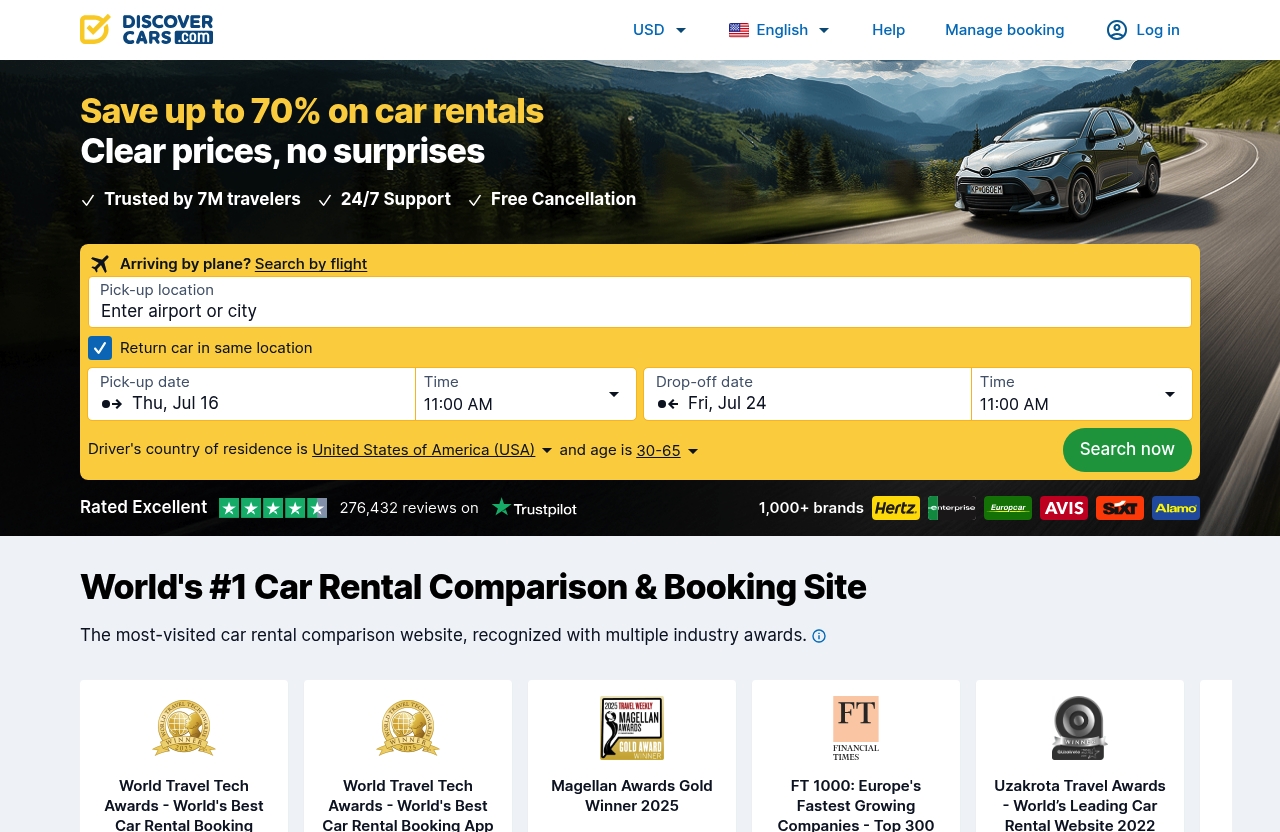
DiscoverCars’ official homepage highlights access to exclusive member-only deals, booking management in one place, a support/help center, language and currency selection, an affiliate program, and site navigation linking to “Our Guarantee” / a price guarantee page. I would still treat every listing as something to verify carefully before checkout, especially for borders, deposits, and insurance.
Why comparison booking helps
Comparison booking helps because Croatia has many variables. The lowest visible price may not be the best option once you account for deposit conditions, fuel policy, transmission, mileage, one-way routing, and cross-border permission.
A comparison site is especially useful when you want to compare:
- Economy vs compact vs SUV
- Manual vs automatic
- Airport vs city pickup
- One-way vs round trip
- Supplier ratings and terms
- Insurance and excess conditions
- Border and ferry restrictions
You can compare Croatia offers through DiscoverCars, then read the supplier conditions carefully before confirming.
What to check before confirming
Before booking, check the final rental conditions rather than relying only on the search results page.
Your pre-payment checklist:
- Pickup and drop-off location
- Opening hours and late-arrival policy
- Main driver age requirements
- License and IDP requirements
- Credit card and deposit rules
- Insurance excess
- Fuel policy
- Mileage policy
- One-way fee
- Extra driver fee
- Ferry permission
- Cross-border permission
- Montenegro and Bosnia and Herzegovina approval
- Roadside assistance terms
- Cancellation conditions
For cross-border trips, save written confirmation and bring it with you. At pickup, ask the agent to point to the border permission in the paperwork before you leave.
How affiliate booking should be presented ethically
This article may earn a commission if you book through the affiliate link, at no extra commentary or pressure from us. The recommendation is not to choose a car blindly; it is to compare options, read the supplier terms, and book the vehicle that actually fits your route.
For Croatia, that means the “best deal” is the one that balances price, deposit, insurance, pickup convenience, and permission for your intended roads. If you are crossing borders, written supplier approval matters more than a small difference in daily rate.
Final Recommendation: Best Booking Approach for Different Travelers
The best car rental in Croatia is not one universal company or vehicle. It is the booking that matches your itinerary, budget, driving confidence, and paperwork needs.
Use this quick decision matrix before you book:
| Traveler type | Best approach | Key warning |
|---|---|---|
| Budget travelers | Economy manual, round-trip rental, full-to-full fuel | Do not ignore deposit and parking |
| Families | Compact SUV or estate, airport pickup, extra luggage space | Confirm child seats and card limits |
| Border road-trippers | Supplier-approved car with written permission | Never cross without paperwork |
| Last-minute bookers | Compare broadly and stay flexible | Automatics and SUVs may be limited |
Budget travelers
Budget travelers should prioritize small cars, manual transmission, round-trip rentals, and city pickup after a car-free stay. This can reduce unused rental days and parking stress.
Do not chase the cheapest headline price without checking the deposit, insurance excess, fuel policy, and pickup hours. The cheapest car rental in Croatia is only cheap if the terms fit your trip.
Families
Families should usually choose comfort over the smallest possible car. A compact SUV, estate, or larger hatchback can make long drives easier and luggage loading less stressful.
Confirm child-seat availability, air conditioning, trunk space, and whether the security deposit fits your credit card limit. Airport pickup is often easiest when arriving with children and bags.
Road-trippers crossing borders
For road-trippers crossing into Montenegro or Bosnia and Herzegovina, choose the supplier based on written permission first. Verify insurance, border paperwork, roadside assistance, and fees directly with the rental company.
This is where car rental in Croatia requires the most caution. The final rental agreement must clearly support your route before you drive to the border.
Last-minute bookers
Last-minute bookers should stay flexible on vehicle type, pickup location, and transmission. If prices are high or availability is poor, consider renting for only part of the trip.
For example, you might use buses or ferries between major cities, then rent for Plitvice, Istria, Pelješac, or a short rural loop. That approach can still give you the freedom of car rental in Croatia without paying for unnecessary city parking days.
Free cancellation on most bookings · No hidden fees
FAQ
Is it a good idea to rent a car in Croatia?
Yes, it is often a good idea to rent a car in Croatia if you want a coastal road trip, national parks, rural stays, wineries, beaches, or cross-border travel. A car gives you flexibility that buses and ferries cannot always match.
It may be unnecessary for short city stays in Zagreb, Split, or Dubrovnik, especially if your accommodation has no parking. For ferry-heavy island trips, compare the cost and hassle of taking a car versus renting locally or going car-free.
What is the best car rental company in Croatia?
The best car rental company in Croatia depends on your pickup location, vehicle needs, insurance terms, deposit rules, and route. There is no single best supplier for every traveler.
For a city-and-coast trip, price and pickup convenience may matter most. For Montenegro or Bosnia and Herzegovina, the best choice is the supplier that confirms cross-border permission, insurance validity, and paperwork in writing.
Can Americans rent a car in Croatia?
Yes, many suppliers allow Americans to rent a car in Croatia if they meet age, license, and payment requirements. U.S. travelers should bring a valid physical driver’s license, passport, and a credit card in the main driver’s name.
Check whether the rental company requires an International Driving Permit. Requirements vary by supplier, and the final rental agreement should be reviewed before travel.
How expensive is car rental in Croatia?
Car rental in Croatia varies by season, location, vehicle class, transmission, insurance, deposit terms, and one-way routing. Summer coastal rentals are usually more competitive and availability can be limited, especially for automatics and family cars.
To control costs, book early for peak season, compare airport and city pickup, choose the smallest practical vehicle, avoid unnecessary add-ons, and read the fuel, deposit, insurance, and cross-border terms before checkout.
Related Reading
- Car Rental in Italy: The Complete 2026 Guide
- Car Rental in Greece 2026: Islands, Mainland, Ferries, and Booking Tips
- Iceland Car Rental Deposit Guide 2026: How Much to Expect and How to Avoid Surprise Holds