
Free cancellation on most bookings · No hidden fees
Car Rental in Italy: Quick Answer for 2026
Car rental in Italy is worth it when your trip goes beyond the big-city train network. If you want Tuscany hill towns, Puglia beaches, Sicily villages, Sardinia coves, rural wineries, or flexible coastal drives, having a car can turn a rigid itinerary into a much smoother trip.
For Rome, Florence, Venice, Milan, and other rail-friendly city breaks, a rental car is often more stress than convenience. Historic centers, parking rules, traffic cameras, and Italy ZTL zones can make urban driving expensive if you are not prepared.
Who should rent a car in Italy
You should strongly consider car rental in Italy if your itinerary includes countryside stays, agriturismos, small towns, beaches, vineyards, or multiple rural stops in one day. Trains are excellent between major cities, but they do not always serve the places travelers dream about most.
A car is especially useful for:
| Region or Route | Why a Car Helps |
|---|---|
| Tuscany | Hill towns, wineries, countryside hotels, scenic drives |
| Puglia | Beaches, trulli villages, masserie, flexible coastal routes |
| Sicily | Ancient sites, beaches, inland towns, multi-stop itineraries |
| Sardinia | Remote beaches and coastal viewpoints |
| Dolomites | Mountain passes, trailheads, lake towns |
| Umbria | Small villages and countryside stays |
If you are building a road trip, start with our related guides on Italy road trip planning and European driving tips to think through distances, parking, and pacing before you book.
When a car is not worth it
A car is usually not worth it if you are spending most of your time in Rome, Florence, Venice, Milan, Bologna, or Naples city centers. These places have strong rail connections, walkable historic cores, local transit, and limited parking.
City-center driving in historic Italian areas can be risky because ZTL cameras monitor restricted streets. Even a short wrong turn can lead to fines that arrive weeks or months after your trip through the rental company.
For a first visit focused on Rome, Florence, and Venice, trains are normally easier. You can always rent a car for two or three days later, once you leave the city.
Fast summary of costs, documents, and risks
The final cost of car rental in Italy depends on season, pickup location, transmission, insurance, deposit, fuel policy, driver age, and whether you return the vehicle to the same place. Summer and holiday periods usually bring higher demand, while shoulder seasons can be easier on availability.
Most foreign visitors need a valid driver’s license, passport, credit card in the main driver’s name, rental voucher, and sometimes an International Driving Permit. Rules can vary by nationality and supplier, so verify the current requirements with your rental company and official authorities before travel.
The biggest risks are ZTL violations, parking mistakes, damage disputes, unclear insurance terms, and unexpected deposits. All of these are manageable if you compare terms carefully and document the car at pickup.
How Much Does Car Rental in Italy Cost in 2026?
Car rental in Italy can range from very affordable off-season compact cars to expensive summer automatic vehicles in high-demand regions. Instead of focusing on one “average” price, it is smarter to understand what changes the final total.
The biggest pricing factors are location, season, transmission, rental length, insurance selection, mileage rules, and supplier deposit policy. The cheapest car rental in Italy is not always the best deal if the terms are restrictive or the deposit is unusually high.
Typical price range by season
Prices are usually lower outside peak travel months and higher during summer, school holidays, major festivals, and long weekends. Coastal regions, islands, and small-town branches may have limited vehicle supply, which can raise prices quickly when demand spikes.
If your dates are fixed, book early and choose a cancellation-friendly rate where available. That gives you the option to re-check prices later without locking yourself into a poor deal too soon.
For popular routes such as Tuscany in June, Sicily in August, or Sardinia in July, availability can matter as much as price. Waiting until the last minute may leave you with fewer automatic cars, larger vehicles, or less convenient pickup times.
Airport vs city pickup pricing
Airport pickup can sometimes cost more because of location-related fees, but it often gives you better availability, longer opening hours, and a more standardized process. For many travelers, the convenience is worth comparing against city branches.
City pickup can be useful if you spend a few car-free days in Rome, Florence, or Milan first. In that case, you avoid paying for parking while sightseeing and start your road trip only when you actually need the vehicle.
For example, car rental in Italy Rome can mean picking up at Rome Fiumicino Airport, Rome Ciampino, or a city branch near a rail station. Each option has different traffic, access, and return considerations.
Manual vs automatic price differences
Manual vs automatic car rental Italy decisions matter more than many first-time visitors expect. Manual cars are common in Europe and may be cheaper or more widely available, while automatics can sell out earlier and cost more.
If you are not fully comfortable driving manual on hills, roundabouts, and narrow streets, reserve an automatic. Italy’s roads can be beautiful, but hill towns, parking ramps, and coastal switchbacks are not ideal places to learn.
Always check the transmission type on the booking page and voucher. Do not assume a car is automatic unless it is clearly stated.
What is usually excluded from the base rate
The base rate may not include everything you care about. Common extras can include one-way fees, young-driver fees, additional driver charges, child seats, GPS, cross-border permission, snow chains, after-hours pickup, and optional insurance products.
Fuel policy also affects cost. A full-to-full policy is often easiest to understand: pick up full, return full, keep the receipt. Other policies may be convenient but require careful reading.
Deposits are separate from the rental price. The supplier may block an amount on your credit card to cover potential damage, fuel, tolls, fines, or other charges, and the amount depends on the supplier and coverage terms.
Best Places to Rent a Car in Italy
The best place for car rental in Italy depends on where your road trip begins and how comfortable you are with traffic. In general, airports are easier for first-time renters, while city locations can be efficient if you are starting after several car-free sightseeing days.
Think of the pickup point as part of the itinerary, not just a transaction. A cheaper branch can become a poor choice if it forces you through a ZTL-heavy city center or creates a stressful return.
Rome Fiumicino and Rome city
Rome Fiumicino is one of the most common starting points for central Italy road trips. It works well for Tuscany, Umbria, the Amalfi region, Abruzzo, and longer southbound routes.
Picking up at the airport lets you avoid driving directly inside Rome’s historic core. If you stay in Rome first, consider taking the train or taxi back to the airport or using a carefully chosen city branch outside the most restricted areas.
Car rental in Italy Rome is best planned around your exit route. Do not simply choose the lowest price without checking how you will leave the city and where you will return the car.
Milan Malpensa and Milan city
Milan Malpensa is convenient for the Italian Lakes, Piedmont, Liguria, the Dolomites, and northern road trips. Milan city branches can work well if you arrive by train and are heading out after a few days.
Car rental in Italy Milan also needs ZTL awareness. Milan has urban access restrictions, paid parking zones, and busy traffic patterns that can surprise visitors.
If your route starts in Lake Como, Lake Maggiore, or the Alps, an airport pickup can be simpler than navigating central Milan with luggage. Compare both options and read pickup instructions closely.
Florence, Venice, Naples, Bari, Palermo, Catania
Florence is popular for Tuscany, but its historic center has strict ZTL controls. Many travelers prefer picking up at Florence Airport or a branch positioned for an easier exit.
Venice is usually not a driving destination itself, but Venice Marco Polo Airport or Mestre can work well for the Dolomites, Veneto countryside, and northern Italy routes. Naples is a key gateway for Campania, but city traffic can be intense, so some visitors delay pickup until leaving the center.
Bari is excellent for Puglia, while Palermo and Catania are the main Sicily hubs. For islands, check ferry plans, one-way restrictions, and whether the rental company permits taking the car on ferries.
Why airport pickup is often easier
Airport branches often have more cars, clearer signage, wider operating hours, and staff used to international travelers. They are not always the cheapest, but they are often the least complicated.
For first-time visitors, airport pickup can reduce the risk of accidentally entering a restricted street immediately after collecting the car. You also avoid hauling luggage through a city to reach a small branch.
That said, compare the full cost. A city branch may be smarter if it saves several days of unused rental charges and parking fees.
Driving in Italy: What Foreign Visitors Need to Know
Driving in Italy is manageable if you prepare, but the rules and documents should not be treated casually. Car rental in Italy for Americans, UK visitors, Canadians, Australians, and other non-EU travelers often raises the same question: what license paperwork is actually required?
Use this section as practical travel guidance, not legal advice. Always confirm current rules with your rental company, your embassy or consulate, and official Italian or EU sources before departure.
Can you drive with a US, UK, or EU license?
EU license holders can generally drive in Italy using their valid EU license. UK and other foreign license holders should verify current post-Brexit or nationality-specific requirements before traveling.
US visitors can usually rent and drive with a valid US license, but that does not automatically mean the license alone satisfies every legal or rental-company requirement. Many travelers also carry an International Driving Permit to avoid problems at the counter or during a roadside check.
For car rental in Italy for Americans, the safest approach is to carry your valid US license plus an IDP if required or recommended for your situation. Also make sure the name on your license, passport, credit card, and reservation is consistent.
When you need an International Driving Permit (IDP)
An International Driving Permit Italy requirement can be confusing because travelers hear different advice from friends, rental counters, and online forums. In plain language, an IDP is a translation-style document that accompanies your physical driver’s license; it is not a standalone license.
If your license is not issued in the EU or is not in a format readily accepted locally, you may need an IDP. Rental companies may also set their own document requirements, even when legal interpretations differ.
Get the IDP before leaving your home country through an authorized issuer. Do not rely on unofficial online “international license” products that may not be valid.
Age requirements and additional driver rules
Minimum age rules vary by supplier, car category, and location. Young-driver fees may apply, and some premium or larger vehicles may have higher age thresholds.
Every person who plans to drive must be listed on the rental agreement. If an unlisted driver has an accident, your coverage may be affected.
Additional drivers usually need to present their own license and required documents at pickup. Do not assume a spouse or travel companion is automatically included.
Documents to carry at all times
Keep your passport, driver’s license, IDP if applicable, rental agreement, insurance documents, and emergency contact details accessible. Digital copies are useful, but you should also understand what physical documents the supplier expects.
I also recommend saving screenshots of your booking voucher, included coverage, deposit terms, fuel policy, and roadside assistance information before you leave the rental desk. If mobile data fails in a rural area, offline access matters.
During car rental in Italy, treat paperwork like part of your safety kit. It can help at toll booths, police checks, hotels with parking registration, and return inspections.
ZTL Zones in Italy: The Biggest Rental-Car Mistake
Italy ZTL zones are one of the most important things to understand before driving into historic towns. Many travelers have perfectly safe trips, return the car, fly home, and only later receive unexpected administrative charges and fines because they entered a restricted zone.
A ZTL mistake is not usually dramatic in the moment. There may be no barrier, no police officer, and no immediate warning beyond a sign and a camera.
What ZTL means
ZTL stands for “Zona a Traffico Limitato,” or limited traffic zone. These areas restrict vehicle access, usually to protect historic centers, reduce congestion, or reserve streets for residents, taxis, buses, deliveries, and authorized vehicles.
If your rental car is not authorized and you enter during restricted hours, cameras can record the license plate. The rental company may later identify you as the renter, and the fine process can continue after your trip.
This is why car rental in Italy requires a different mindset from driving in suburban North America or rural Australia. The road may look open, but legal access can change by time, day, vehicle type, and permit status.
How to spot ZTL signs
Look for signs that say “Zona Traffico Limitato,” often with a red circle symbol and text showing hours or exceptions. Some signs include electronic displays indicating whether the zone is active.
Do not follow local cars blindly. Residents, taxis, buses, delivery vehicles, or hotel guests with pre-authorized plates may be allowed where you are not.
Before driving to a hotel inside or near a historic center, ask the hotel for written parking and ZTL instructions. If they can register your plate temporarily, confirm the exact process and keep proof.
Cities where ZTLs are common
ZTLs are common in Florence, Rome, Milan, Bologna, Pisa, Siena, Palermo, and many other historic Italian cities and towns. Smaller places can be just as tricky because streets are narrow and signage may appear only shortly before the restricted area.
Florence is especially famous among travelers for ZTL problems because the historic core is compact and easy to enter accidentally. Siena, Pisa, and Bologna also require close attention near old-town streets.
In Rome, restrictions can vary by area and time. Milan has its own urban access rules, and Palermo’s historic areas can also be confusing for visitors.
How fines are issued and why they arrive later
ZTL fines are often camera-based. The camera captures the plate, the authority contacts the rental company, and the rental company provides renter information according to its process.
This can create two separate costs: the actual traffic fine and an administrative fee from the rental company for handling the notice. The timing can be delayed, which is why some travelers are surprised long after returning home.
The best prevention is simple: park outside historic centers, use official parking lots, walk or take transit in town, and use navigation apps cautiously. GPS can suggest a route that is physically possible but not legally permitted for your rental car.
Insurance and Coverage: How to Avoid Expensive Surprises
Car rental insurance Italy terms can feel intimidating, but the basics are understandable once you know the vocabulary. The goal is not to buy every product out of fear; it is to know what is included, what your financial exposure is, and what proof you need.
Product names differ by supplier, country, and booking platform. Always read the voucher and the rental agreement before signing.
CDW, theft protection, and liability basics
CDW stands for Collision Damage Waiver. It is not exactly the same as full insurance; it usually limits your responsibility for damage to the rental vehicle, subject to exclusions and an excess.
Theft protection may limit your responsibility if the vehicle is stolen, again subject to terms. Liability coverage relates to damage or injury to others, but details and legal frameworks vary.
When reviewing car rental in Italy options, check what is included in the base rate and what is optional. Do not rely only on the headline price.
Excess/deductible explained
The excess, also called a deductible, is the amount you may be responsible for if there is covered damage or theft. For example, if a contract says damage is covered above a certain excess, you may still be liable up to that amount.
Some travelers buy extra coverage to reduce or reimburse this exposure. Others rely on credit card coverage or third-party policies. Each approach has conditions, exclusions, and documentation requirements.
Ask yourself two practical questions: how much can the rental company block on my card, and how much could I be out of pocket if something happens? Those answers matter more than the name of the product.
Why many travelers use a credit card for the deposit
Many rental companies require a credit card in the main driver’s name for the security deposit. Debit cards may not be accepted, or they may trigger different conditions.
A credit card also gives some travelers access to rental car coverage benefits, depending on the card and country. You must confirm this with your card issuer before booking because exclusions can apply in Italy or for certain vehicle types.
If you plan to use credit card coverage, bring written proof of benefits and understand whether you must decline the supplier’s optional CDW. The counter is not the place to start reading your card guide for the first time.
What to check before accepting extra insurance at the desk
Before accepting extra insurance, compare it against what you already booked. Check the included coverage, excess, deposit amount, exclusions, roadside assistance, tires, glass, undercarriage, roof, and lost-key rules.
Ask for any changes in writing. If a staff member says something important verbally, request that it be reflected on the agreement before you sign.
Take screenshots of coverage terms and keep copies of the rental agreement and insurance documents. For car rental in Italy, documentation is your best defense against misunderstandings later.
Free cancellation on most bookings · No hidden fees
Picking the Right Car for Italy
The best car rental in Italy for most travelers is not the biggest or most powerful vehicle. It is the one that fits your luggage, your driving ability, and the roads you will actually use.
Italian streets, old villages, parking garages, and hotel driveways can be tight. A compact car can save stress every single day.
Manual vs automatic
Choose manual only if you are confident driving stick shift in real-world conditions. Hills, tight parking, roundabouts, and stop-start traffic can make manual driving more demanding than it seems on paper.
Choose automatic if you are used to automatic at home or if your trip includes challenging roads like Amalfi, hill towns, or mountain passes. Reserve early because automatic availability can be limited.
Manual vs automatic car rental Italy choices are also about fatigue. On a long road trip, comfort and confidence are worth paying for.
Compact cars vs SUVs
Compact cars are often the smartest choice for Italian cities, villages, and countryside roads. They are easier to park, easier to maneuver, and more suitable for narrow lanes.
SUVs can be useful for families with luggage or mountain itineraries, but they are not always ideal for old-town parking. A larger vehicle may also feel cumbersome on coastal roads and in small villages.
If you need more room, consider a compact wagon or small crossover instead of automatically choosing a large SUV.
Boot space for luggage and road trips
European rental cars can have smaller luggage areas than travelers expect. A “compact” may be fine for two people with carry-ons but uncomfortable for four adults with large suitcases.
Check luggage capacity carefully, and remember that visible bags can attract theft. Ideally, everything should fit in the boot or covered cargo area.
For multi-city car rental in Italy, pack lighter than you think you need. Soft-sided luggage is easier to fit than hard-shell suitcases.
Convertible and luxury options for scenic routes
A convertible can be fun for scenic routes in Tuscany, Sardinia, or coastal areas, but it is not always practical. Heat, luggage limits, security, and parking can reduce the romance quickly.
Luxury cars can also bring higher deposits, stricter age requirements, and more anxiety in tight spaces. If you choose one, read the terms carefully and inspect it thoroughly.
For most travelers, a comfortable compact or midsize automatic is the sweet spot between enjoyment and practicality.
Where to Drive and Where to Avoid Driving
Car rental in Italy shines when it helps you reach places that trains, buses, and ferries serve poorly. It becomes frustrating when you try to use it in dense city centers where public transport is easier.
Build your itinerary around the car’s strengths: countryside freedom, scenic routes, and flexible timing.
Tuscany road trips
Tuscany is one of the best regions for renting a car. Hill towns, vineyards, thermal baths, country hotels, and photo stops are much easier with your own vehicle.
A classic route might include Florence airport pickup, Chianti, Siena, Val d’Orcia, Montepulciano, Pienza, and perhaps Lucca or Pisa. Just avoid driving into restricted historic centers unless you have confirmed legal parking access.
For more planning ideas, see our Tuscany road trip resources before choosing your pickup and drop-off points.
Amalfi Coast and mountain roads
The Amalfi Coast is beautiful but not always relaxing to drive. Roads are narrow, traffic can be heavy, parking is limited, and buses, scooters, and pedestrians all share tight space.
A car can be useful if you are staying outside the main towns or exploring inland Campania. But for Positano, Amalfi, Capri, and Sorrento-focused trips, ferries, drivers, or transfers may be easier.
If you do drive, choose a small car and plan parking before arrival. Do not assume your hotel has convenient parking.
Sicily and Sardinia itineraries
Sicily and Sardinia are excellent car destinations because many beaches, archaeological sites, villages, and viewpoints are easier by road. Public transport exists, but it may not match the timing or flexibility you want.
In Sicily, Catania works well for eastern routes including Taormina, Mount Etna, Syracuse, and Noto. Palermo is useful for western Sicily, Cefalù, Trapani, Marsala, and nearby coastal routes.
In Sardinia, a car is often essential for beaches and scenic drives. Check ferry and island rules carefully if combining regions.
Areas where trains, ferries, or transfers are better
Do not rent a car just to move between Rome, Florence, Venice, Milan, and Bologna. High-speed trains are usually faster, easier, and less stressful for these city pairs.
Venice itself is car-free in the historic lagoon area, so a rental car is only useful before or after your stay. The same logic applies to island trips where ferries and local transport dominate.
For major city breaks, save car rental in Italy for the days when you leave the rail corridor. This usually lowers cost and reduces parking headaches.
How to Book a Car in Italy the Smart Way
Smart booking is about comparing the full terms, not just finding the lowest headline price. A cheap car can become expensive if it has poor fuel terms, a difficult pickup location, a high deposit, or coverage you do not understand.
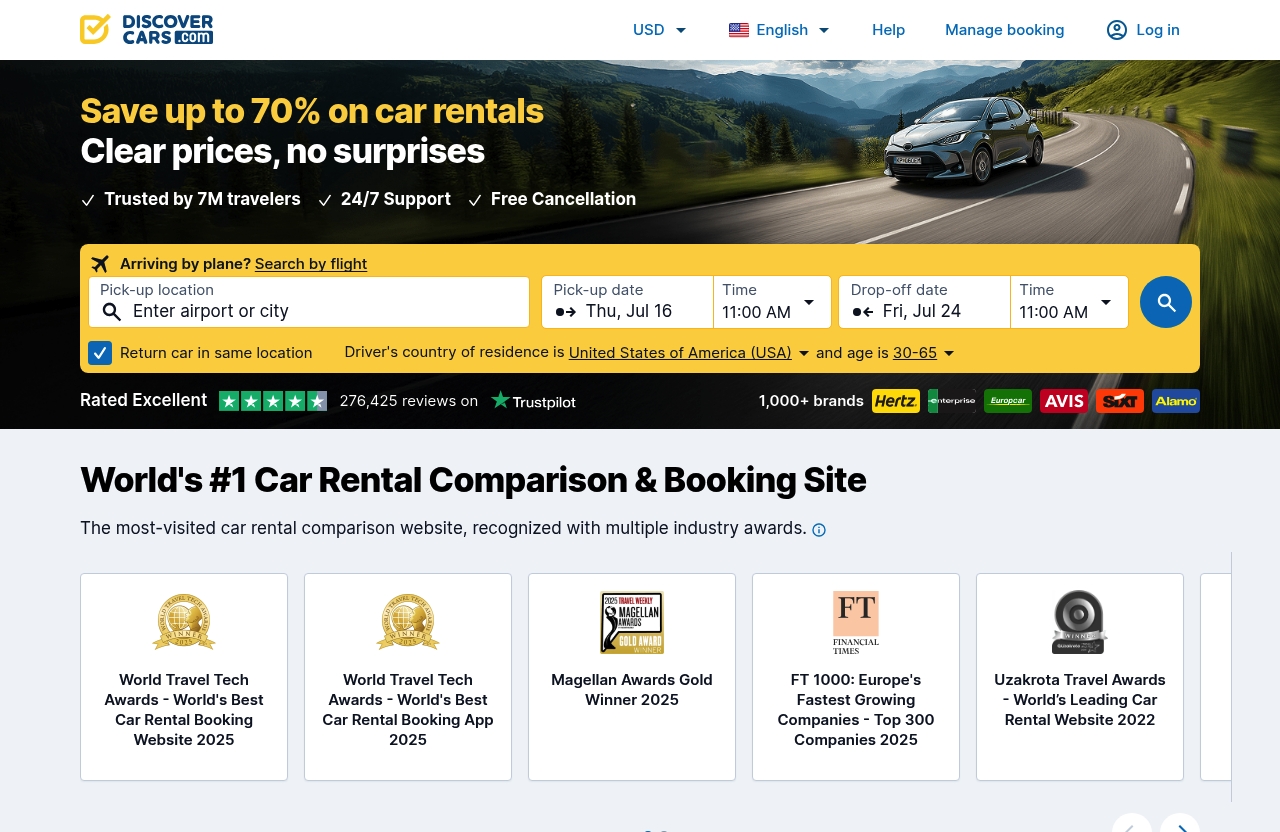
This is where a comparison platform can help you see multiple suppliers in one place. For Italy rentals, I recommend comparing options through DiscoverCars, which promotes comparing car rental deals, free cancellation, member-only deals, and managing bookings in one place.
Compare suppliers before you book
Compare suppliers by price, rating, pickup location, opening hours, deposit, included mileage, fuel policy, and coverage terms. Do not choose based on the logo alone.
The best car rental in Italy is the one that matches your route and risk tolerance. A well-reviewed airport supplier with clear terms may be better than a slightly cheaper option that creates confusion.
Read recent reviews with context. One bad review does not prove a company is terrible, but repeated complaints about deposits, shuttles, or damage disputes deserve attention.
Choose cancellation-friendly rates
Cancellation flexibility is valuable because Italy rental prices and availability can change. If your plans are not final, look for rates that clearly explain cancellation terms before you reserve.
DiscoverCars highlights “Best Car Rental Deals with Free Cancellation, Compare & Save!” on its homepage, but you should still read the specific booking conditions. Not every rate or supplier term is identical.
A practical strategy is to reserve early, keep your confirmation organized, and re-check options as your trip approaches. If you find a better cancellation-friendly deal, you may be able to adjust your plan according to the terms.
Check mileage, fuel policy, and deposit
Before booking, confirm whether mileage is unlimited or capped. Limited mileage can be fine for short local rentals but risky for road trips across Tuscany, Puglia, Sicily, or Sardinia.
Check the fuel policy and return expectations. Full-to-full is straightforward, but only if you refuel near the return location and keep the receipt.
Deposit terms matter because the blocked amount must fit your credit limit. If you are searching for rent a car Italy no deposit options, be cautious: truly no-deposit rentals may be limited, location-specific, or tied to particular coverage conditions, so read the full terms carefully.
Inspect the car and photograph everything at pickup
At pickup, inspect the car before leaving the lot. Photograph all sides, wheels, windshield, mirrors, roof, interior, fuel gauge, mileage, and any existing damage.
Use a timestamped video if possible. Make sure scratches, dents, tire damage, and glass chips are marked on the rental agreement before you drive away.
Keep copies of the agreement, insurance documents, and return receipt. For car rental in Italy, a five-minute inspection can save hours of dispute later.
Italy Car Rental Tips by Traveler Type
Different travelers have different pain points. Car rental in Italy for Americans is often about documents and transmission, while families worry more about luggage, child seats, and parking.
Use the tips below to match your booking to your travel style.
For Americans
Bring your valid US license, passport, credit card in the main driver’s name, and an International Driving Permit if required or recommended for your situation. Confirm requirements with the rental company before booking and again before travel.
Reserve an automatic if you do not drive manual regularly. Automatics can be less available, so waiting until arrival is risky.
Remember that road signs, lane discipline, fuel types, and parking systems may feel different. Build in a calm first driving day instead of landing overnight and immediately tackling mountain roads.
For first-time Europe drivers
Start outside the city center if possible. Airport pickups, suburban branches, or rail-station-adjacent locations with clear exit routes can make the first hour easier.
Learn the basics of roundabouts, toll roads, speed cameras, ZTL signs, and parking colors before you arrive. Use navigation, but do not obey it blindly if it sends you toward a restricted zone.
For a first car rental in Italy, choose a small automatic, avoid night pickups, and keep the first day’s drive short.
For families
Book a car with enough boot space for luggage and strollers. Do not assume a compact car will fit four people plus large suitcases.
Reserve child seats in advance if you need them, but consider bringing your own approved travel seat if that is practical. Availability and seat condition can vary.
Families should also prioritize easy parking. A beautiful old-town apartment may be less convenient if it requires long walks with bags and children from a remote parking garage.
For road-trippers with multiple cities
Avoid keeping the car during big-city stays. Structure the trip so you rent after city sightseeing and return before entering the next major city.
One-way rentals can save time, but they may add fees or limit supplier options. Compare the total cost against train tickets and backtracking.
For multi-city car rental in Italy, map parking before hotels, not after arrival. This is especially important in Florence, Rome, Naples, Palermo, and smaller walled towns.
Common Car Rental Scams and Mistakes in Italy
Most Italy rentals go smoothly, but the common mistakes are predictable. You can avoid many problems with clear paperwork, careful inspection, and a realistic return plan.
The goal is not to be suspicious of everyone. It is to leave less room for confusion.
Damage disputes
Damage disputes often happen when existing scratches or wheel marks were not documented at pickup. Italy’s narrow streets and tight parking also make minor marks more likely.
Photograph the car thoroughly in good light. Pay special attention to wheels, bumpers, mirrors, glass, roof, and under-door areas.
At return, ask for written confirmation of condition if available. If the return is unattended, take another timestamped video in the drop-off area.
Fuel policy confusion
Fuel misunderstandings are easy to avoid if you know the policy. Full-to-full means return it full, ideally with a receipt from a nearby station.
Do not wait until the final few minutes to refuel. Airport access roads and city traffic can make the last stop more stressful than expected.
Take a photo of the fuel gauge and mileage at return. Keep the receipt until your deposit is released.
Extra insurance pressure
Some travelers feel pressured at the desk to buy additional insurance. Sometimes the offer is legitimate and useful; other times it may duplicate coverage you already have.
Before you arrive, know your included coverage, excess, deposit, and any third-party or credit card benefits. Bring proof if you plan to decline optional products.
If you accept extra coverage, make sure the price and terms are written clearly on the contract. Do not sign a document you do not understand.
Late-return and cleaning fees
Return times matter. A delay that seems small can create additional charges depending on the contract and grace period.
Plan your return with traffic, refueling, luggage unloading, shuttle time, and inspection time included. Airport returns can take longer than expected during peak periods.
Also return the car reasonably clean. Normal use is expected, but excessive sand, mud, food spills, or trash can create problems.
Free cancellation on most bookings · No hidden fees
FAQ
Is it a good idea to rent a car in Italy?
Yes, car rental in Italy is a good idea for rural regions, coast drives, countryside hotels, islands, and multi-stop itineraries. It is especially useful in Tuscany, Puglia, Sicily, Sardinia, Umbria, and the Dolomites.
It is not usually necessary for Rome, Florence, Venice, Milan, and other major city breaks. The tradeoff is freedom versus parking stress, ZTL risk, traffic, and extra cost.
Can I drive a rental car in Italy with a US license?
Many US visitors can rent and drive in Italy with a valid US license, but you should confirm whether an International Driving Permit is required by your rental company and your specific legal situation. The IDP is used alongside your license, not instead of it.
For car rental in Italy for Americans, the practical approach is to bring your US license, passport, credit card, rental voucher, and IDP if required or recommended. Verify current rules before travel.
What is the most trusted car rental in Italy?
There is no single universally best car rental in Italy for every route, budget, and traveler. Trusted choices are usually major, well-reviewed suppliers and comparison platforms that show transparent terms, clear policies, and accessible support.
Look at recent reviews, deposit terms, pickup logistics, coverage, fuel policy, and cancellation conditions. A trusted rental is one you fully understand before you reserve.
What is the cheapest way to rent a car in Italy?
The cheapest way to find car rental in Italy is to compare early, stay flexible, choose a compact or manual car if suitable, avoid unnecessary extras, and check both airport and city pickup options. Off-peak dates usually give you more room to compare.
Use cancellation-friendly rates where available so you can re-check prices and rebook if a better option appears under the terms. Always compare the full cost, not just the headline price.
Final Verdict: Is Car Rental in Italy Worth It?
Car rental in Italy is absolutely worth it for the right trip. If your dream itinerary includes countryside roads, hill towns, beaches, vineyards, remote villages, or flexible day trips, a car can be the difference between seeing Italy and truly exploring it.
If your trip is mostly Rome, Florence, Venice, Milan, and high-speed rail, skip the car until you leave the city network. You will save money, avoid ZTL stress, and enjoy the cities more on foot and by transit.
Best itinerary types for renting
Rent a car for Tuscany loops, Puglia coast routes, Sicily or Sardinia road trips, Dolomites mountain itineraries, and agriturismo stays. These are the trips where public transport can limit your timing and reach.
Avoid renting for dense urban sightseeing unless you have a specific reason and a confirmed parking plan. Historic centers are not where rental cars shine.
The smartest approach is often hybrid: trains between major cities, then car rental in Italy for the rural or coastal segment.
When to book early
Book early if you need an automatic, a family-size vehicle, an island rental, a summer trip, or a one-way route. These categories can become limited as travel dates approach.
Early booking also gives you time to compare cancellation-friendly rates, read terms, and confirm documents. Rushed bookings are where expensive mistakes happen.
If your plans change, use the cancellation terms you selected rather than waiting until the counter to solve problems.
Checklist before clicking reserve
Before you reserve, confirm:
- Pickup and return location are convenient and outside risky ZTL areas where possible
- Transmission is manual or automatic as intended
- Mileage policy fits your route
- Fuel policy is clear
- Deposit amount works with your credit card
- Insurance, CDW, theft protection, liability, and excess are understood
- IDP and license requirements are confirmed
- Additional drivers are listed correctly
- Cancellation terms are acceptable
- Pickup hours match your flight or train arrival
For a confident booking, compare suppliers, filter for cancellation-friendly options, and read the full terms before you commit. You can start by comparing Italy rental deals through DiscoverCars, then choose the car and supplier that best match your route, budget, and comfort level.
Related Reading
- renting a car in iceland complete guide
- Europe road trip planning tips
- best travel insurance for road trips