

Renting a car in Crete is one of those travel decisions that can completely change the shape of your trip. Crete is not a tiny “walk the harbor, take one bus to the beach” island. It is Greece’s largest island, with long driving distances, mountain roads, scattered villages, remote beaches, and two major airport gateways.
My honest take: if you want freedom, variety, and efficient travel between regions, renting a car in Crete is usually worth it. If you are staying in one resort town and only planning organized tours, you may not need one.
Free cancellation on most bookings · No hidden fees
Quick verdict: should you rent a car in Crete?
For most independent travelers, yes. Renting a car in Crete makes the island easier, richer, and less dependent on bus schedules or tour pickup times.
That does not mean everyone needs a car for every day. The smartest choice depends on where you are staying, how much ground you want to cover, and whether you are comfortable driving narrow local roads.
Who absolutely should rent
You should strongly consider renting a car in Crete if your trip includes beach hopping, mountain villages, archaeological sites, wineries, or more than one base. The island rewards curiosity, and many of the best stops are not perfectly aligned with public transport.
A rental car is especially useful if you want to:
- Visit beaches outside the main resort zones
- Drive between Chania, Rethymno, Heraklion, and the south coast
- Stay in rural guesthouses or smaller villages
- Reach trailheads, viewpoints, monasteries, and tavernas
- Avoid planning your days around bus timetables
- Travel with kids, luggage, beach gear, or older relatives
If your arrival flight lands late or your accommodation is outside town, having a car from day one can also make the airport-to-itinerary transition smoother.
Who can skip a car
You can skip renting a car in Crete if you are staying in central Chania, Heraklion, Rethymno, or a resort area and plan to keep things simple. For a low-effort holiday with beach days, boat trips, taxis, and a few organized excursions, a car may become more hassle than help.
You may also prefer not to rent if you dislike mountain driving, do not want to manage parking, or are nervous about insurance excesses and deposit holds. In that case, choose a walkable base and use transfers for specific outings.
The short answer for first-time visitors
For a first visit, I usually recommend renting a car in Crete for at least part of the trip. You do not necessarily need it while staying in the old town of Chania or Heraklion, but you will probably appreciate it for day trips and regional exploring.
A practical compromise is to spend the first night or two car-free in a city, then pick up a rental for the road-trip portion. This keeps parking stress low while still giving you the freedom Crete is best known for.
Why Crete is different from many Greek islands
Renting a car in Crete is a different calculation than renting one on a smaller island like Milos, Paros, or Naxos. On many islands, distances are short enough that buses, taxis, scooters, or occasional transfers can cover most needs.
Crete is bigger, more varied, and more spread out. The distance between places changes how you plan your days.
Crete’s size and geography
Crete has four major regional areas travelers commonly move through: Chania in the west, Rethymno in the center-west, Heraklion in the center, and Lasithi in the east. The north coast has the main highway and larger towns, while the south coast is more rugged and slower to reach.
The mountains are not just scenery; they shape your routes. A beach that looks close on the map may require a winding mountain descent, and two villages separated by a short straight-line distance can take much longer by road.
This is why renting a car in Crete often feels less like a luxury and more like a tool. It lets you link places that would otherwise require awkward transfers.
Why buses are not enough for many itineraries
Crete does have intercity buses, and they can be useful between major towns. If you are traveling from Chania to Rethymno or Heraklion, public transport may work well enough.
The limitation appears when you want flexibility. Buses may not run frequently to smaller beaches, mountain villages, trailheads, or rural accommodations. Some routes are seasonal, some require connections, and some do not fit a relaxed sightseeing pace.
For travelers comparing bus-only plans with car rental in Crete, the real question is not “Can I get there?” but “Can I get there when I want, stay as long as I want, and continue somewhere else afterward?”
How distance changes the travel experience
Crete trips are often built around basecamps. You might spend several nights near Chania for western beaches, then move toward Heraklion for Knossos and central Crete, or continue east for Agios Nikolaos and Lasithi.
Renting a car in Crete makes that style of travel much easier. Instead of treating each transfer as dead time, you can turn travel days into scenic routes with village lunches, monastery stops, and detours to beaches.
This is one of the biggest differences between Crete and smaller islands: the journey itself can become part of the trip, but only if you have enough control over your route.
How much does renting a car in Crete cost in 2026?
Renting a car in Crete cost depends heavily on season, pickup location, car type, insurance choices, driver profile, and booking timing. It is not useful to quote one universal price because rates can move significantly between spring, peak summer, and shoulder season.
The more important point is this: the headline daily rate is only part of the real cost. You need to compare the total rental conditions before deciding whether a deal is genuinely good.
Typical price drivers
Several factors affect the final cost of renting a car in Crete:
- Travel season
- Pickup and drop-off location
- Manual vs automatic transmission
- Car size and category
- Driver age and license history
- Insurance package and excess amount
- Deposit requirements
- Fuel policy
- One-way rental rules
- Late pickup, early return, or after-hours fees
Automatic cars often cost more than manuals because supply can be more limited. Larger cars, SUVs, and vans also tend to price higher than compact models, especially when family travel demand rises.
If you are researching “renting a car in Crete reddit” threads, you will often see travelers disagree about whether prices are cheap or expensive. That is because their trips may involve different months, airports, insurance choices, and supplier policies.
When rates rise
Rates usually rise when demand rises. Summer, school-holiday periods, last-minute bookings, and airport pickups can all push the total cost higher.
Airport convenience is valuable, but it can come with extra charges depending on the supplier and booking terms. That does not mean airport pickup is a bad choice; it simply means you should compare the full price against city-center options.
Renting a car in Crete also becomes more expensive when availability tightens. If you need an automatic, a child seat, a larger vehicle, or a specific pickup time, booking earlier gives you more choice.
What’s usually included vs extra
What is included varies by rental company, so read the policy instead of assuming. A base rental may include basic mandatory cover, but that does not always mean you are protected from a large excess if damage occurs.
Common extras or policy points to check include:
- Collision damage excess
- Theft protection excess
- Additional driver fees
- Young driver surcharge
- Child seats
- GPS or navigation equipment
- Cross-region or ferry restrictions
- Roadside assistance terms
- After-hours pickup
- Fuel refill charges
- Cleaning or sand-related fees
Before booking, compare the total cost with the level of cover you actually want. A cheaper upfront price can become less attractive if the deposit is high, the excess is large, or important items like tires and glass are excluded.
Best places to pick up a rental car in Crete
The best pickup location depends on your arrival airport, first base, and comfort level. For many travelers, airport pickup is the simplest option because it lets you leave immediately for your accommodation or first destination.
That said, city-center pickup can make sense if you are spending your first nights in a walkable town where parking is limited.
Heraklion Airport
Heraklion Airport is the busiest gateway for many central and eastern Crete itineraries. If your plan includes Knossos, Heraklion city, Agios Nikolaos, Elounda, Malia, Hersonissos, or the south-central coast, starting here can be efficient.
Search demand for car rental crete heraklion airport is high because many travelers want to land, collect the car, and drive directly to their base. This works well if your accommodation has parking and you are comfortable driving after your flight.
If you are looking for the best car rental crete heraklion airport option, focus less on the brand name alone and more on policy clarity. Check supplier reviews, deposit terms, fuel policy, office location, shuttle instructions, and after-hours rules.
Chania Airport
Chania Airport is the natural pickup point for western Crete. It works well for travelers staying in Chania, Kissamos, Falassarna, Paleochora, or other west-side bases.
Searches for car rental crete chania airport and car rent crete chania usually come from travelers planning beaches, old-town time, and western road trips. For this region, having a car can be especially useful if you want to explore beyond Chania town.
If your first nights are inside Chania Old Town, consider whether you really want the car immediately. Parking can be inconvenient near the historic center, so picking up after your city stay may be calmer.
City-center pickups vs airport pickups
Airport pickups are convenient when your itinerary starts right away. You avoid arranging a transfer, and you can drive straight to a village, beach town, or rural accommodation.
City-center pickups can be better if you are staying somewhere parking is difficult. They may also suit travelers who want to spend a couple of days walking, eating, and adjusting before driving.
When comparing pickup points, look at:
- Total rental cost, not just daily rate
- Airport surcharge or location fee
- Shuttle vs terminal pickup
- Office opening hours
- Parking situation at your accommodation
- Whether one-way drop-off is allowed
- How tired you will be after arrival
Renting a car in Crete should make your trip easier. If your first day involves jet lag, a late arrival, and a tight old-town parking situation, waiting until the next morning can be the smarter move.
What it’s like to drive in Crete
Driving in Crete is generally manageable for confident drivers, but it is not always relaxing. The main roads are straightforward enough, while mountain roads and village lanes require patience.
The key is to drive defensively, avoid rushing, and choose a car that fits the roads you will actually use.
Road quality and mountain roads
The north coast highway connects the major towns and is the easiest long-distance route for most travelers. Conditions vary, but this is usually the fastest way to move between Chania, Rethymno, Heraklion, and eastern Crete.
Mountain and south-coast roads are a different experience. Expect bends, elevation changes, occasional rough patches, narrow sections, and limited shoulders. Some roads feel perfectly fine; others demand concentration.
Renting a car in Crete is most rewarding on these routes, but only if you respect the terrain. Do not plan too many ambitious drives in one day, especially in hot weather or after a long hike.
Village driving and parking
Village streets can be narrow, and parked cars may reduce the usable road space even further. In older settlements, a compact car is often easier than a larger SUV.
Parking is one of the real annoyances of car rental in Crete. In towns such as Chania, Rethymno, and Heraklion, central parking can be limited, especially in high season. Beach parking can also fill early at popular spots.
A good habit is to park slightly outside the busiest area and walk in. This is less stressful than trying to squeeze through crowded lanes looking for the perfect space.
Speed, local habits, and caution points
Local driving habits may feel more assertive than what you are used to. You may see quick overtakes, scooters weaving through traffic, buses on narrow roads, and drivers using the shoulder differently than expected.
Also watch for:
- Blind corners
- Goats or sheep on rural roads
- Gravel near beach access roads
- Tour buses on mountain bends
- Scooters and motorbikes in towns
- Sudden stops near viewpoints
- Pedestrians stepping into village roads
None of this should scare you away from renting a car in Crete. It simply means you should slow down, leave space, and avoid driving like you are trying to “complete” the island.
Free cancellation on most bookings · No hidden fees
Documents and license requirements
You need a valid driving license to rent and drive in Crete. The details can vary depending on your nationality, the rental supplier, and current policy interpretation, so confirm requirements before booking.
Do not rely only on forum comments or old travel advice. License rules and company procedures can differ.
Valid driving license
Your license should be valid, readable, and held for the minimum period required by the rental company. Some suppliers require the main driver to have held a license for a specific number of years.
The name on the license should match the rental booking and payment card. If there is a mismatch, ask the supplier before arrival rather than trying to solve it at the counter.
Renting a car in Crete is much smoother when every document matches exactly. Bring the physical license, not just a digital copy, unless the supplier clearly says otherwise.
When an International Driving Permit may be needed
Some travelers may need an International Driving Permit, often called an IDP, in addition to their home license. Whether this applies can depend on your nationality, license language, and the rental company’s policy.
This is an area where you should be cautious. A traveler from one country may be accepted with a standard license, while another may be asked for an IDP. Even travelers with similar licenses can encounter different counter rules by supplier.
If you are unsure, contact the rental company before booking and keep the written answer. It is much easier to obtain an IDP before departure than to argue at the pickup desk.
Passport, payment card, and driver age rules
You will typically need your passport or ID, driving license, and a payment card in the main driver’s name. Many companies require a credit card for the deposit hold, though some may offer alternatives under specific conditions.
Age rules also matter. Young drivers may face surcharges or category restrictions, while older drivers should check whether the supplier has upper age limits or extra documentation requirements.
Before finalizing renting a car in Crete, verify:
- Minimum and maximum driver age
- License-holding period
- IDP requirement
- Credit card requirement
- Deposit amount
- Additional driver rules
- Name matching across documents
These checks are boring, but they prevent the most expensive kind of travel problem: arriving and not being allowed to take the car.
Insurance, deposits, and hidden fees to watch
This is where many travelers get caught out. Renting a car in Crete can look cheap at the search-results stage, but the real value depends on insurance, deposits, excesses, and exclusions.
I would rather pay a fair total price with clear terms than chase the lowest headline rate and spend the first hour of vacation arguing about cover.
Collision damage and excess
Basic collision damage cover may reduce your liability, but it often comes with an excess. The excess is the amount you may be responsible for if the car is damaged.
A low daily rate with a high excess is not automatically a bad deal, but you should know what you are accepting. If the excess makes you uncomfortable, compare options for extra cover.
Pay attention to whether damage to glass, tires, wheels, mirrors, roof, underbody, and interior is covered. These areas are commonly excluded or treated differently, and Crete’s mix of gravel pull-offs, beach roads, and tight streets makes the details relevant.
Credit card hold/deposit
Most rental companies place a deposit hold on the main driver’s card. This is not usually a charge, but it reduces your available credit until released.
The size of the deposit can vary by supplier, car category, and insurance choice. Some rentals with extra cover may have different deposit conditions, but you need to read the exact policy.
Before booking, ask yourself:
- Is the required card accepted?
- Is the card in the main driver’s name?
- Is there enough available credit?
- Is it a credit card, not only a debit card?
- What happens if the deposit cannot be blocked?
Renting a car in Crete becomes stressful fast if your payment card does not meet the supplier’s rules. Check this before you travel, not at the desk.
Glass, tires, underbody, and roadside assistance
Crete’s roads are not extreme if you stay on normal routes, but the island does have rough shoulders, steep approaches, gravel lots, and narrow village turns. That makes exclusions important.
Glass and tire damage can happen from stones, potholes, or tight parking situations. Underbody damage may be excluded if you drive on unsuitable roads. Roadside assistance may also have conditions, especially if the car is taken somewhere not permitted by the rental agreement.
Hidden-fee risks to check include:
- Fuel not returned at the required level
- Cleaning fees for excessive sand or dirt
- Late return fees
- Out-of-hours pickup or drop-off fees
- Extra driver charges
- Baby seat or booster seat fees
- Cross-border or ferry restrictions
- One-way drop-off fees
- Administrative fees after fines or toll-related issues
The safe approach is simple: compare the full rental conditions, not just the cheapest visible price.
How to book safely: our recommended booking strategy
A safe booking strategy for renting a car in Crete starts with comparison, then moves into policy checking. Do not choose only by the lowest number on the screen.
The best rental is the one that fits your route, your risk tolerance, your documents, and your arrival plan.
Use a comparison site first
I like starting with a comparison platform because it gives you a broad view of available car categories, pickup locations, and supplier terms. For Crete, this is especially useful because airport, city, manual, automatic, compact, SUV, and insurance differences can change the decision.
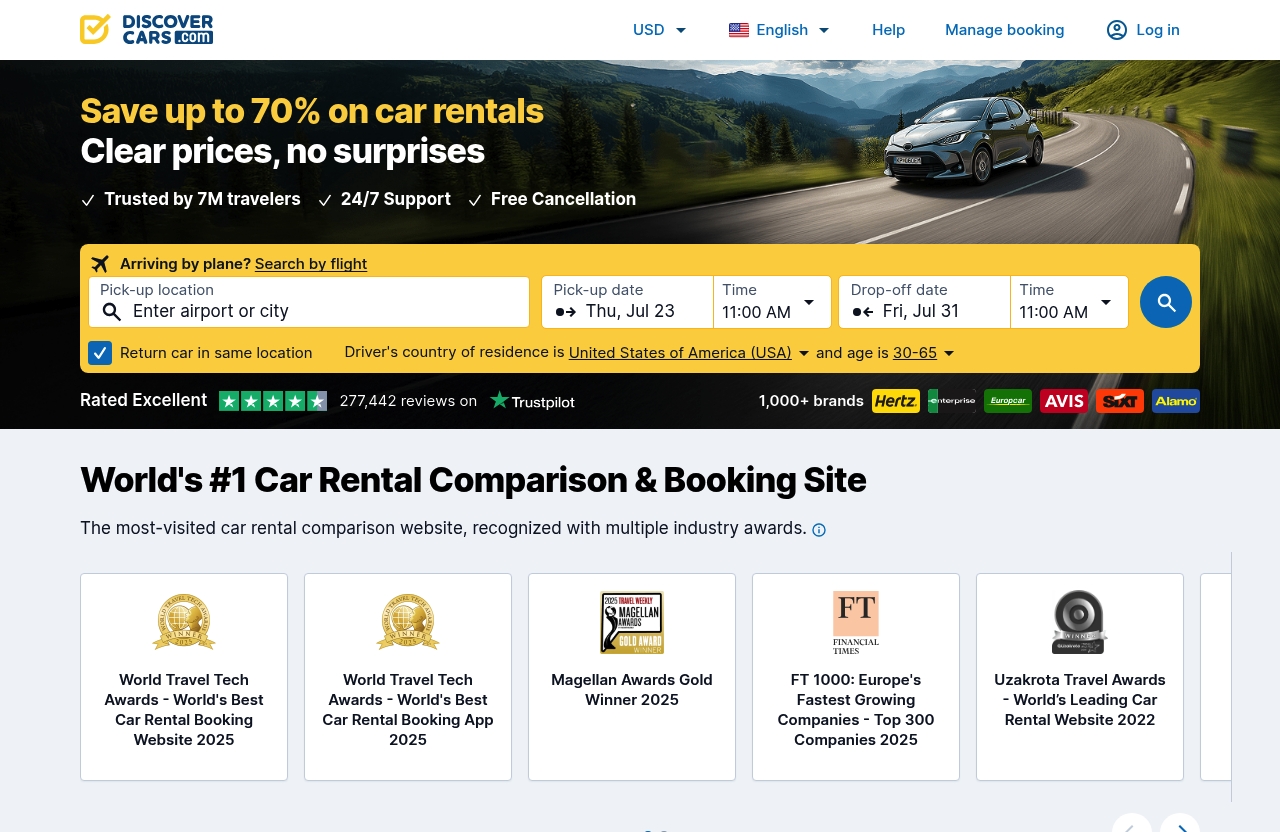
One option is DiscoverCars, which presents itself as a car rental comparison and booking site with free cancellation highlighted on its homepage. Its site also includes areas such as manage booking, help center, reviews, locations, suppliers list, and van and SUV rental.
I would use a platform like that as a starting point, not as a reason to stop thinking. Compare the offers, then read the actual supplier policy before booking.
Check supplier ratings and policies
After you shortlist a few options, look at supplier ratings and recent auto rentals Crete reviews. Recent reviews matter because counter experience, shuttle efficiency, deposit handling, and vehicle condition can vary over time.
Look especially for comments about:
- Pickup wait times
- Pressure to buy extra insurance
- Deposit release issues
- Car condition
- Fuel disputes
- Damage inspection process
- Clarity of airport pickup instructions
- Helpfulness during delays
If you are comparing car rental crete heraklion airport or car rental crete chania airport offers, confirm whether the desk is inside the terminal, nearby, or shuttle-based. None of those is automatically bad, but you should know what to expect when you land.
Inspect the car at pickup and record everything
This step matters more than people think. Before leaving the lot, inspect the car in daylight if possible and photograph or video all existing damage.
Record:
- Front, rear, and both sides
- Wheels and tires
- Windshield and windows
- Mirrors
- Roof if visible
- Interior condition
- Fuel gauge
- Mileage
- Any dashboard warning lights
Make sure existing scratches, dents, chips, and marks are written on the rental form or acknowledged in the app or system. If the employee says “don’t worry,” politely ask them to record it anyway.
When renting a car in Crete, also confirm the return process. Ask where to park, whether someone will inspect the car, what to do for early drop-off, and how fuel level is verified.
Best car type for Crete trips
The best car type depends on your itinerary, not your ego. For most travelers, a small or compact car is the easiest and most sensible choice.
Crete’s narrow streets, small parking spaces, and winding village roads often reward modest vehicles.
Small car for cities and easy roads
A small car is ideal if you are staying in towns, visiting established beaches, and using main roads. It is easier to park, easier to maneuver, and usually more economical than a larger vehicle.
For couples or solo travelers with light luggage, this is often the best category. It also makes old-town edges and village streets less stressful.
Renting a car in Crete does not mean you need the largest vehicle available. In many places, smaller is better.
SUV for comfort and rougher access
An SUV can make sense for families, travelers with lots of luggage, older passengers who prefer easier entry, or itineraries with longer drives. It can also feel more comfortable on uneven roads and mountain routes.
That said, an SUV is not a magic pass to drive anywhere. Rental agreements may restrict off-road driving, and some rough beach access roads may not be suitable or permitted.
Choose an SUV for comfort and practicality, not because you assume every remote beach road is fair game.
Automatic vs manual
Manual cars are common in Greece and may offer more availability. If you are comfortable driving manual, you will usually have more choice.
If you prefer automatic, book early. Automatic availability can be tighter, especially in high season and at popular pickup points.
For nervous drivers, mountain routes, or travelers used to automatic cars at home, paying more for an automatic can be worth it. The best rental is the one that reduces stress, not the one that saves a small amount while making every hill start unpleasant.
Honest pros and cons of renting a car in Crete
Renting a car in Crete is not perfect, but it is often the difference between a limited trip and a genuinely flexible one. The important thing is to understand both sides before booking.
This is where I think some rental content gets too promotional. A car is useful, but it also brings responsibility.
Pros: freedom, time savings, hidden beaches
The biggest advantage is freedom. You can leave early, stay late, change plans, stop for lunch in a mountain village, or detour when the weather looks better on another coast.
A car also saves time on multi-stop days. Instead of waiting for buses or joining a tour that may not match your pace, you can build your own route.
The best moments in Crete often happen between the famous places: a roadside bakery, a quiet viewpoint, a village taverna, a small chapel, or an empty stretch of coast. Renting a car in Crete gives you more chances to find those.
Cons: parking stress, insurance complexity, mountain-road nerves
The downsides are real. Parking can be annoying in old towns and popular beaches. Insurance terms can be confusing, and deposits can make travelers nervous.
Mountain roads may also be tiring if you are not used to bends, narrow lanes, or local driving habits. Add summer heat, beach traffic, and late arrivals, and the first day can feel more demanding than expected.
My balanced conclusion: renting a car in Crete is worth it for most travelers who want to explore, but it should be booked carefully. Compare options, read policies, choose a sensible car, and avoid overloading your itinerary.
For a practical starting point, you can compare car categories and rental conditions on DiscoverCars, then verify the supplier’s reviews, deposit, insurance, and pickup details before committing.
Free cancellation on most bookings · No hidden fees
FAQ
Is it a good idea to rent a car in Crete?
Yes, renting a car in Crete is a good idea for most travelers who want beaches, villages, mountain routes, and flexibility beyond one resort area. You can skip a car if you plan to stay in one town and rely on transfers, taxis, buses, or organized tours.
Is renting a car in Crete expensive?
Renting a car in Crete can be expensive in peak summer, especially with airport pickup, automatic transmission, larger vehicles, younger drivers, or added insurance. The real cost depends on season, supplier policy, pickup location, deposit terms, and what is included.
Is it easy to drive a car in Crete?
Driving in Crete is generally manageable for confident drivers, especially on main roads. Expect narrow village streets, mountain bends, scooters, buses, goats, and occasional parking stress in busy areas.
Do you need a license to rent a car in Crete?
Yes, you need a valid driving license to rent a car in Crete. Some travelers may also need an International Driving Permit depending on nationality, license language, and the rental company’s policy, so verify the rules before booking.
Related Reading
- Driving in Portugal: 12 Rules Tourists Must Know
- Portugal Car Rental Insurance: What Travelers Need to Know in 2026
- International Driving Permit Italy: What Foreign Drivers Need to Know in 2026