
If you’re asking whether rental car full coverage worth it is a real yes-or-no question, the honest answer is: it depends on what risk you are trying to avoid. In 2026, the smartest renters look beyond the counter pitch and compare the cost of protection against their personal auto insurance, credit card rental car coverage, destination risk, deductible exposure, and comfort level.
Full coverage can be worth it when a damage bill, claim hassle, or large card hold would seriously disrupt your trip. It can also be unnecessary if you already have strong, documented coverage and you’re taking a low-risk rental.
Free cancellation on most bookings · No hidden fees
Quick answer: is rental car full coverage worth it in 2026?
For many travelers, rental car full coverage worth it comes down to peace of mind versus duplicated protection. If you already have personal auto insurance and a credit card with confirmed rental protection, you may not need to buy every add-on. But if you are traveling internationally, driving in unfamiliar conditions, or cannot comfortably handle a deductible, full coverage may be a smart upgrade.
The key is to decide before you arrive at the counter. That keeps you from making an expensive, rushed decision while tired, jet-lagged, or worried about losing the car.
The 30-second verdict by traveler type
| Traveler type | Likely best move |
|---|---|
| First-time renter | Consider full coverage for simplicity and confidence |
| Domestic renter with strong auto insurance | Verify coverage first; you may be able to decline |
| International traveler | Strongly consider extra protection after checking exclusions |
| Credit card benefit user | Confirm terms in writing before relying on it |
| Budget traveler | Compare total rental cost, not just the daily rate |
| Nervous driver or high-risk route | Full coverage may be worth the stress reduction |
If your main concern is “do I need rental car insurance if I have full coverage,” remember that your personal policy’s phrase “full coverage” may not mean the same thing as a rental car company’s protection package.
When full coverage is usually worth the cost
Full coverage is often worth it when you are exposed to unfamiliar roads, tight city parking, winter driving, remote areas, or international rules. In those situations, rental car full coverage worth it is less about expecting an accident and more about limiting financial and administrative stress.
It can also make sense when the rental company may place a large hold on your card unless you buy certain protection. The amount, rules, and waiver terms vary, so always verify the rental agreement before paying.
When you can often skip it
You can often skip full coverage if you have confirmed personal auto insurance, a credit card benefit that applies to your rental, and a low-risk itinerary. This is especially true for short domestic rentals where you are driving in familiar conditions.
The best answer to “should I buy rental car insurance” is not automatically yes. It is “only after you know what you already have and what you would still owe if something goes wrong.”
What rental car “full coverage” really means
Rental car “full coverage” is not one universal product. Different companies use different names, bundles, waivers, deductibles, and exclusions. That is why rental car full coverage worth it depends heavily on the exact contract, not just the phrase used during booking.
In practice, full coverage may include several forms of protection, but it does not always cover every type of damage, every road, every driver, or every country.
Why rental companies call it a waiver, not insurance
Many rental companies sell a collision damage waiver or loss damage waiver. A waiver usually means the company agrees to waive some or all of its right to charge you for certain damage or theft, subject to the rental agreement.
That is different from traditional insurance. With rental car CDW vs LDW, the exact naming can vary, but both are generally designed to reduce your financial responsibility for damage or loss of the rental vehicle.
Common pieces: CDW/LDW, liability, theft, vandalism, glass, tires, roadside help
A full coverage rental car insurance package may include some combination of:
- Collision damage waiver or loss damage waiver
- Theft protection
- Liability coverage or supplemental liability
- Vandalism protection
- Glass and windshield protection
- Tire protection
- Roadside assistance
- Key replacement help
- Administrative fee reduction
The details matter. One rental car protection plan may include tires and glass, while another may exclude them or only reduce your cost after a deductible.
What ‘full coverage’ does NOT automatically mean
“Full coverage” does not automatically mean zero responsibility. It may not cover unauthorized drivers, off-road driving, undercarriage damage, roof damage, lost keys, fuel mistakes, towing, or violations of the rental agreement.
This is why rental car full coverage worth it should be judged by the exclusions list, not the marketing label. If the waiver excludes the exact risks you are worried about, it may not be as valuable as it sounds.
The 2026 decision framework: 9 questions to ask before you buy
The best way to decide if rental car full coverage worth it applies to your trip is to work through a short risk framework. Do this before booking, not at the counter.
Here are the nine questions I use when comparing rental options for road trips, airport pickups, and international drives.
| Question | If yes | If no |
|---|---|---|
| Do you have personal auto insurance? | Check rental coverage and deductible | Consider buying protection |
| Does your credit card include rental protection? | Confirm terms before relying on it | Do not assume coverage |
| Are you abroad? | Review country exclusions carefully | Domestic policy may help |
| Are roads unfamiliar or high-risk? | Extra coverage may be valuable | You may tolerate more risk |
| Can you afford the deductible? | Declining may be reasonable | Full coverage may help |
| Will there be multiple drivers? | Make sure all are authorized | Avoid informal driver swapping |
| Will you cross borders? | Get written permission | Do not assume protection follows |
| Are you taking ferries or mountain roads? | Read route restrictions | Standard terms may be enough |
| Is the counter price high? | Compare alternatives | Convenience may still win |
Do you have personal auto insurance?
Start with your own insurer. Ask, “does my car insurance cover rental cars?” and request the answer in writing if possible. Confirm whether your collision and comprehensive coverage extend to rentals, what deductible applies, and whether loss-of-use or administrative fees are covered.
This matters because your personal policy may reduce the need for full coverage. But if you carry only limited coverage on your own car, your rental protection may also be limited.
Does your credit card include rental protection?
Many travelers rely on credit card rental car coverage, but the details can be strict. Some cards require you to pay for the entire rental with that card and decline rental car insurance from the rental company.
Check whether the benefit is primary or secondary, which vehicle types are excluded, how long the rental can be, and which countries are not covered. If you cannot verify those terms, rental car full coverage worth it may be a safer conclusion.
Are you driving in a high-risk destination or on unfamiliar roads?
A short suburban rental is not the same as driving through old city centers, narrow mountain passes, desert routes, or snow-covered roads. Destination risk changes the value of protection.
This is especially relevant for rental car insurance for international travel. Different signage, roundabouts, parking rules, and driver behavior can make even experienced drivers feel less confident.
Can you afford the deductible or damage hold?
Even if you are insured, you may still face a deductible, temporary hold, paperwork, or reimbursement delay. If that would create financial stress, full coverage may be worth considering.
A key test: if a damage charge or card hold would ruin the trip, rental car full coverage worth it becomes more likely for you.
Will you cross borders or drive off-road?
Border crossings, ferries, gravel roads, and off-road routes are common sources of confusion. Some agreements restrict where you can take the car or require advance permission.
If your itinerary includes any of these, do not rely on assumptions. Ask the supplier directly and get confirmation in the rental documents.
When full coverage is worth it: traveler scenarios that justify the upgrade
There are plenty of cases where paying more for protection is reasonable. The goal is not to scare you into buying everything, but to identify when rental car full coverage worth it is the practical answer.
In my experience, the upgrade is easiest to justify when the cost buys simplicity, faster resolution, and lower stress.
First-time renters and nervous drivers
If this is your first rental, the process itself can feel intimidating. You are learning the inspection, fuel policy, deposit rules, local driving patterns, and return procedure all at once.
For nervous drivers, full coverage can reduce the mental load. You still need to drive carefully, but you may spend less time worrying about every scratch or parking garage pillar.
International trips and unfamiliar road rules
International rentals add layers of complexity. Language barriers, unfamiliar signs, manual transmissions, left-side driving, toll systems, and different accident procedures can make claims harder.
In this scenario, rental car full coverage worth it often depends on whether you value convenience as much as cost. If a claim would be difficult to manage from home, paying more upfront can be rational.
Remote areas, mountain roads, or winter weather
Remote and rugged trips raise exposure. Think rural gravel access roads, alpine switchbacks, icy mornings, narrow lanes, or long distances between service stations.
Even a minor issue like a cracked windshield or damaged tire can become expensive and time-consuming. Review whether those items are included because they are often treated differently from standard collision damage.
Business trips where downtime costs more than the waiver
For business travel, time can matter more than the daily rental price. A damage dispute, replacement vehicle delay, or claim documentation burden can interfere with meetings and deadlines.
If your employer reimburses protection or requires certain coverage, follow that policy. If you are self-employed, consider whether avoiding administrative friction is worth the added cost.
When full coverage may be unnecessary
Full coverage is not always the best buy. Sometimes rental car full coverage worth it gets discussed online as if every renter should purchase it, but that is too simplistic.
The right answer depends on verified existing coverage, trip risk, and the price of the protection compared with alternatives.
You already have robust personal auto insurance
If you have collision and comprehensive coverage that extends to rental cars, you may already be protected for many common risks. Confirm the deductible, exclusions, and whether the policy applies only domestically or also in certain international locations.
This is the clearest case where buying every counter add-on may duplicate protection. Bring proof of coverage or keep a digital copy handy.
Your credit card protection is confirmed in writing
If your card benefit administrator confirms that your rental qualifies, declining the rental company’s CDW/LDW may make sense. Read the benefit guide carefully and keep a copy with your reservation.
This is where people researching “rental car insurance worth it reddit” often find mixed answers. The reason is simple: card benefits differ, and one traveler’s successful claim does not guarantee yours will work the same way.
You are renting for a short, low-risk urban trip
A one-day rental on familiar roads may not justify a high protection cost if you are already covered elsewhere. Low mileage and predictable routes reduce exposure.
Still, inspect the car carefully. Small scratches and wheel damage are easier to dispute when you have pickup photos.
The rental company’s price is inflated compared with alternatives
Sometimes the counter offer is simply expensive relative to the base rental. In that case, rental car full coverage worth it may be less compelling if you can verify coverage through your own policy, card, or another legitimate option.
The smart move is to compare before booking, not after you arrive. That gives you time to weigh total cost instead of reacting under pressure.
Free cancellation on most bookings · No hidden fees
The hidden gaps renters often miss
The most frustrating rental disputes often come from gaps renters never knew existed. This is where reading the contract pays off.
A protection package can look broad but still leave you responsible for specific damage types, driver violations, or route restrictions.
Deductibles and exclusions
A deductible is the amount you may still owe before protection applies or before reimbursement kicks in. Exclusions are situations the protection does not cover.
When deciding if rental car full coverage worth it, compare the deductible against your emergency fund. If the deductible is still high, the waiver may not deliver the peace of mind you expected.
Tires, windshield, undercarriage, keys, and roof damage
These are common trouble spots. Tires, glass, undercarriage, keys, and roof damage may be excluded from standard CDW/LDW or covered only through an added product.
That matters on road trips where stones, potholes, parking garages, or rough access roads are realistic risks. Do not assume “full” means these items are included.
Unauthorized drivers, alcohol use, and policy violations
Coverage can be voided when someone not listed on the agreement drives the car. Alcohol or drug use, reckless driving, racing, commercial use, and illegal parking situations may also create problems.
If more than one person will drive, add every driver properly. The extra step is cheaper than discovering coverage does not apply after an incident.
Cross-border and ferry-related restrictions
Crossing into another country, taking a ferry, or driving on certain islands may require written approval. Some suppliers allow it, some restrict it, and some charge extra.
For international road trips, rental car full coverage worth it is only part of the decision. You also need permission for the route itself.
How DiscoverCars fits into the decision: is rental car full coverage worth it before booking?
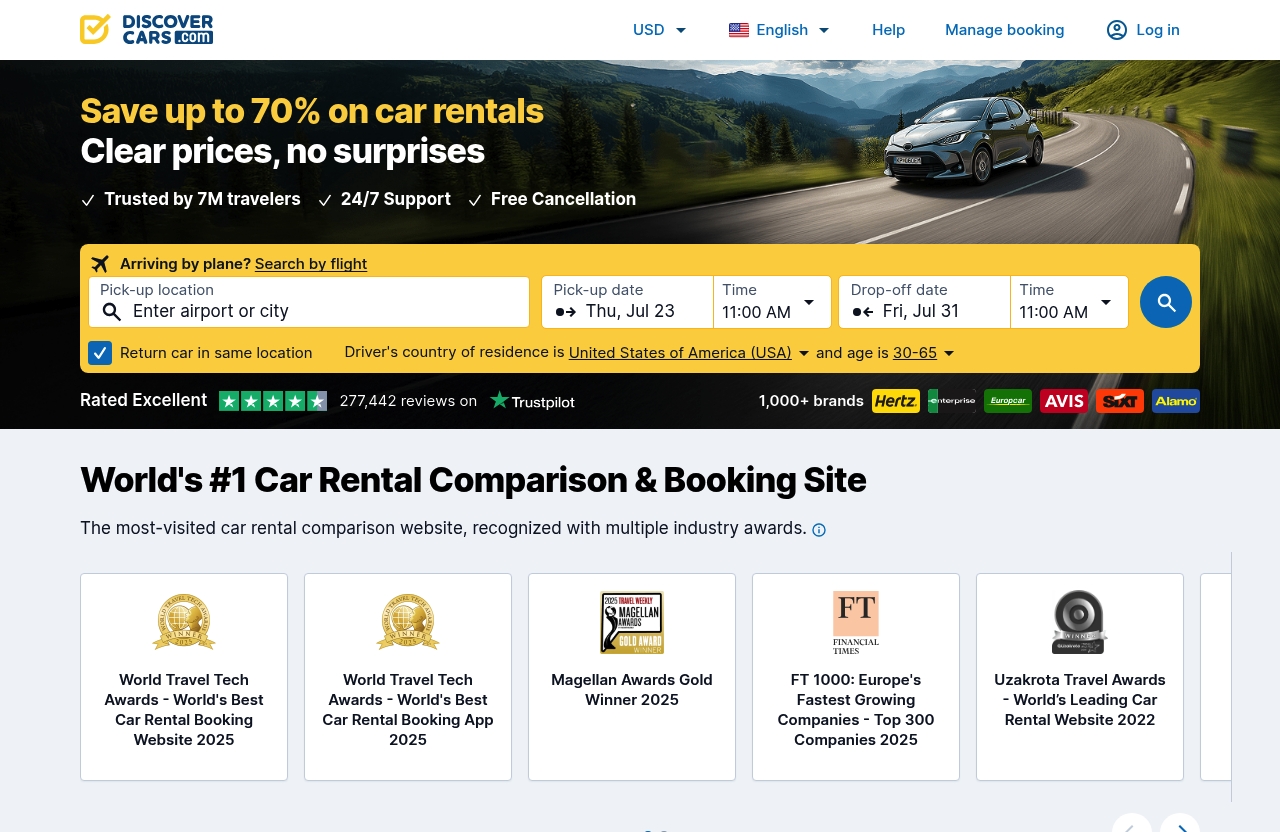
DiscoverCars can be useful before you make the coverage decision because it lets you compare car rental deals and manage bookings in one place. Its official homepage messaging highlights “Best Car Rental Deals with Free Cancellation, Compare & Save!” and it also promotes member-only deals.
I would not use any comparison site as a substitute for reading the rental agreement. But comparing options early helps you avoid making a rushed protection decision at the counter.
Compare rental options before you book
Before you decide whether rental car full coverage worth it applies to your trip, compare suppliers, car categories, pickup locations, and cancellation terms. You can start by browsing rental options on DiscoverCars and then reviewing the supplier’s conditions carefully.
This is especially helpful when different rental companies have different deposit rules, included mileage, fuel policies, or counter procedures.
Look for the best total trip price, not just the daily rate
The cheapest daily rate is not always the cheapest rental. A low base price can become less attractive once you factor in protection, extra drivers, fuel rules, deposits, airport fees, toll needs, and return timing.
Compare the full trip cost before deciding. The best value is the car that fits your route, risk tolerance, and documentation comfort.
Use free cancellation strategically
DiscoverCars displays free cancellation messaging on its official homepage. For travelers, that can be useful when you want to reserve a reasonable deal while continuing to verify insurance, card benefits, and rental conditions.
Do not treat cancellation flexibility as a reason to ignore details. Use it as breathing room to make a better decision.
Why checking multiple suppliers matters
Suppliers can differ in vehicle availability, pickup process, restrictions, and required deposits. Checking multiple options gives you more control over the full cost picture.
If a rental company’s protection price feels high, comparing alternatives can show whether another supplier offers a better overall fit. This is one reason rental car full coverage worth it should be evaluated during booking, not only at pickup.
How to choose between declining coverage, buying at the counter, or buying elsewhere
Once you understand your existing protection, you usually have three options: decline the rental company’s coverage, buy at the counter, or consider another protection route. None is universally best.
The right choice depends on documentation, risk, convenience, and how comfortable you are handling a claim.
Decline at pickup if you’re already covered
It can be reasonable to decline rental car insurance if your personal auto policy or credit card benefit clearly applies. Make sure the rental type, country, duration, driver list, and payment method all meet the rules.
If you decline, be disciplined. Inspect the vehicle, document damage, and keep every receipt and agreement.
Buy rental-company protection when convenience matters
Buying at the counter may cost more than other options, but it can be convenient. Some travelers prefer dealing directly with the rental company if something happens.
This may be the right move if you are tired, traveling internationally, driving in difficult conditions, or simply want fewer moving parts. In that case, rental car full coverage worth it may be about simplicity rather than savings.
Consider third-party protection for price or simplicity
Some renters look at third-party protection for cost control or a clearer claims process. If you do, review who provides it, what documents are needed, whether you pay upfront for damage and seek reimbursement, and what is excluded.
Do not buy any rental car protection plan without reading the terms. The cheapest option is not helpful if it excludes your destination or vehicle type.
Step-by-step checklist before you click ‘Book’
Before booking, slow down and work through the practical details. This checklist can save money and prevent counter stress.
The goal is to know your coverage position before you enter your payment details.
Verify your coverage documents
Contact your auto insurer and credit card benefit provider. Ask specific questions:
- Does my car insurance cover rental cars?
- Does coverage apply in my destination?
- What deductible would I owe?
- Are loss-of-use, towing, or administrative fees addressed?
- What vehicle types are excluded?
- Must I decline rental company coverage for the card benefit to apply?
If the answers are unclear, rental car full coverage worth it becomes more likely.
Take inspection photos at pickup
Photograph every panel, wheel, tire, windshield, roof, mirrors, interior, fuel level, mileage, and existing scratches. Take a short walkaround video too.
At drop-off, repeat the process. Photos are especially useful after-hours when no agent is present.
Read the exclusion list
Do not skip the exclusions. Look for tires, glass, undercarriage, roof, keys, border crossings, ferries, unpaved roads, late returns, unauthorized drivers, and fuel mistakes.
If an exclusion overlaps with your real trip risk, the protection may be less valuable than it appears.
Check cancellation terms
Before locking in a rental, review cancellation rules and timing. If free cancellation is available, use that window to confirm insurance documents and compare suppliers.
You can also manage bookings through DiscoverCars’ Manage booking page, and the site has a Help center / Help page if you need assistance with booking-related questions.
Save emergency contacts and claim instructions
Save the rental company’s roadside number, local emergency number, booking reference, credit card benefit phone number, and insurer contact. Keep offline copies in case you lose signal.
If something happens, report it promptly and follow the rental agreement’s instructions. Good documentation can make the difference between a smooth resolution and a drawn-out dispute.
Bottom line: the smartest 2026 play — is rental car full coverage worth it?
The smartest 2026 play is to decide before the counter. Rental car full coverage worth it when it protects you from a financial hit, claim complexity, or trip disruption you are not comfortable handling yourself. It is less likely to be worth it when you already have strong, documented protection and a low-risk rental.
Your best move is to compare the total rental cost, verify your insurance and credit card terms, read exclusions, and choose the protection level that matches your actual trip.
The best value approach for most travelers
For most travelers, the best value is not automatically the cheapest car or the most expensive coverage package. It is the combination of a fair rental price, manageable deductible risk, clear terms, and a supplier you are comfortable using.
Before finalizing, compare rental options on DiscoverCars, then read the supplier conditions carefully. That gives you a better chance of choosing calmly instead of buying impulsively at pickup.
Who should definitely pay for full coverage
You should strongly consider paying for full coverage if you are uninsured, unsure whether your policy applies, traveling internationally, driving in difficult conditions, or unable to absorb a deductible or damage hold.
In those cases, rental car full coverage worth it is usually less about beating the odds and more about protecting your trip from unnecessary stress.
Who can likely skip it confidently
You can likely skip full coverage if your personal auto insurance and credit card terms are confirmed, your destination is low-risk, your deductible is affordable, and you understand the rental agreement.
That confidence should come from documents, not assumptions. If you cannot prove what covers you, reconsider before declining.
Free cancellation on most bookings · No hidden fees
FAQ
Should I get rental car insurance if I have full coverage?
Maybe. “Full coverage” on your personal auto policy may include collision and comprehensive coverage, but you still need to confirm whether it extends to rental cars.
Check your deductible, destination limits, vehicle exclusions, and whether fees like towing or loss-of-use are addressed. Get the answer in writing when possible.
Should you decline rental car coverage?
You can decline rental car coverage if your own auto insurance or credit card rental car coverage provides documented protection and your trip risk is low. This is common for domestic renters with strong existing policies.
Do not decline based only on a vague memory of your benefits. Confirm the rules before pickup and inspect the car carefully.
What is the best insurance to get when renting a car?
There is no one-size-fits-all best option. The best choice depends on your existing insurance, credit card benefits, destination, deductible tolerance, and whether you value convenience or lower upfront cost.
For some travelers, rental-company protection is best because it is simple. For others, personal insurance or card benefits may be enough.
How much does insurance usually cover for a rental car?
Coverage varies widely by provider, country, rental company, policy, and protection type. Some products reduce your responsibility for certain damage, while others may include deductibles, limits, or major exclusions.
Before traveling, review the rental agreement, insurance policy, and credit card benefit guide. Pay special attention to exclusions for tires, glass, undercarriage, unauthorized drivers, border crossings, and off-road use.
Related Reading
- Greece Car Rental Insurance: What It Covers, What It Excludes, and When to Upgrade in 2026
- Florida Car Rental: 10 Tips to Save in 2026
- Car Rental in Dubrovnik Airport: A Practical 2026 Guide for Smarter Pickup, Parking, and Road Trips