
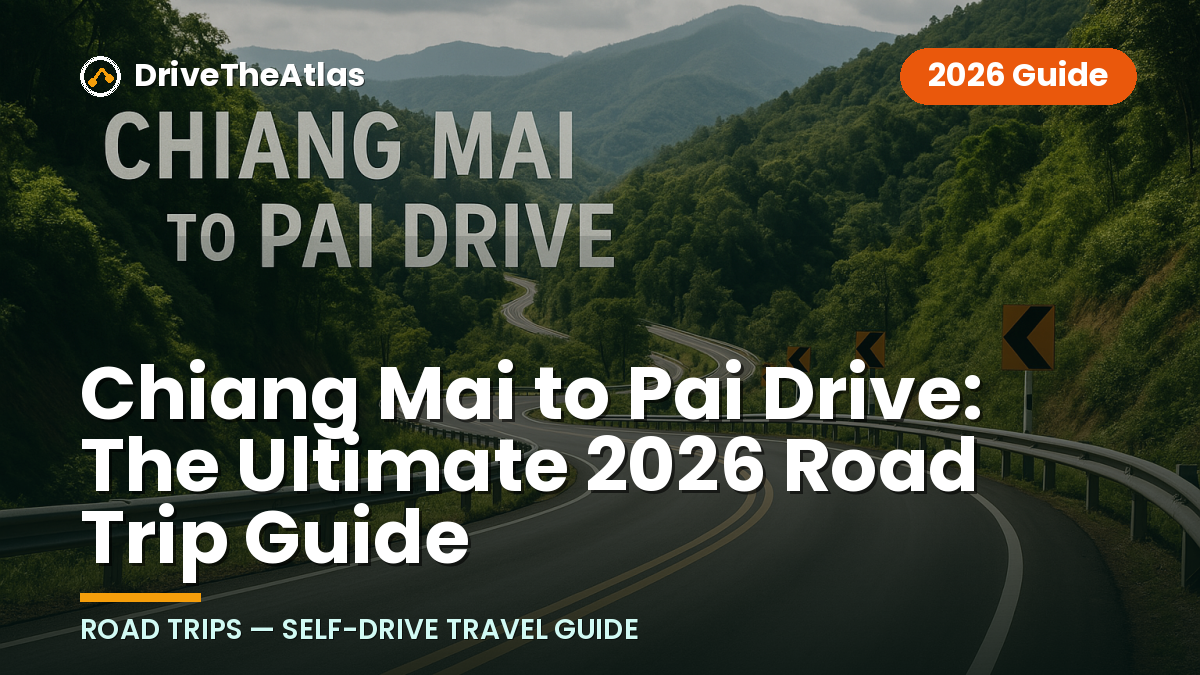
The chiang mai to pai drive is one of Northern Thailand’s most talked-about road trips for a reason: it is beautiful, memorable, and full of mountain curves. It is also not a route every traveler should drive themselves.
The famous road to Pai has 762 curves, most of them along Route 1095 through forested hills, small villages, viewpoints, and waterfall detours. For confident drivers, it can be a rewarding self-drive adventure. For nervous drivers, inexperienced scooter riders, or anyone prone to motion sickness, a minivan or private transfer may be the smarter choice.
This guide gives you a safety-first, practical answer to the big question: should you drive from Chiang Mai to Pai yourself, or choose another way to get there?
Free cancellation on most bookings · No hidden fees
Chiang Mai to Pai drive at a glance
Distance, route number, and typical drive time
The chiang mai to pai drive is roughly 130 km, depending on your start point in Chiang Mai and your accommodation in Pai. The main road is Route 1095 Thailand, which climbs from the Chiang Mai side into the mountains before descending toward Pai.
Most travelers should allow 3 to 4 hours of driving time without long sightseeing stops. With waterfalls, coffee breaks, viewpoints, fuel stops, or slower mountain traffic, it can easily become a half-day journey.
| Detail | What to Expect |
|---|---|
| Route | Chiang Mai to Pai via Route 1095 |
| Distance | About 130 km |
| Typical drive time | Around 3–4 hours without long stops |
| Road type | Paved mountain road with many curves |
| Famous feature | 762 bends on the road to Pai |
| Best for | Confident drivers, scenic road trippers |
| Better alternative for | Nervous drivers, first-time scooter riders, motion-sick passengers |
If you are still planning the broader route, our guide to [driving in Thailand](/driving-in-thailand/) is a useful place to understand local rules, left-side driving, documents, and general road etiquette before deciding.
Why this road is famous for 762 curves
The chiang mai to pai drive is famous because of the pai road 762 curves. This number is not just travel marketing; it describes the real character of the journey.
Instead of a fast highway, you get a winding mountain road with repeated bends, climbs, descents, and limited straight sections. The scenery is part of the appeal, but the constant steering, braking, and acceleration can be tiring.
For passengers, the curves can trigger motion sickness. For drivers, they demand steady concentration for several hours, especially if you are unfamiliar with Thai roads or mountain driving.
Who this guide is for
This guide is for international travelers planning chiang mai to pai thailand travel and trying to choose between a rental car, scooter, minivan, or private driver.
It is especially useful if you are:
- A first-time visitor to Northern Thailand
- A nervous driver considering a rental car
- A backpacker thinking about a scooter
- A couple or family comparing comfort and flexibility
- Someone prone to motion sickness
- A traveler deciding whether the chiang mai to pai self drive option is worth it
The short version: drive yourself only if you are calm, licensed, insured, comfortable on mountain roads, and willing to take the route slowly.
Is the Chiang Mai to Pai drive safe?

What makes the road challenging
The chiang mai to pai drive is not unsafe in the sense of being remote, unpaved, or unknown. It is a popular paved route used daily by locals, travelers, minivans, cars, and motorbikes.
What makes it challenging is the combination of curves, elevation changes, mixed traffic, and driver fatigue. Even if the road surface is generally manageable, the mental workload can be high.
You are not simply driving from one city to another. You are navigating a mountain road where attention matters from start to finish.
Common risks: curves, motion sickness, fatigue, weather
The most common travel issues on this road are not dramatic. They are ordinary things that become more important on a winding mountain route.
The biggest considerations are:
- Curves: The repeated bends require smooth steering and careful speed control.
- Motion sickness: Passengers may feel unwell, especially in the back of vans or cars.
- Fatigue: Three hours of curves can feel longer than three hours on a highway.
- Weather: Rain can reduce visibility and grip, particularly in mountain sections.
- Overconfidence: Drivers who treat the road like a normal highway create unnecessary risk.
- Mixed traffic: Expect scooters, cars, vans, local vehicles, and occasional slow-moving traffic.
The chiang mai to pai road conditions can vary by season, weather, and maintenance. Do not assume that a sunny morning in Chiang Mai means perfect visibility in the hills.
Who should avoid self-driving
You should probably avoid the chiang mai to pai drive if you are not comfortable with mountain roads, left-side driving, or long stretches of curves.
Self-driving is also not ideal if you:
- Have never driven in Thailand before
- Are anxious in tight bends or steep sections
- Plan to rent a scooter without proper riding experience
- Do not have the right license or insurance coverage
- Are arriving jet-lagged and want to drive the same day
- Are traveling with someone who gets severe motion sickness
- Feel pressured to drive because it looks fun online
There is no shame in choosing a minivan or private transfer. On this route, knowing your limits is good travel planning.
Should you self-drive from Chiang Mai to Pai?
Car vs scooter vs minivan
The chiang mai to pai drive can be done by rental car, scooter, minivan, or private transfer. The best option depends less on your budget and more on your confidence, comfort, and risk tolerance.
| Option | Best For | Main Advantage | Main Tradeoff |
|---|---|---|---|
| Rental car | Confident drivers, couples, families | Flexible, comfortable, luggage-friendly | You handle mountain driving |
| Scooter | Experienced riders only | Open-air adventure, low flexibility barriers | Higher exposure and risk |
| Minivan | Budget travelers, non-drivers | Simple and widely used | Less control, motion sickness possible |
| Private transfer | Families, nervous travelers, comfort seekers | Door-to-door and less stressful | Usually costs more than shared transport |
A car gives you the best balance of comfort and flexibility if you are a confident driver. A scooter can be memorable, but it is not a beginner route. A chiang mai to pai minivan is the simplest option if you mainly want to get there.
When the Chiang Mai to Pai drive makes sense
The chiang mai to pai drive makes sense if you value independence and have the experience to handle the road calmly. It is a good fit for travelers who want to stop at waterfalls, viewpoints, and cafés without following a fixed schedule.
Self-driving by car is usually the most sensible self-drive option if you:
- Are comfortable driving on the left
- Have experience on winding or mountain roads
- Prefer air conditioning and luggage space
- Want to stop at places like Sticky Waterfall or Mok Fa Waterfall
- Are not trying to rush the journey
- Have checked your license, insurance, and rental terms
If you are new to Thai road rules, read our practical guide to [Thailand driving rules](/driving-in-thailand/) before committing. Small differences in road behavior can feel bigger once you are in mountain traffic.
When it is better to book a transfer
It is better to book a transfer if the idea of the chiang mai to pai drive already makes you tense. This road rewards patience and confidence, not hesitation.
Choose a minivan or private driver if you want to sleep, relax, avoid responsibility, or reduce stress. This is especially true if you are arriving after a long flight, traveling during heavy rain, or unsure about rental insurance.
A transfer also makes sense if Pai is your destination rather than the road trip itself. You can always rent a scooter locally in Pai for short rides once you arrive, assuming you are properly licensed and comfortable.
Best way to get from Chiang Mai to Pai
Driving a rental car
Driving a rental car is the best way to turn the chiang mai to pai drive into a flexible road trip. You control the timing, choose your stops, and can travel with luggage more comfortably than on a scooter.
A car also gives passengers more weather protection and comfort. If someone starts feeling motion sick, you can stop when needed rather than waiting for a scheduled break.
Before renting, check the basics carefully:
- Does your license and International Driving Permit cover cars?
- Is the vehicle suitable for mountain roads?
- What insurance or excess applies?
- Are there restrictions on where you can drive?
- Is pickup at Chiang Mai airport or city center more convenient?
Planning note: if you decide a rental car is right for your chiang mai to pai drive, you can compare options through DiscoverCars. It is a car rental comparison and booking platform that highlights free cancellation, booking management, and deal comparison features, which can be useful when you are weighing pickup locations and rental terms.
For more detail before booking, see our guide to [renting a car in Thailand](/renting-a-car-in-thailand/) and our notes on [Thailand car rental insurance](/thailand-car-rental-insurance/).
Riding a scooter
A chiang mai to pai scooter trip is popular with adventurous travelers, but it should be treated seriously. The road is long, winding, and exposed, and the consequences of small mistakes can be greater on two wheels.
Only consider a chiang mai to pai motorbike rental if you are already an experienced rider, legally licensed for the bike you rent, and comfortable with mountain traffic. A short scooter ride around an island or quiet town is not the same as riding Route 1095.
If you do ride, wear a proper helmet, avoid night riding, keep your luggage light, and do not treat the route as a race. Rain, gravel, tiredness, and blind bends can all change the feel of the road quickly.
Taking a minivan or private transfer
A chiang mai to pai bus or minivan is the most common option for travelers who do not want to drive. In practice, many people refer to the shared minivan as the bus option because it is the standard budget transport between the two places.
The advantage is simplicity. You book a seat, show up, and let someone else handle the road.
The downside is comfort. The curves can be tough from the back of a minivan, and you have less control over breaks, speed, and airflow. If you are prone to motion sickness, a private transfer may be worth considering because you can request stops and travel at a pace that suits you.
Free cancellation on most bookings · No hidden fees
The route: what to expect on the road to Pai
Leaving Chiang Mai
The chiang mai to pai drive begins with urban or suburban traffic, depending on where you start. Leaving Chiang Mai can be the least scenic part of the day, but it is where you need to settle into local road flow.
Expect traffic lights, scooters, lane changes, and city driving before the route becomes more rural. If you are collecting a rental car at the airport, give yourself time to adjust before reaching the mountain sections.
If you prefer an airport pickup, our [Chiang Mai airport car rental guide](/chiang-mai-airport-car-rental/) can help you think through pickup timing, luggage, and first-day driving plans.
Route 1095 and the mountain sections
Once you are on Route 1095, the road gradually becomes more interesting. The chiang mai to pai drive shifts from regular regional driving into a winding mountain journey.
This is where the 762 curves begin to define the experience. Some bends are gentle, while others require slower, more deliberate steering. The road can be fun if you are relaxed, but it becomes tiring if you are tense or rushing.
Use lower gears on descents where appropriate, avoid hard braking before every bend, and keep a smooth pace. Let faster vehicles pass when it is safe rather than feeling pressured.
Traffic, overtaking, and road conditions
Traffic on the chiang mai to pai drive can include local drivers, tourist minivans, scooters, rental cars, and trucks. Speeds vary, so patience is essential.
Overtaking should be conservative. Blind curves, changing elevation, and limited sightlines mean you should only pass when the road is clearly open and legal.
Road conditions are generally paved, but that does not mean they are always easy. Rain, debris, roadworks, or worn surfaces can appear. Treat every bend as something to read actively rather than assuming the next one will be the same.
Best stops on the Chiang Mai to Pai road trip
Sticky Waterfall
Sticky Waterfall, also known as Bua Tong Waterfall, is a popular detour from Chiang Mai and can be worked into a scenic day if you are not rushing. It is not directly on the fastest line to Pai for every itinerary, so check your route before committing.
This stop is best if you want to make the chiang mai to pai drive feel like a full road trip rather than a transfer. Leave early if you plan to include it, because the mountain section still deserves unhurried attention.
Bring footwear you do not mind getting wet, and avoid overloading the day with too many stops.
Mok Fa Waterfall
Mok Fa Waterfall is one of the more practical nature stops along the road toward Pai. It can break up the journey nicely before the curvier mountain sections intensify.
For many travelers, this is a better stop than trying to do everything in one day. It gives you a chance to stretch, cool down, and reset before continuing the chiang mai to pai drive.
Check local opening conditions when you travel, especially in rainy periods, as access and trail comfort can vary.
Coffee stops and viewpoints
Coffee stops are part of the rhythm of this route. Small cafés, viewpoints, and roadside rest areas give you useful breaks from the curves.
Even if you are not sightseeing heavily, stopping every hour or so can make the chiang mai to pai drive more comfortable. This is especially helpful for passengers who are starting to feel queasy.
Do not rely on one specific café being open. Instead, build flexibility into your plan and stop when the road, your energy, and the view line up.
Pai Canyon and arrival in Pai
Pai Canyon is near Pai and works well near the end of the journey, depending on your timing and energy. If you arrive late in the afternoon, it can be a scenic final stop before checking in.
That said, do not force it if you are tired. After several hours of curves, it may be smarter to drop your bags, rest, and visit Pai Canyon the next day.
The best version of the chiang mai to pai drive is not the one with the most stops. It is the one where you arrive safely and still have energy to enjoy Pai.
Driving tips for a smoother journey
Timing your departure
Start the chiang mai to pai drive in the morning if you are self-driving. Morning departures give you more daylight, more flexibility for stops, and less pressure if the journey takes longer than expected.
Avoid starting late unless you are very familiar with the route. Mountain roads feel different in fading light, and fatigue builds faster when you are trying to beat sunset.
A good plan is to leave after breakfast, keep the day flexible, and arrive in Pai with daylight to spare.
Motion sickness prevention
Motion sickness is one of the most common complaints on the Pai route. The 762 curves are real, and they affect even travelers who normally feel fine in cars.
Helpful steps include:
- Sit near the front if you are a passenger
- Look forward rather than down at your phone
- Eat lightly before departure
- Carry water and simple snacks
- Use motion sickness medication if you know it works for you
- Stop before nausea becomes severe
If your group includes someone very prone to motion sickness, a private transfer or self-drive car may be more comfortable than a shared minivan because you can control breaks.
Fuel, rest stops, and weather
Do not begin the chiang mai to pai drive with low fuel or a tight schedule. Fill up before the mountain sections and treat rest stops as part of the plan, not as delays.
Weather can also change the feel of the road. Rain may make surfaces slick, reduce visibility, and make scooter travel less comfortable. In hot weather, dehydration and fatigue can sneak up on drivers and riders.
Pack water, keep valuables accessible, and make sure offline maps are available. Mobile signal may not be consistent everywhere in the hills.
Night driving warnings
Avoid doing the chiang mai to pai drive at night unless you have a strong reason and the experience to match. Darkness reduces visibility on bends, makes it harder to read road surfaces, and can increase fatigue.
Night driving is particularly unwise for scooter riders. Reduced visibility, cooler mountain air, and limited protection make the ride less forgiving.
If your flight or schedule puts you in Chiang Mai late in the day, stay overnight and travel to Pai the next morning.
If you decide not to drive yourself
Minivan option
The minivan is the standard alternative to the chiang mai to pai drive. It is practical, budget-friendly, and widely used by travelers.
If you choose a minivan, book ahead during busy periods and think carefully about seat position if you get motion sick. A front or middle seat may feel better than the very back, though availability depends on the operator.
Bring water, keep a small bag with essentials, and avoid heavy meals right before departure.
Private driver option
A private driver is the most comfortable non-driving option. It usually costs more than a shared minivan, but it can be a good value for families, small groups, nervous passengers, or travelers who want stops.
The biggest advantage is control. You can ask for breaks, travel door-to-door, and avoid the packed-van feeling.
If you are unsure about self-driving but still want a relaxed road trip atmosphere, a private driver is often the best compromise.
Scooter rental considerations
Some travelers decide not to do the full chiang mai to pai drive themselves but still want scooter freedom once they arrive. Renting locally in Pai for short trips can be a more manageable option than riding all the way from Chiang Mai.
Still, the same basics apply. Make sure you are licensed, insured, wearing a helmet, and realistic about your riding ability.
Pai’s relaxed atmosphere can make scooters feel casual, but road risk does not disappear just because the town is laid-back.
Sample Chiang Mai to Pai road trip plan
Half-day direct transfer plan
This plan is best if you care more about getting to Pai than sightseeing.
- Morning: Leave Chiang Mai after breakfast
- Midway: Take one rest stop for bathroom, water, and fresh air
- Early afternoon: Arrive in Pai and check in
- Late afternoon: Walk around town or rest
- Evening: Enjoy Pai without feeling road-tired
This is the simplest way to handle the chiang mai to pai drive or transfer. It works especially well for minivan passengers and drivers who prefer a focused journey.
Full-day scenic stop plan
This plan is best for confident self-drivers who want the route to be part of the experience.
- 8:00 am: Leave Chiang Mai
- Morning: Stop at Sticky Waterfall if it fits your route and timing
- Late morning: Continue toward Route 1095
- Midday: Visit Mok Fa Waterfall or take a coffee break
- Afternoon: Continue slowly through the mountain curves
- Late afternoon: Stop near Pai Canyon if you still have energy
- Evening: Check in and keep plans light
For this version of the chiang mai to pai drive, do not overload the day. Two meaningful stops are usually better than five rushed ones.
Two-day relaxed plan
This plan is best for travelers who dislike rushing, photographers, families, or anyone nervous about long mountain drives.
Day one can focus on leaving Chiang Mai, visiting a waterfall, staying somewhere along the broader route area, or simply shortening the total driving load. Day two can be a calmer continuation into Pai.
Not everyone needs two days for this distance, but the slower pace can make the trip feel more like exploration and less like endurance.
A relaxed schedule is also useful if weather is uncertain. You have more room to wait out rain, take breaks, and avoid driving tired.
Free cancellation on most bookings · No hidden fees
FAQ
Is it easy to drive from Chiang Mai to Pai?
The chiang mai to pai drive is straightforward to follow because the road is paved and popular, but it is not easy for everyone. The challenge is the 762 curves, mountain terrain, and need for constant attention.
Confident drivers with mountain-road experience may find it enjoyable. Inexperienced drivers, nervous drivers, and first-time scooter riders should consider a minivan or private transfer.
How long does it take to drive from Chiang Mai to Pai?
The typical driving time is around 3 to 4 hours without long stops. The total journey can take longer with traffic, rain, rest breaks, sightseeing, or slower driving through curves.
If you are self-driving, plan it as a half-day journey rather than a quick transfer.
How do I get from Chiang Mai to Pai?
You can get from Chiang Mai to Pai by rental car, scooter, shared minivan, or private transfer. A rental car gives the most flexibility, a scooter is only suitable for experienced licensed riders, a minivan is the common budget option, and a private transfer is the most comfortable non-driving choice.
For most first-time visitors who are unsure, a minivan or private driver is the safer decision. Choose self-drive only if you are confident and properly prepared.
How many bends are in the road from Chiang Mai to Pai?
The road from Chiang Mai to Pai is famous for 762 curves. That matters because the journey can be tiring for drivers and uncomfortable for passengers prone to motion sickness.
The curves are also what make the route scenic and memorable. Take them slowly, avoid rushing, and build in breaks.
Conclusion: Should You Do The Chiang Mai To Pai Drive Yourself?
The chiang mai to pai drive can be one of the most rewarding road trips in Northern Thailand, but it is not a route to take casually. The 762 curves are beautiful, famous, and demanding.
Self-drive by car is a good choice if you are experienced, calm on mountain roads, comfortable driving in Thailand, and excited to stop along the way. A scooter is best reserved for properly licensed riders with real experience. A minivan or private transfer is the better option if you are nervous, tired, motion-sick, or simply want an easier travel day.
My practical recommendation is simple: drive it yourself only if the road sounds enjoyable, not stressful. If the idea of managing hundreds of bends makes you uneasy, let someone else handle the route and save your energy for Pai.