

Car rental in Greece can be a brilliant choice—but only for the right itinerary. If you want to explore mainland regions, reach rural beaches, visit mountain villages, or move at your own pace on larger islands, renting a car often makes the trip smoother. If you are staying only in central Athens, hopping between many islands by ferry, or relying on short port-to-hotel transfers, a car can become more hassle than help.
The key is that Greece is not one rental market. Mainland driving, island driving, airport pickups, ferry rules, and insurance conditions can all work differently depending on the supplier, date, and route. This 2026 guide breaks down when car rental in Greece makes sense, where to pick up, what to check before booking, and how to avoid the most common mistakes.
Free cancellation on most bookings · No hidden fees
Car rental in Greece: what makes it different in 2026
Why Greece is not a one-size-fits-all rental market
Car rental in Greece feels different from renting in many other European destinations because the country is split between a large mainland, dozens of popular islands, major ferry routes, and compact historic cities. A car that is perfect for a Peloponnese road trip may be annoying in central Athens or unnecessary on a tiny island.
The biggest difference is logistics. You are not just asking, “Do I need a car?” You are asking where to collect it, whether you can take it on a ferry, whether parking will be realistic, and whether your route involves mountains, ports, airports, or narrow village roads.
Rules and prices vary by supplier and date, so always check the rental conditions before you commit. This is especially important for ferry permissions, insurance exclusions, one-way fees, age requirements, and payment card rules.
When a car is worth it vs when ferries/public transport are better
Car rental in Greece is usually worth it when you want flexibility. That includes mainland road trips, beach-hopping on larger islands, exploring archaeological sites outside major cities, or staying in rural accommodation where buses are limited.
It is less useful when you are spending most of your time in Athens, Thessaloniki’s central neighborhoods, or ferry-hopping between several islands with only one or two nights in each place. In those cases, taxis, buses, hotel transfers, and separate short rentals can be simpler.
A good rule: rent the car for the days you truly need it, not automatically for the whole trip. For example, you might skip car rental in Greece Athens city center, then collect a vehicle at the airport or port once you are ready to leave town.
Quick decision framework: mainland road trip, island hopping, or city stay
| Trip style | Best rental approach | Why it works |
|---|---|---|
| Mainland road trip | Pick up at airport or city edge | Easier access to highways and rural areas |
| Athens-only stay | Usually skip the car | Parking, traffic, and metro access make driving less attractive |
| Larger island stay | Rent locally at airport or port | Useful for beaches, villages, and viewpoints |
| Multi-island ferry route | Consider separate island rentals | Avoids ferry restrictions and vehicle transport costs |
| Fly-in/fly-out beach trip | Greece airport car rental can be convenient | Saves transfer time if your hotel is remote |
| Northern Greece trip | Compare car rental Greece Thessaloniki options | Good base for Halkidiki, Meteora, and mountain routes |
This framework helps narrow the decision before you compare suppliers. The best car rental in Greece is not always the cheapest listing—it is the one that fits your route, pickup point, luggage, insurance comfort, and driving conditions.
Is renting a car in Greece a good idea?
Best use cases for renting
Yes, renting a car in Greece can be a very good idea when your itinerary rewards flexibility. Mainland regions such as the Peloponnese, Meteora, Delphi, Epirus, Halkidiki, and parts of Crete are far easier to explore with your own vehicle than by relying only on bus schedules.
Car rental in Greece is also helpful on larger islands where beaches and villages are spread out. Crete, Rhodes, Corfu, Kefalonia, Lesbos, Naxos, and parts of Paros are examples where a car can unlock a much better trip, especially if you want to avoid waiting for seasonal buses.
A rental also helps if you are traveling with children, beach gear, photography equipment, or luggage that makes frequent transfers tiring. For families and road-trippers, convenience can be as important as the base daily price.
When not to rent
You probably do not need car rental in Greece if your trip is mostly central Athens, a short Santorini stay focused on caldera towns, or a ferry-heavy itinerary with brief stops. Parking can be limited, roads can be narrow, and port logistics can be stressful.
In Athens, public transport, taxis, and walking are often easier than driving. For visitors searching car rental in Greece Athens, the better question is often whether to collect after the city portion instead of at the start.
On smaller islands, walking, local buses, scooters, ATVs, taxis, or hotel shuttles may be enough. Just remember that scooters and ATVs bring their own safety, licensing, and insurance considerations, so they are not automatically the better choice.
Money-saving and stress-saving scenarios
Car rental in Greece can save money when it replaces multiple long taxi rides, private transfers, or organized tours. It can also save time when your accommodation is outside town or you want to visit several beaches in one day.
On the other hand, renting for unnecessary days can add parking costs, fuel, ferry complications, and insurance decisions. A smart compromise is to book a car only for the exploration portion of your trip.
For example, spend two nights in Athens without a vehicle, then pick up from car rental Athens Airport for a mainland loop. Or arrive on an island, take a transfer to your hotel, and rent locally for two or three active sightseeing days.
Island vs mainland: where a rental car helps most
Athens and the mainland: road-trip friendly areas
The mainland is where car rental in Greece often delivers the clearest value. Highways connect Athens with Corinth, Nafplio, Delphi, Meteora, Thessaloniki, and other major regions, while rural roads lead to beaches, monasteries, mountain towns, and archaeological sites that are harder to combine by bus.
If your flight arrives in Athens and you are heading straight into a road trip, car rental Athens Airport can be convenient. You avoid driving into the city center and can get onto major roads more directly.
Northern routes are another strong use case. Travelers comparing car rental Greece Thessaloniki often use the city as a base for Halkidiki beaches, Mount Olympus, Meteora, or the villages and wine regions of Macedonia.
Greek islands: which types work well with a car
Island car rental Greece decisions depend heavily on island size. Larger islands and spread-out beach destinations often reward having a vehicle, especially if you want to explore beyond the main town or resort strip.
Crete is the clearest example: distances are significant, mountain roads are part of the experience, and many beaches are easier with a car. Rhodes, Corfu, Kefalonia, Naxos, Paros, and Lesbos can also be more enjoyable with flexible transport.
That said, island driving is not always relaxed. Expect tight village lanes, steep access roads, busy port areas, and limited parking near famous beaches in peak season. A compact car is often more practical than a large SUV unless you truly need the space.
Smaller islands where walking, scooters, or buses may be enough
On smaller or very compact islands, car rental in Greece can be optional. If you are staying near the main port, eating locally, and visiting one or two nearby beaches, you may not use a car enough to justify the cost.
Some islands have seasonal buses that connect ports, beaches, and villages, though frequency can vary. Taxis may be limited at peak times, so check in advance rather than assuming transport will be easy late at night or after a ferry arrival.
For small-island trips, consider renting for one day instead of the full stay. That gives you one flexible loop for beaches and viewpoints without paying for a parked vehicle you barely move.
Ferry + car in Greece: what travelers need to know
Can you take a rental car on a ferry?
Sometimes, but never assume. Ferry car rental Greece rules depend on the rental supplier, the route, the insurance terms, and the vehicle category. Some suppliers allow ferry travel with prior approval, some restrict it, and others may exclude coverage while the vehicle is on a ferry.
This is one of the most important conditions to verify before booking. If you plan to drive onto a ferry, look for written confirmation in the rental terms or ask the supplier directly through the booking channel.
Also factor in ferry tickets for the vehicle, boarding time, port traffic, and the risk of delays. Even when permitted, taking a rental car on a ferry is not always the simplest or cheapest option.
Do rental contracts allow island-to-island travel?
Rental contracts may treat island-to-island travel differently from mainland driving. A supplier might allow one ferry route but not multiple islands, or require advance notice for any ferry use.
Insurance can be the sticking point. Damage, breakdown, theft, or recovery costs may be handled differently if the car is transported by ferry or used away from the pickup region. This is why car rental in Greece requires more careful reading than a simple airport-to-airport booking.
If your trip includes several ferries, do not rely on verbal assumptions at the counter. Confirm the rule before you pay, and keep a copy of the policy or approval with your documents.
Pickup/drop-off combinations that reduce ferry headaches
The easiest way to avoid ferry complications is often to rent separate cars in separate places. For example, rent in Athens for the mainland, return the vehicle before boarding a ferry, then book an island car rental Greece option after arrival.
This can reduce vehicle ferry costs, avoid supplier restrictions, and make port transfers easier. It also means you are not responsible for a car during rough ferry schedules, cancellations, or tight boarding windows.
Another option is a one-way rental, such as picking up in Athens and dropping off in another mainland city. One-way rentals can be useful, but fees and availability vary, so compare the total cost rather than just the daily rate.
Best strategy for ferry-heavy itineraries
For ferry-heavy trips, separate local rentals are usually the cleanest strategy. Book a car only on the islands where you need one, and rely on ferries, transfers, walking, and buses between stops.
This approach is especially helpful if you are visiting three or more islands. You avoid repeatedly loading and unloading a vehicle, buying car ferry tickets, and worrying whether the rental contract covers each route.
Car rental in Greece works best when it supports the itinerary rather than complicating it. If the ferry schedule is the backbone of your trip, let the ferries move you—and rent locally only when the island itself requires a car.
Where to pick up a car in Greece
Athens Airport vs Athens city
For many travelers, car rental in Greece Athens decisions come down to timing. If you are staying in central Athens first, it is often better to delay pickup until you leave the city. You avoid city traffic, parking issues, and paying for unused rental days.
Car rental Athens Airport is more convenient if you land and immediately drive to the Peloponnese, Delphi, Meteora, Evia, or another mainland region. Airport pickup can also be easier for late arrivals or travelers with luggage.
City pickup can work if your hotel is near a rental office and you are comfortable navigating out of Athens. Just allow extra time, check office hours, and confirm whether after-hours return is available if needed.
Airport rentals for mainland itineraries
If you want to rent a car in Greece airport locations, think about your first and last driving days. Airport rentals are usually practical for road trips because they connect well with highways and avoid extra transfers.
Greece airport car rental options are also useful outside Athens. Thessaloniki, Heraklion, Chania, Rhodes, Corfu, and other airports can be practical pickup points when your accommodation is outside the main town.
The trade-off is that airport locations may include location-specific fees or busier counters in peak season. Always compare the full rental terms, not just the first price shown.
Island airports and port pickups
Island airport pickups are convenient when you fly directly to an island and plan to explore. Port pickups are better if you arrive by ferry and want the car immediately after docking.
However, port areas can be hectic. Ferries may arrive in waves, roads can be congested, and rental offices may have limited space. If you are nervous about driving immediately after arrival, consider taking a taxi to your accommodation and collecting the car later.
For island car rental Greece bookings, pay attention to exact pickup location. “Port” may mean a desk near the terminal, a shuttle meeting point, or an office a short distance away.
One-way rentals and inter-island trip planning
One-way rentals can be useful on the mainland, such as Athens to Thessaloniki or Athens to Kalamata. They can save time, but the fee structure varies by supplier and route.
Inter-island one-way rentals are more complicated and often limited. You may not be able to pick up on one island and return on another, especially if ferry transport is restricted.
If your route is Athens, Paros, Naxos, and Santorini, it may be cleaner to book no car in Athens, a short rental on Naxos, and maybe no car in Santorini. That kind of selective planning is often better than forcing one vehicle into the whole itinerary.
Free cancellation on most bookings · No hidden fees
What Americans and other international travelers need
Driver’s license and IDP considerations
Renting a car in Greece with US license requirements can depend on the supplier, current rules, and the traveler’s exact documentation. Many Americans travel with a valid U.S. driver’s license, but some rental companies or situations may require an International Driving Permit.
The safest approach is to verify requirements before departure. Check the rental terms, confirm with the supplier if anything is unclear, and make sure the name on your license matches your passport and booking.
Travelers from other countries should do the same. License language, issuing country, and rental company policy can all affect what is accepted at the counter.
Age, passport, and credit card basics
Most suppliers require a valid driver’s license, passport or national ID, and a payment card in the main driver’s name. Age rules vary, and young-driver or senior-driver conditions may apply depending on the company.
Credit card requirements are especially important. Some suppliers require a credit card for the security deposit, even if you paid online with a debit card. Others may accept different card types, but you should not assume.
Before booking car rental in Greece, read the deposit, card, and age sections carefully. These details can determine whether you actually receive the car at pickup.
Insurance: what to check before you book
Insurance terms can be confusing, so slow down and read them. Check what basic protection is included, what the excess or deductible is, what is excluded, and whether tires, glass, underbody, roof, keys, or ferry travel are treated differently.
Do not assume your home auto insurance covers Greece. U.S. travelers should contact their insurer and card provider before relying on outside coverage, then compare those details with the rental company’s requirements.
If you buy extra protection, understand whether it reduces the deposit at the counter or works as reimbursement after a claim. These are not the same experience when you are traveling.
Cross-border or ferry-specific restrictions
Some travelers want to combine Greece with Albania, North Macedonia, Bulgaria, or Turkey. Cross-border travel is not automatically allowed and usually requires written approval, extra documentation, or specific insurance.
Ferry rules are separate. A car may be allowed within mainland Greece but restricted on ferries, or allowed on one route only with prior notice.
Car rental in Greece is easiest when your route stays within the permitted area. If you want to cross borders or use ferries, confirm before booking and again before pickup.
How much does car rental in Greece cost?
Typical price drivers: season, island, airport, transmission
Car rental in Greece cost depends on season, location, supplier, vehicle size, transmission, insurance choices, and how early you book. Summer island rentals often behave differently from winter mainland rentals, and automatic cars are usually more limited than manuals.
Airport and port pickups can be convenient, but location-based fees may affect the final total. Larger vehicles, SUVs, vans, and automatic transmission cars may cost more or sell out earlier in busy periods.
The cheapest car rental in Greece is not always the best deal if it comes with inconvenient pickup, limited mileage, a high deposit, or restrictive terms. Compare the full booking conditions before deciding.
Why cheap headline prices can change at checkout
Some search results and competitor pages advertise very low daily rates, but actual pricing can change once dates, location, insurance, fees, vehicle category, and availability are applied. That is normal in travel booking, but it means headline prices are only a starting point.
Pay close attention to taxes, airport fees, one-way charges, fuel policy, mileage limits, late pickup, after-hours return, and deposit requirements. These can change the value of a booking.
For car rental in Greece, ferry permissions and island pickup rules can also affect the real cost. A cheap mainland booking may become expensive if you later discover it cannot be taken on your ferry route.
Tips to avoid surprise fees
Read the rental conditions before you book, then re-check the voucher before travel. Look for fuel policy, mileage, deposit, card requirements, cancellation terms, ferry rules, and pickup grace periods.
Take photos and video at pickup and return, including wheels, bumpers, mirrors, windshield, roof, and fuel level. In Greece, narrow roads and tight parking make minor scratches a realistic concern.
Return the car with the agreed fuel level and keep receipts when useful. If you are returning at an airport or port, allow extra time for traffic, signage, and inspection.
How to choose the best rental car in Greece
Small car vs SUV vs family car
For many travelers, the best car rental in Greece is a compact car. Small vehicles are easier to park, easier to maneuver in villages, and usually more practical on island roads.
Choose a larger family car if you have multiple passengers and luggage, but do not oversize without a reason. A big vehicle can feel inconvenient in historic towns, beach parking lots, and narrow island lanes.
SUVs can be useful for comfort, luggage, or mountain routes, but they are not automatically necessary. Also remember that rental contracts may restrict unpaved roads, even if the car looks capable.
Automatic vs manual
Manual cars are common in Greece, while automatic vehicles can be more limited and may cost more depending on demand. If you need an automatic, filter for it early and confirm the transmission on your booking.
Do not book a manual to save money unless you are genuinely comfortable driving one on hills, in traffic, and on narrow roads. Greek island villages and mountain routes can make clutch control more stressful than expected.
For relaxed travel, an automatic may be worth considering if your budget allows. This is especially true for first-time visitors, families, or anyone planning longer driving days.
Luggage, roads, and parking considerations
Think about luggage before choosing the smallest possible car. A compact vehicle is practical, but if bags must be visible in the back seat, that can be inconvenient during sightseeing stops.
For car rental in Greece, balance three things: passenger comfort, luggage concealment, and parking ease. The right car is usually the smallest one that fits people and bags securely.
If your itinerary includes mountain roads, check engine size and comfort, not just category name. If it includes old towns and ferry ports, prioritize maneuverability.
Why book Greece car rental through DiscoverCars
Compare suppliers in one place
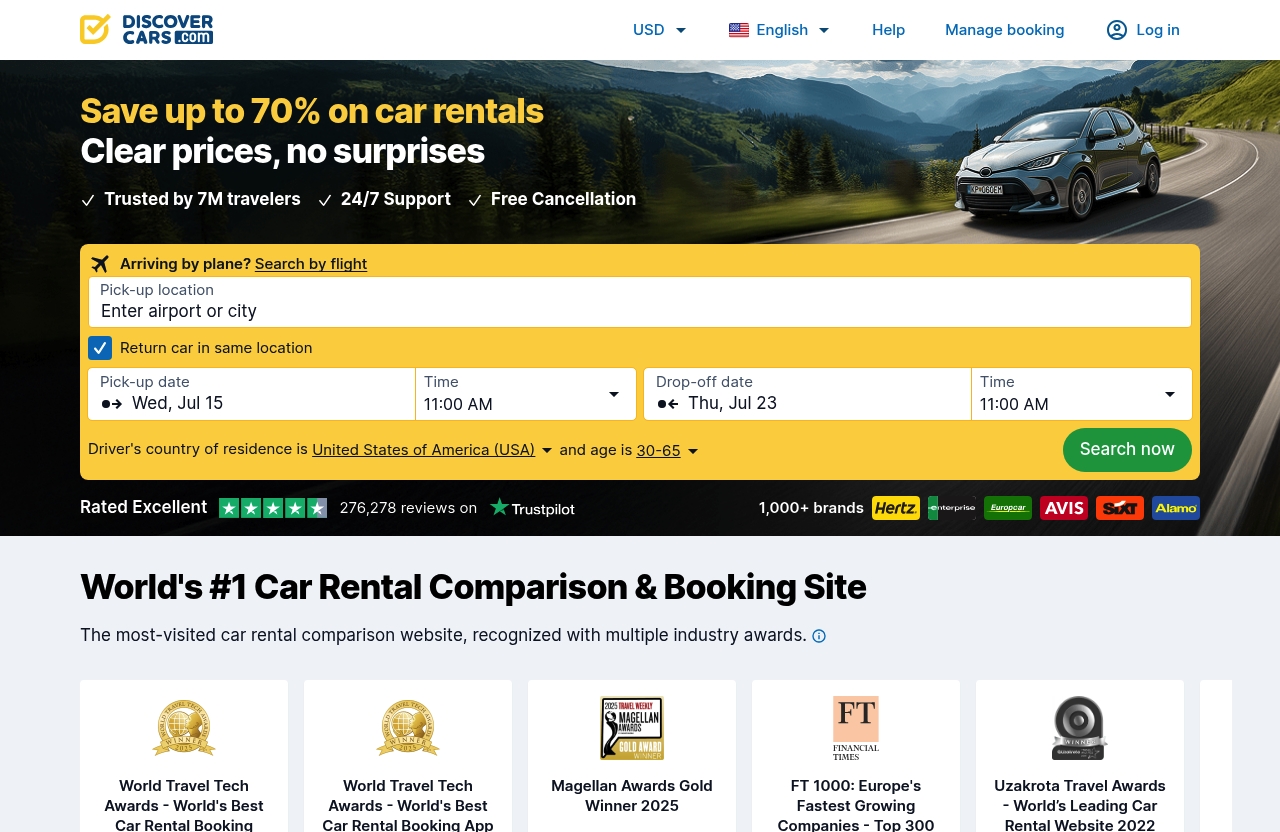
A comparison site can make car rental in Greece easier because you can view multiple suppliers and vehicle types in one workflow. DiscoverCars is one option for comparing and booking rentals in Greece, including different locations, suppliers, SUVs, vans, and standard car categories.
The value is not that one site magically makes every booking perfect. The value is being able to compare pickup points, suppliers, policies, and vehicle types without opening a dozen separate tabs.
That matters in Greece because Athens, Thessaloniki, Crete, Corfu, Rhodes, Santorini, and smaller islands can all have different availability and conditions. Comparing helps you match the car to the route.
Look for free cancellation options and member deals
DiscoverCars’ official homepage references “Best Car Rental Deals with Free Cancellation, Compare & Save!” As with any booking, you should still check the cancellation terms attached to the specific car and supplier before you reserve.
The site also lets users log in or create an account to access exclusive member-only deals and manage bookings in one place. There is a Manage booking area and a Help center, which can be useful if your plans change or you need to review details before pickup.
DiscoverCars also has an Our Guarantee page at /price-guaranteed, but you should read the official terms yourself rather than assuming how it applies to your specific rental. Avoid relying on any unsupported promise from third-party summaries.
Use filters for pickup type, transmission, and policy needs
When comparing car rental in Greece, filters are your friend. Look for pickup location, transmission, vehicle size, supplier rating, cancellation preference, and policy details that match your route.
If you need an automatic, filter for it. If you want airport convenience, compare airport options. If you are planning ferry car rental Greece routes, read the rental conditions carefully and verify whether ferry travel is permitted.
You can start by comparing options through DiscoverCars for Greece, then review the specific supplier terms before booking. Treat the comparison page as the beginning of the decision, not the end.
Honest 2026 tips for driving in Greece
Road conditions, signage, and mountain roads
Greek highways can be straightforward, especially on major mainland routes, but rural and island roads vary. You may encounter tight bends, steep climbs, goats, scooters, buses, and drivers who know the road much better than you do.
Signage is often manageable for international travelers, especially on major routes, but navigation apps are helpful. Download offline maps in case signal drops in mountains or remote coastal areas.
Car rental in Greece is more enjoyable when you avoid rushing. Build in time for slow roads, photo stops, fuel stops, and wrong turns near villages.
Parking and city-center caution
Parking is one of the biggest reasons not to rent for city-only stays. Athens and Thessaloniki can be stressful for visitors unfamiliar with local traffic patterns, one-way streets, and limited central parking.
On islands, parking near famous beaches and sunset towns can fill quickly in peak season. Arriving earlier in the day often saves time and frustration.
Avoid leaving valuables visible in the car. Even in places that feel relaxed, basic travel caution applies.
Ferry timing, fuel, and return inspections
If your route involves a port, give yourself more time than you think you need. Ferry traffic, boarding lanes, rental return offices, and fuel stops can all slow you down.
Check the fuel policy before pickup and return the vehicle accordingly. Keep photos of the fuel gauge and mileage if you want extra documentation.
At return, inspect the car with staff when possible. If it is an unattended drop-off, take clear photos and video from all sides.
First-time visitor checklist:
- Confirm license, passport, card, and IDP requirements.
- Read ferry and cross-border restrictions before booking.
- Choose compact unless you truly need a larger car.
- Filter early for automatic transmission if required.
- Photograph the car at pickup and return.
- Avoid driving in central Athens unless necessary.
- Allow extra time for ports, airports, and mountain roads.
Free cancellation on most bookings · No hidden fees
FAQ
Is renting a car in Greece a good idea?
Yes, renting a car in Greece is a good idea for mainland road trips, flexible island exploration, rural beaches, mountain villages, and family travel. It is less useful for city-only stays or ferry-heavy itineraries where separate local rentals may be simpler.
Is it expensive to rent a car in Greece?
It depends. Prices vary by season, island, airport, supplier, vehicle category, transmission, and insurance choices. Cheap headline rates can change once fees, deposits, location surcharges, and policy options are included, so compare the full rental terms.
Does my US car insurance cover me in Greece?
Do not assume your U.S. car insurance covers you in Greece. Contact your insurer and credit card provider before travel, then compare their coverage with the rental company’s included protection, exclusions, and deductible terms.
What do Americans need to rent a car in Greece?
Americans usually need a valid U.S. driver’s license, passport, credit card in the main driver’s name, and compliance with the rental company’s age and documentation rules. Some suppliers or itineraries may require an International Driving Permit, so verify before booking.
Conclusion: the best setup for your Greece trip
Best choice for island-only trips
For one larger island, car rental in Greece can be a great choice if you want beaches, villages, viewpoints, and flexible days. Pick up at the island airport or port, choose a compact car when possible, and avoid renting for days you will not drive.
For smaller islands or short stays, skip the full-week rental unless your accommodation is remote. A one- or two-day rental may be enough.
Best choice for mainland road trips
For mainland road trips, car rental in Greece is often the most practical setup. Airport pickup works well if you are heading straight out of Athens or Thessaloniki, while city pickup can make sense after a few car-free nights.
Choose a vehicle that fits your luggage and comfort needs, but keep parking and village roads in mind. Compact and midsize cars usually make more sense than oversized vehicles.
Best choice for mixed ferry itineraries
For mixed ferry itineraries, the best setup is usually selective renting. Use cars on the mainland and on islands where they add real value, but avoid taking one rental across multiple ferries unless the supplier clearly allows it and the logistics make sense.
In short, car rental in Greece is worth it when it matches the route. Compare carefully, read the terms, respect ferry restrictions, and rent for the parts of the trip where a car genuinely improves your travel.
Related Reading
- Car Rental in Portugal: Complete 2026 Guide
- Car Rental in Reykjavik Iceland: 2026 Guide
- Iceland Car Rental at KEF Airport: 2026 Guide