

Planning car rental in Portugal for 2026 is one of the smartest moves if your trip goes beyond Lisbon and Porto. Portugal has good highways, scenic coastal roads, vineyard routes, and small towns that are much easier to explore with your own vehicle.
The catch is that renting a car here comes with a few Portugal-specific details: toll roads, Via Verde, deposits, insurance excess, manual transmissions, and airport pickup logistics. This guide explains what to compare before booking so you can choose confidently and avoid the most common mistakes.
Free cancellation on most bookings · No hidden fees
Portugal car rental in 2026: what travelers need to know first
Who this car rental in Portugal guide is for
This guide is for travelers comparing car rental in Portugal for a vacation, road trip, family holiday, surf trip, wine route, or flexible multi-city itinerary. It is especially useful if you are landing in Lisbon, Porto, or Faro and want to understand airport pickup, tolls, and insurance before committing.
Portugal is not a country where every visitor needs a car. If you are only spending a few days in central Lisbon or Porto, public transportation, trains, rideshares, and walking may be easier.
But once you add the Algarve, Douro Valley, Alentejo, remote beaches, small villages, or national parks, a rental car can dramatically improve your flexibility.
When renting a car in Portugal makes sense
Car rental in Portugal makes the most sense when your itinerary includes places that are poorly served by trains or buses. This includes many beaches in the Algarve, viewpoints in the Douro Valley, hill towns in Alentejo, surf breaks along the west coast, and rural guesthouses.
A car is also useful if you are traveling with luggage, kids, camera gear, golf clubs, or a group of three or more people. In those cases, the convenience can outweigh the cost of parking and tolls.
For Madeira and the Azores, the decision depends on the island and your comfort with hills, narrow roads, and manual cars. Madeira in particular has steep terrain, so choosing the right vehicle matters more than simply finding the lowest rate.
Main pitfalls travelers should avoid
The biggest mistakes with car rental in Portugal usually happen before pickup. Travelers often book the cheapest listing without checking toll handling, deposit amount, fuel policy, mileage limits, pickup hours, or insurance excess.
Portugal toll roads are another common source of confusion. Some highways use electronic tolling, and tourists sometimes assume they can always pay in cash at a booth. That is not always true.
Here are the issues to check before booking:
- Whether the rental includes or offers a Via Verde transponder
- The deposit amount and accepted credit card rules
- Whether the car is manual or automatic
- Insurance excess and exclusions
- Fuel policy, especially full-to-full vs prepaid fuel
- Mileage limits
- Pickup desk location and after-hours fees
- Cross-border or one-way rental rules
A cheap headline rate is only useful if the full rental terms work for your trip.
Best places to rent a car in Portugal
Lisbon Airport
Lisbon Airport is one of the most popular pickup points for car rental in Portugal. If you are arriving from North America, the UK, or elsewhere in Europe, picking up at the airport is often the simplest option because you can collect your car soon after landing and head directly to your hotel or first destination.
Car rental Lisbon Airport options typically include a wide range of suppliers, vehicle classes, and pickup arrangements. Some desks are inside the terminal area, while others may use shuttle service to nearby lots.
If your first few nights are in central Lisbon, think carefully before collecting a car immediately. Lisbon’s older neighborhoods have narrow streets, limited parking, and traffic restrictions that can make a car more stressful than helpful.
A practical strategy is to explore Lisbon first, then rent a car Portugal Lisbon location when you are ready to leave the city for Sintra, Cascais, Alentejo, or the Algarve.
Porto Airport
Porto Airport is another strong hub for car rental in Portugal, especially if your trip includes northern Portugal, the Douro Valley, Braga, Guimarães, or a route south toward Coimbra and Lisbon.
Car rental Porto Airport pickup is usually convenient for travelers who want to avoid driving inside Porto’s steep historic center. The airport is outside the densest part of the city, so it can be easier to start a road trip from there.
If you are staying in Porto first, consider whether you really need the car during your city days. Parking near Ribeira, the cathedral area, and older neighborhoods can be limited and expensive.
Faro Airport
Faro Airport is the main gateway for Algarve road trips and one of the easiest places for car rental in Portugal if your goal is beaches, resorts, golf, or coastal towns.
For the Algarve, renting a car is often more useful than relying on buses or taxis. Many of the best beaches, cliffs, small towns, and viewpoints are spread out along the coast.
Faro is also a logical pickup point if you plan to visit Tavira, Lagos, Carvoeiro, Sagres, or the western Algarve. Just remember that summer demand can be high, so automatic cars and larger vehicles may be more limited if you wait too long.
Madeira and island considerations
Island rentals are a different category of car rental in Portugal. Madeira, São Miguel, Terceira, and other islands can be excellent with a rental car, but the roads may feel very different from mainland highways.
Madeira has steep hills, tunnels, tight parking, and mountain roads. If you are not comfortable with hill starts in a manual car, automatic car rental Portugal options are worth comparing early.
On the Azores, weather can change quickly, and rural roads may require slower driving. A smaller car is often easier for village streets, but you still want enough power for hills and luggage.
City-center vs airport pickup
Airport pickup is usually the easiest option for international travelers comparing car rental Portugal airport locations. Airports often have broader inventory, longer opening hours, and simpler access to motorways.
City-center pickup can make sense if you are spending several days in Lisbon or Porto before starting a road trip. It may save you from paying for parking while you are sightseeing.
The tradeoff is that city locations can have shorter hours, smaller lots, fewer automatic cars, and more complicated urban driving. Always compare the total cost and convenience rather than assuming one pickup type is cheaper.
How much car rental in Portugal costs in 2026
Typical price ranges
Pricing for car rental in Portugal varies widely by season, pickup location, car class, transmission, insurance, and booking timing. You may see third-party search snapshots showing very low daily teaser rates, sometimes just a few dollars per day, but those are not guaranteed and often exclude important extras.
For 2026 planning, treat online price examples as directional signals rather than fixed averages. A tiny manual economy car in winter is not the same product as an automatic SUV in August at Faro Airport.
When comparing prices, focus on the all-in cost. That means rental rate, taxes, fees, insurance choices, toll device charges, fuel policy, one-way fees if applicable, and deposit requirements.
What affects the daily rate
The daily rate for car rental in Portugal depends on several practical factors. The biggest are season, vehicle category, pickup airport, rental length, transmission, and cancellation terms.
Automatic cars usually cost more than manual cars because manual transmission is still common in Europe. If you need automatic car rental Portugal options, book early and filter carefully.
Other cost drivers include:
- SUV or larger vehicle classes
- Child seats or additional drivers
- One-way drop-off
- Young-driver fees
- Cross-border permissions
- After-hours pickup or return
- Extra insurance or reduced excess coverage
The cheapest car is not always the best value if it comes with a large deposit, inconvenient shuttle, unclear toll policy, or poor pickup hours.
Why prices change by season
Demand for car rental in Portugal is highly seasonal. Summer in the Algarve, Easter breaks, major holidays, and peak travel months can increase demand for the most practical cars.
Faro is especially seasonal because many travelers arrive for beach holidays. Lisbon and Porto see steadier year-round demand, but prices can still rise around holidays and major events.
If your trip is in June, July, August, September, or around Christmas and New Year, book earlier than you would for a quiet winter weekday. You do not need to panic, but waiting can reduce your choices.
How to compare deals safely
When comparing car rental in Portugal, do not sort only by the lowest displayed price. Open the rental conditions and check the details that affect your real cost and risk.
Use this comparison checklist:
| What to compare | Why it matters |
|---|---|
| Pickup location | Terminal desk, shuttle, city office, or off-airport lot |
| Fuel policy | Full-to-full is usually easiest to understand |
| Mileage | Unlimited mileage is helpful for road trips |
| Transmission | Manual vs automatic changes comfort and price |
| Deposit | Must fit your credit card limit |
| Insurance excess | Determines your financial exposure |
| Toll device | Important for Portugal toll roads |
| Pickup hours | Late arrivals can trigger fees or missed pickups |
| Cancellation policy | Useful if plans change before travel |
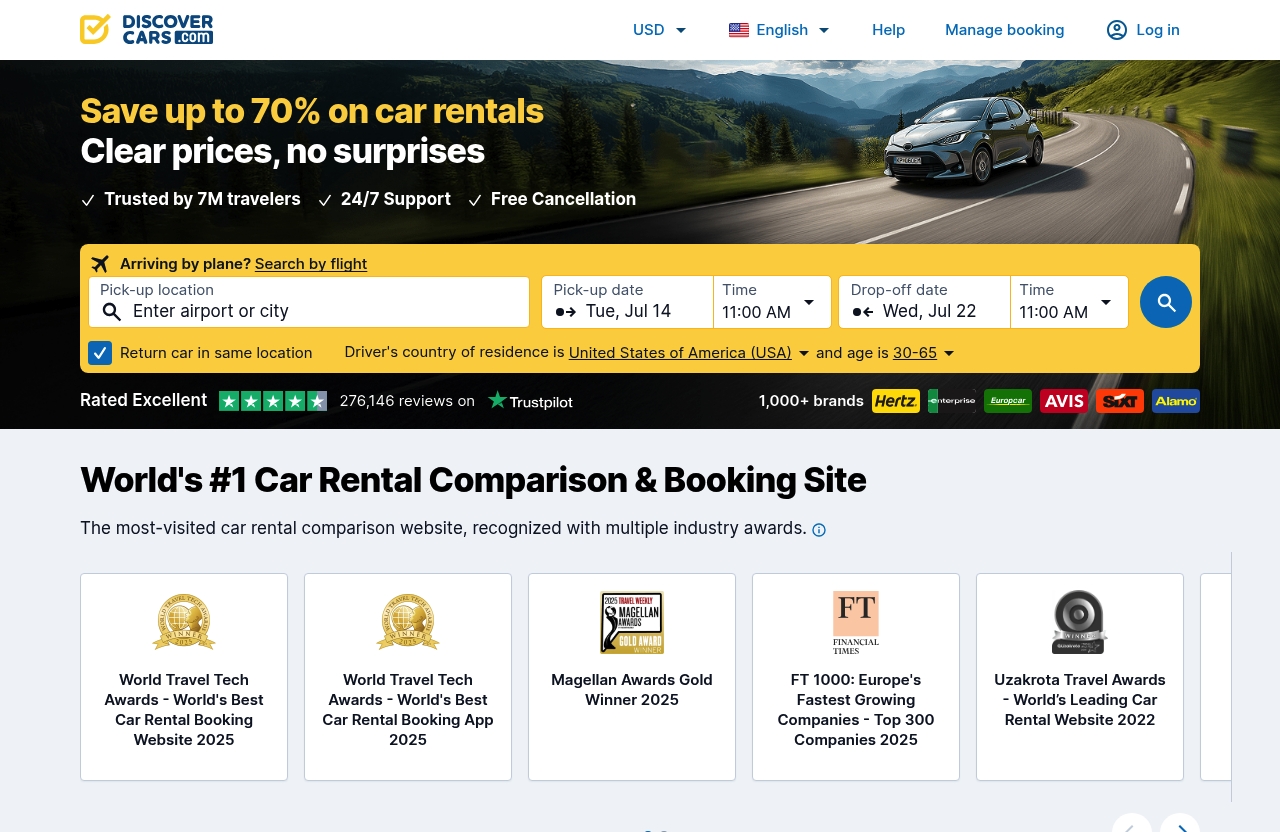
For a neutral starting point, I like comparing rentals through DiscoverCars because it lets travelers evaluate prices, pickup locations, insurance options, and rental policies in one place. If you book through that link, Drive the Atlas may earn a commission at no extra cost to you.
Documents, driver rules, and age requirements
Valid license and IDP considerations
For car rental in Portugal, you generally need a valid driver’s license, passport or national ID, and a payment card in the main driver’s name. Travelers from some countries may also need an International Driving Permit, especially if their license is not in a Roman alphabet or if the rental company requires one.
Rules can vary by supplier, so check the rental conditions before you book. Do not assume that one company’s policy applies to all companies.
If you are unsure, bring an IDP along with your original license. An IDP does not replace your license; it supports it.
Credit card and deposit basics
A common pain point with car rental in Portugal is the security deposit. Many rental companies require a credit card in the main driver’s name, and debit cards may not be accepted for the deposit.
The deposit is not the same as the rental price. It is a temporary hold used to cover potential damage, fuel, fines, tolls, or contract issues.
Before booking, check:
- Required card type
- Name on the card
- Deposit amount
- Credit limit needed
- Whether prepaid or debit cards are accepted
- Currency conversion fees from your bank
One of the worst pickup-day surprises is having the right booking but the wrong payment card.
Minimum age and young-driver fees
Age rules for car rental in Portugal depend on the supplier and vehicle category. Many companies rent to drivers in their early twenties, but younger drivers may face extra fees or restrictions on larger vehicles.
Some premium cars, vans, or SUVs may require a higher minimum age. Always check the rental terms for your exact car class.
If multiple people will drive, add each driver to the rental agreement. An unlisted driver can create serious insurance problems if there is an accident.
Manual vs automatic transmission
Manual cars are common in Portugal, and many cheap car rental Portugal listings are manual by default. If you normally drive automatic, do not assume the cheapest economy car will work for you.
Automatic car rental Portugal options are available, especially at major airports, but they can cost more and sell out sooner in busy periods. Filter for automatic from the start.
If you are visiting Madeira or hilly towns, automatic may be worth the extra cost for comfort. Hill starts, tight garages, and steep switchbacks are not the best place to relearn manual driving.
Free cancellation on most bookings · No hidden fees
Portugal toll roads explained: Via Verde and how to pay
What Via Verde is
Understanding tolls is essential for car rental in Portugal. Via Verde Portugal is the country’s electronic toll collection system, similar to an automated transponder pass.
A Via Verde device lets the car pass through electronic toll lanes without stopping. On many routes, especially motorways, this is much easier than trying to figure out payment afterward.
For visitors, the key question is not just “Do I need Via Verde?” but “How does my rental company handle tolls?” Each supplier may have its own device rental fee, service charge, billing process, and toll payment timing.
Toll road types in Portugal
Portugal toll roads include traditional toll booths, electronic-only tolls, and lanes marked for Via Verde. Some motorways let you pay manually with cash or card, while others rely on electronic systems.
This is where tourists get confused. On some roads, there may be no normal toll booth where you can stop and pay. If your rental car does not have an electronic toll device or a clear payment arrangement, you can accidentally create unpaid tolls.
Common toll-road situations include:
- Manual booths where you take a ticket and pay later
- Card or cash toll plazas
- Via Verde-only lanes
- Electronic gantries that record the vehicle plate
- Mixed systems on longer journeys
Before leaving the rental lot, ask exactly how tolls are charged for your car.
How rental cars handle toll transponders
With car rental in Portugal, many companies offer a toll transponder or electronic toll service. This may be branded as Via Verde, an e-toll device, or a toll management service.
Typically, the device records your toll usage, and the rental company later charges the tolls to your card. There may also be a daily or administrative fee for using the device. The exact structure varies, so check the contract.
At pickup, confirm:
- Is a toll device installed in the car?
- Is it already activated?
- What daily or service fees apply?
- Are tolls charged automatically after return?
- What happens if you use a Via Verde lane without activation?
- Are all Portugal toll roads covered by the arrangement?
Do not rely only on verbal explanations. Ask where the toll policy appears in your rental agreement.
Manual payment vs electronic tolls
Some Portugal toll roads still allow manual payment. If you enter through a normal ticket lane, keep the ticket and pay at the exit booth.
However, electronic toll roads do not always work that way. They may identify the vehicle by transponder or license plate. If you are in a rental car, the bill may be routed to the rental company.
If you are planning a road trip from Lisbon to the Algarve, Porto to the Douro Valley, or Faro along the coast, assume you will encounter toll roads unless you intentionally avoid them. Navigation apps may offer “avoid tolls,” but slower non-toll routes can add time and complexity.
For most first-time visitors, using the rental company’s toll device is the simplest option, provided the fees are clear.
How to avoid toll fines
The best way to avoid toll issues with car rental in Portugal is to clarify the toll setup before you drive away. This is especially important at airport exits, where you may reach a motorway quickly after pickup.
Use this quick toll checklist:
- Ask if the car has Via Verde or another toll device
- Confirm whether it is active
- Understand the fee and billing process
- Avoid Via Verde-only lanes if your device is not active
- Keep toll receipts from manual booths
- Save your rental agreement and final invoice
- Watch for post-trip charges on your card
Do not remove or tamper with a transponder. If you are unsure whether you should use a certain lane, choose a staffed or card-payment lane when available.
Portugal’s toll system is manageable, but it rewards preparation.
Insurance, coverage, and what to check before booking
Collision damage and theft protection
Insurance is one of the most confusing parts of car rental in Portugal. Basic collision damage and theft protection may be included in many rentals, but that does not mean you have zero financial responsibility.
The important detail is the excess, also called the deductible. This is the amount you may be responsible for if the car is damaged or stolen, depending on the policy and circumstances.
Read the coverage section before booking and again at pickup. If the desk agent offers extra coverage, compare it with what you already selected.
Excess/deductible
The excess can be significant, and it often explains why a rental requires a large deposit. A lower headline rental rate may come with a higher excess.
When comparing car rental in Portugal, look for:
- Damage excess
- Theft excess
- Deposit amount
- Excluded parts
- Required police report rules
- Coverage limits
- Claims process
If you use a credit card rental benefit or third-party insurance, understand whether you must first pay the rental company and then claim reimbursement later.
Glass, tires, and underbody coverage
Glass, tires, wheels, roof, mirrors, clutch, keys, and underbody damage are common exclusions. These are exactly the areas travelers forget to ask about.
Portugal’s highways are generally good, but rural pullouts, gravel parking areas, curbs, and narrow streets can still cause minor damage. Historic towns can be especially tight around wheels and mirrors.
Before leaving the lot, photograph the car thoroughly. Capture the front, rear, sides, wheels, windshield, roof, interior, fuel level, mileage, and any existing scratches.
Roadside assistance
Roadside assistance can mean different things. It may cover mechanical breakdowns, but not necessarily lost keys, flat tires, wrong fuel, or driver-caused issues.
For car rental in Portugal, ask what number to call if something goes wrong and whether roadside service is included in your rate. Keep the emergency contact with your rental agreement.
If you plan to drive in rural areas or islands, this matters more. A breakdown outside a major city can take time to resolve.
How affiliate booking platforms help compare car rental in Portugal options
Comparison platforms can help you evaluate car rental in Portugal because they put multiple offers and rental conditions side by side. That makes it easier to compare pickup locations, policies, insurance options, and car types before you commit.
DiscoverCars states on its homepage: “Best Car Rental Deals with Free Cancellation, Compare & Save!” It also offers an account system where users can log in or create an account, manage bookings, and access exclusive member-only deals.
The platform supports multiple currencies, including EUR, GBP, USD, AUD, and CAD, and many languages, including English, English UK, Spanish, French, German, Italian, Portuguese, and Portuguese Brazil. It also has a Help Center and an Our Guarantee page.
Those features are useful, but you should still read the rental terms carefully. A comparison site helps organize the decision; it does not replace checking the contract.
Driving in Portugal: road rules and real-world tips
Speed limits and roundabouts
Most travelers find car rental in Portugal manageable because major roads are generally in good condition. Highways are modern, signage is usually clear, and distances between major destinations are reasonable.
Portugal drives on the right side of the road. Seat belts are required, and speed limits are posted in kilometers per hour.
Roundabouts are common. As a general rule, traffic already in the roundabout has priority, and you should use signals when exiting. Pay close attention because local drivers may move quickly.
City driving vs rural roads
The hardest part of car rental in Portugal is usually not the highways. It is city centers, old towns, parking garages, and narrow lanes.
Lisbon and Porto have hills, trams, one-way streets, delivery zones, bus lanes, and tight parking. Sintra, Óbidos, Évora, Lagos, and many historic towns can also have narrow streets that were not designed for modern cars.
Rural roads are often scenic and enjoyable, but they may have sharp bends, farm vehicles, cyclists, or limited shoulders. Drive slower than the posted limit when visibility is poor.
Parking and fuel policy
Parking deserves more attention than many Portugal driving tips mention. In historic centers, the best strategy is often to park outside the old town and walk in.
Look for marked public parking lots or garages rather than squeezing into questionable street spaces. Pay attention to color-coded curb rules, signs, and resident-only zones.
For fuel, full-to-full is usually the simplest policy. You receive the car full and return it full, keeping your final fuel receipt in case of a dispute.
Before returning the car, refuel near the airport or drop-off location but not so far away that the gauge drops noticeably.
Navigation and road conditions
Navigation apps work well for most car rental in Portugal trips, but they can occasionally route you through very narrow streets. If a road looks too tight, trust your judgment and find an alternate route.
Motorways are usually the fastest way between regions, but they often involve tolls. Scenic alternatives can be worthwhile if you are not in a rush.
Carry a charging cable, download offline maps, and confirm your accommodation’s parking instructions before arrival. In old towns, the official address may not be the easiest place to approach by car.
Where DiscoverCars fits in your booking strategy
Why compare before you book
The best car rental in Portugal is not one specific company for every traveler. It is the rental that fits your route, comfort level, budget, insurance preferences, and pickup plan.
Comparing before booking helps you spot differences that are not obvious in the headline rate. Two cars may look similar until you compare deposit, mileage, toll policy, pickup location, cancellation terms, and transmission.
This is especially important if you are looking for cheap car rental Portugal options. Low prices can be legitimate, but only if the terms are practical for your trip.
How to use a comparison platform
For car rental in Portugal, start by entering your exact dates, pickup location, return location, driver age, and preferred transmission. Then filter based on what you actually need.
A practical process:
- Choose airport or city pickup.
- Filter for automatic if needed.
- Compare fuel policy and mileage.
- Open the rental conditions.
- Check deposit and credit card rules.
- Review insurance excess.
- Look for toll device information.
- Confirm pickup hours.
- Save the booking details before travel.
You can compare Portugal rentals through DiscoverCars as part of this process, especially if you want to review prices, pickup points, insurance choices, and policies before booking.
When to book early
Book early if you need an automatic car, a larger vehicle, a child seat, or a specific airport pickup during a busy period. This is also wise for summer Algarve trips, island travel, and holiday weeks.
For one-way car rental in Portugal, compare carefully because drop-off fees and availability can vary. A Lisbon pickup with Faro return, or Porto pickup with Lisbon return, may be convenient but not always the lowest-cost structure.
If your plans are flexible, consider booking a refundable option and reviewing prices again later. Just make sure you understand the cancellation policy.
Sample Portugal road trip itineraries with a rental car
Lisbon to Cascais and Sintra
This is one of the easiest starter routes for car rental in Portugal. You can drive from Lisbon toward Cascais, explore the coast, and continue to Sintra for palaces, forests, and viewpoints.
That said, Sintra can be congested, and parking near major sights is limited. Start early, use official parking areas when possible, and avoid driving into tight historic lanes unless your accommodation specifically instructs you to.
A flexible route could include Lisbon, Belém, Cascais, Cabo da Roca, Sintra, and then onward to Óbidos or Nazaré.
Porto to Douro Valley
The Douro Valley is one of the best reasons to rent a car in northern Portugal. Trains serve parts of the region, but a car gives you more freedom to reach viewpoints, wineries, villages, and rural hotels.
The drive from Porto into the valley is scenic, with winding roads near the river and vineyard terraces. Take your time and avoid overloading the day with too many stops.
If wine tasting is part of the plan, designate a driver or arrange tastings responsibly. Rural roads are beautiful but require focus.
Faro and the Algarve coast
The Algarve is where car rental in Portugal often feels most useful. Beaches, cliffs, small towns, and coves are spread across the region, and public transportation does not reach every spot efficiently.
A simple route might include Faro, Tavira, Albufeira, Carvoeiro, Lagos, Sagres, and the west coast. If you prefer quieter areas, spend more time around Tavira, the eastern Algarve, or villages inland.
In peak summer, parking near famous beaches can fill early. Plan morning beach visits, bring coins or cards for parking meters, and avoid blocking narrow access roads.
Free cancellation on most bookings · No hidden fees
FAQ
Best way to rent a car in Portugal?
The best way to arrange car rental in Portugal is to compare rates, pickup locations, insurance, fuel policy, deposit rules, mileage, transmission, and toll options before booking. Airport pickups are often convenient for road trips, while city pickups can work better if you are sightseeing first.
For busy 2026 travel periods, book early if you need an automatic, larger car, or Faro Airport pickup.
Do I need Via Verde?
Via Verde is not always mandatory, but it is very convenient if you plan to use Portugal toll roads. Some roads use electronic tolling, and a rental car toll device can simplify payment.
Ask your rental company whether the car has an active Via Verde Portugal transponder, what it costs, and how tolls are billed after return.
Is driving in Portugal difficult?
Driving in Portugal is manageable for most tourists. Highways are generally good, signage is clear on major routes, and driving is on the right side of the road.
The trickier parts are narrow historic centers, tight parking garages, roundabouts, and understanding toll roads. With basic preparation and careful driving, most visitors adjust quickly.
Can I rent a car in Portugal with a foreign license?
Yes, many travelers can rent with a valid foreign driver’s license, but requirements vary by nationality and rental company. Some drivers may also need an International Driving Permit.
Bring your original license, passport, payment card, and IDP if required or recommended for your license type.
Is it better to rent at the airport?
Airport pickup is often better if you are starting a road trip immediately because airports usually have more inventory, longer hours, and easier motorway access. This is especially true for car rental Lisbon Airport, car rental Porto Airport, and Faro Airport.
City pickup can be better if you are staying downtown first and do not want to pay for parking. For most road-trip travelers, airport pickup is the simpler choice.
Conclusion
Car rental in Portugal can turn a good trip into a much more flexible one, especially if you want to explore the Algarve, Douro Valley, Alentejo, surf towns, islands, or smaller villages beyond the train network.
The key is to compare more than the daily price. Look closely at toll handling, Via Verde, insurance excess, deposit rules, transmission, pickup location, fuel policy, and cancellation terms.
Portugal is a practical country for a road trip in 2026, but the best experience comes from booking with clear expectations. If you understand the toll system and choose a rental that fits your route, driving in Portugal is straightforward, scenic, and often the easiest way to see the country beyond its biggest cities.