
Learning how to plan a road trip abroad is less about filling every hour with attractions and more about removing the avoidable surprises: missing documents, unexpected tolls, wrong-side driving stress, rental restrictions, and overly ambitious daily routes. With the right preparation, an international self-drive trip can be one of the most flexible and rewarding ways to travel.
This practical guide is designed as a saveable road trip abroad checklist for first-time international drivers, couples, families, and budget-conscious travelers. Work through it before you book, before you fly, and again at the rental desk for a smoother 2026 adventure.
Free cancellation on most bookings · No hidden fees
Road Trip Abroad Planning: What’s Different in 2026
Why international road trips need more prep than domestic ones
Knowing how to plan a road trip abroad means preparing for rules that may be completely different from home. Your license may need supporting documentation, your rental may not be allowed across borders, and road signs, toll systems, parking rules, and fuel types can change from one country to the next.
In my experience, the biggest mistakes happen when travelers treat an international drive like a local weekend getaway. A little advance research prevents problems such as arriving without the correct permit, booking a car too small for luggage, or discovering a border crossing requires advance rental-company approval.
Use this guide as a free checklist to reduce costs, drive more confidently, and avoid wasting valuable vacation time at the airport counter.
The 2026 planning timeline at a glance
A reliable international road trip planning timeline looks like this:
| When | Priority Tasks |
|---|---|
| 3–6 months ahead | Choose destinations, review license rules, compare car rental locations, reserve major accommodations |
| 6–12 weeks ahead | Build the route, book the rental car, check insurance, arrange any required permits |
| 2–4 weeks ahead | Confirm cross-border permission, download offline maps, organize documents, review toll systems |
| 48 hours ahead | Check weather, flight timing, reservation details, payment cards, and luggage |
| Pickup day | Inspect the car, photograph damage, confirm fuel policy, test navigation, verify return instructions |
Peak-season travel, island routes, popular national parks, and ferry-heavy itineraries deserve more lead time. The same applies when how to plan a road trip abroad with family involves child seats, a larger vehicle, or multiple drivers.
Who this checklist is for: solo, couples, families, and long-haul travelers
This checklist works whether you are taking a short scenic drive or a multi-country journey. Solo travelers should focus on daylight arrival times, emergency contacts, and conservative driving days. Couples may prioritize a compact car and flexible boutique stays, while families need additional space, child equipment, and more frequent breaks.
For long-haul travelers, jet lag deserves serious consideration. Do not schedule your longest driving day immediately after an overnight flight; book a nearby first-night stay or keep the first route simple.
Step 1: Choose the Country, Season, and Route Style
Pick a region that matches your driving confidence
A smart answer to how to plan a road trip abroad starts with choosing a destination that fits your comfort level. If you are nervous about driving internationally, look for places with well-maintained roads, clear signage, manageable distances, and driving on the same side of the road as your home country.
Mountain roads, historic city centers, remote islands, and dense capitals can be wonderful, but they require more patience. Start with a region where you can avoid high-pressure city driving until you settle in.
For example, travelers considering the Balkans can review our practical guide to driving in Croatia before deciding whether coastal roads, inland routes, or island ferries fit their plans.
Match your dates to weather, daylight, and peak-season traffic
Season affects more than packing. It changes road conditions, daylight hours, crowd levels, accommodation availability, and the amount of driving you can realistically do in a day.
Before finalizing dates, check:
- Typical temperatures and rainfall
- Sunrise and sunset times
- Mountain pass or seasonal road closures
- Holiday traffic and local school breaks
- Wildfire, storm, snow, or flood risks where relevant
- Ferry schedules for islands and coastal routes
A summer route may look easy on paper but become slow because of traffic, heat, and parking shortages. In colder seasons, scenic mountain drives can require snow equipment or may not be suitable for inexperienced drivers.
Decide between loop routes, one-way routes, and hub-and-spoke road trips
The route shape has a major effect on rental cost, fatigue, and logistics. When deciding how to plan a road trip abroad, choose a structure before reserving flights.
| Route Style | Best For | Main Watch-Out |
|---|---|---|
| Loop route | First-time travelers, lower-complexity trips | Returning to the original city may add backtracking |
| One-way route | Seeing more ground without repeating roads | Possible one-way fees and limited drop-off options |
| Hub-and-spoke | Families, slower travel, city-plus-countryside trips | More hotel changes may be avoided, but day trips can grow long |
Loop routes are often easiest because pickup and drop-off happen in the same location. One-way routes work well for coast-to-coast or country-to-country drives, but always check fees and whether the rental provider permits your intended drop-off city.
Hub-and-spoke trips are useful when you want to stay three or four nights in one place and take shorter day drives. They are especially practical for travelers who want a less rushed approach to how to plan a road trip abroad with family.
Step 2: Verify Driving Rules, Licenses, and Paperwork
Check if you need an International Driving Permit
An international driving permit is not universally required, but it can be essential in some destinations. It is generally used alongside your valid home-country driver’s license, not as a replacement for it.
The rules vary by destination, nationality, license language, rental company, and the countries you plan to enter. Check official government or embassy guidance for every country on your route before booking, then confirm the rental company’s document requirements in writing if anything is unclear.
When researching how to plan a road trip abroad, do not assume that a license accepted in one country will automatically work across a nearby border.
Confirm age rules, local license requirements, and minimum rental age
Rental companies can have their own requirements in addition to local driving laws. These may include a minimum age, a minimum period holding a license, young-driver rules, and restrictions on certain vehicle groups.
Before booking, verify:
- Your license is valid for the rental period
- The name on your reservation matches your license and passport
- Every planned driver meets the age and license requirements
- Additional drivers are properly added to the agreement
- Your license has no issue that could affect rental eligibility
- You have the required payment card for the security deposit
Do not wait until arrival to check these details. Rental counter staff must follow the terms of the booking, and a missing document can leave you without a vehicle.
Review border-crossing documents, green card-style proof, and country restrictions
A cross-border car rental requires advance planning. Some companies allow certain countries, prohibit others, require written permission, or charge an extra border-related fee. Rules can also differ by vehicle category.
Ask the rental company about:
- Countries you intend to enter, including day trips
- Required border authorization or paperwork
- Insurance validity outside the pickup country
- Whether a green card-style proof of insurance is needed
- Restrictions for islands, ferries, mountain roads, or unpaved routes
- What to do if your route changes during the trip
This is one of the most important road trip abroad tips: never assume you can cross a border just because it appears easy on Google Maps. Verify local entry requirements and rental conditions before departure.
Step 3: Build a Car Rental Strategy Before You Book Flights
Compare pickup and drop-off cities, airports, and city-center locations
Rental strategy should come before flights, especially if your trip begins in a crowded capital but quickly moves into rural areas. Airport pickup is convenient after landing, while a city-center pickup may suit travelers who want a few car-free nights first.
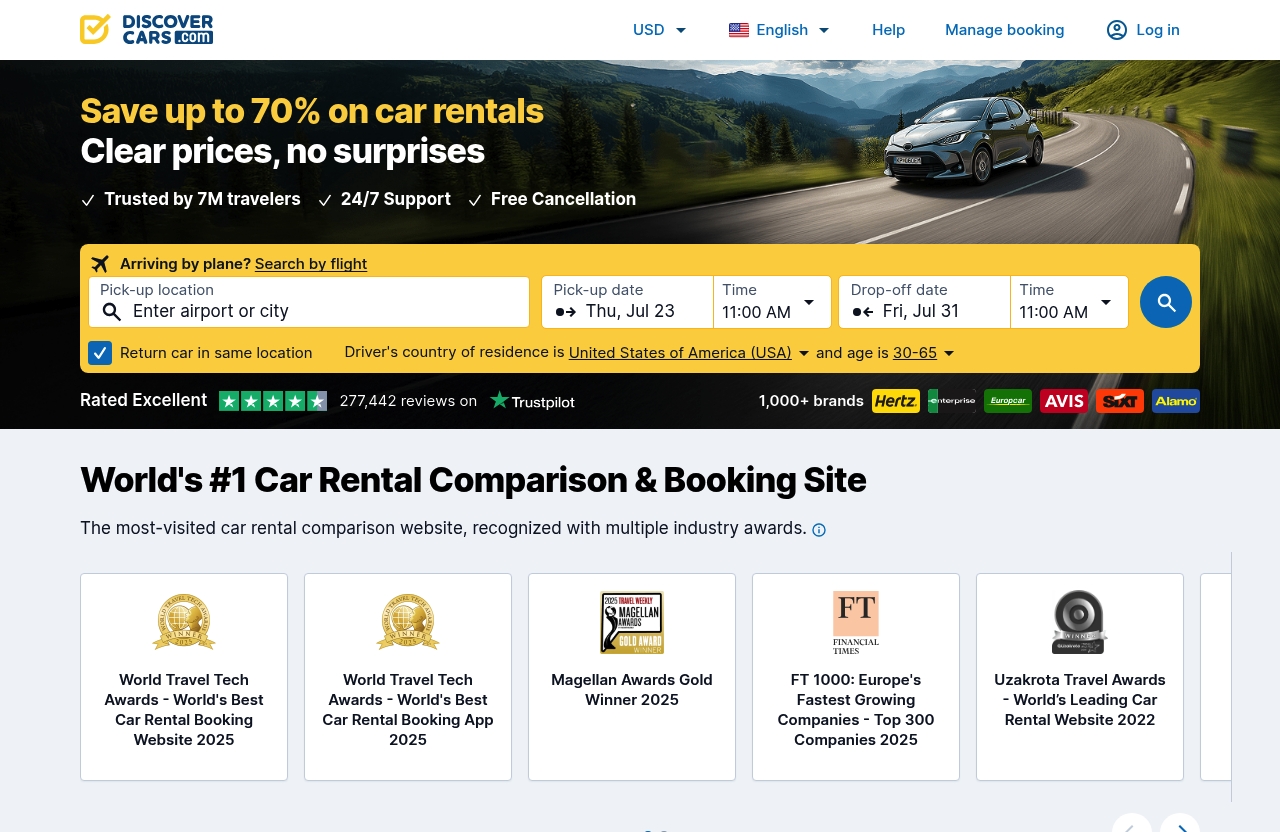
Comparing options early can help you choose the most practical pickup location, vehicle category, and rental policy for your route. You can compare car rental options through DiscoverCars, a car rental comparison and booking platform, before committing to flights or hotels.
For Europe-specific ideas, see our guide to the cheapest way to rent a car in Europe. Focus on total trip convenience, not only the headline rental rate.
Choose the right car size, transmission, fuel type, and luggage capacity
One overlooked part of how to plan a road trip abroad is matching the car to the route, not just the number of passengers. A small vehicle is easier to park on narrow streets, but it may not handle four adults, large suitcases, a stroller, and road-trip supplies comfortably.
Use this quick framework:
- Couples with light luggage: compact car or small SUV
- Families with child gear: larger sedan, wagon, SUV, or van
- Mountain routes: consider power, cargo space, and local road conditions
- Historic towns: prioritize compact width and parking ease
- Long motorway days: prioritize comfort, luggage room, and fuel efficiency
Also check whether the car is manual or automatic. In many destinations, manual transmission vehicles are common, while automatics may have more limited availability. Reserve the type you can confidently drive.
Understand deposits, insurance, mileage limits, and cross-border fees
Read the rental terms carefully before paying. The booking confirmation, rental agreement, and insurance conditions matter more than an appealing vehicle photo.
Check these points:
| Rental Detail | What to Verify |
|---|---|
| Deposit | Payment card requirements and expected security hold |
| Insurance | Coverage, exclusions, deductible, and claims process |
| Mileage | Whether mileage is limited or unrestricted |
| Fuel | Full-to-full policy and refueling expectations |
| Additional drivers | Whether each driver must be listed and any applicable charge |
| Borders | Written cross-border approval, country list, and fees |
| One-way rental | Drop-off location rules and any applicable charge |
If you are figuring out how to plan a road trip abroad on a budget, avoid booking solely by the lowest visible rate. A slightly different pickup location or policy can be more practical once you include insurance, mileage, luggage needs, and border permissions.
Step 4: Map the Route and Daily Driving Limits
Plan realistic daily mileage and driving hours
The best routes leave room for real travel conditions. A three-hour drive can become five hours once you add fuel, food, traffic, viewpoints, grocery stops, wrong turns, and hotel check-in.
For most travelers, aim for two to four hours of driving on standard touring days. Save longer drives for transfer days, and avoid scheduling several long days in a row.
This approach is central to how to plan a road trip abroad without turning a vacation into a moving commute. Families should generally plan shorter drives and schedule playgrounds, beach stops, or picnic breaks along the way.
Add rest stops, scenic stops, and buffer time for delays
Your route should include “known stops” and “optional stops.” Known stops are places you genuinely want to see; optional stops are viewpoints, villages, trails, or cafes you can skip if traffic or weather changes the day.
Build in buffers for:
- Fuel stops and restroom breaks
- Parking searches in popular towns
- Toll booths or vignette purchases
- Ferry check-in times
- Roadworks and weather delays
- Meal breaks away from the wheel
- Border wait times on multi-country routes
A good rule: do not fill every daylight hour. The most memorable road trips usually include unplanned discoveries, and you need flexibility to enjoy them.
Use maps, offline navigation, and multiple-stop planning methods
If you are wondering how to plan a road trip Google Maps can be an excellent starting point. Create a saved map with accommodations, major attractions, fuel stations, parking areas, grocery stores, and backup stops.
The best way to plan a road trip with multiple stops is to group destinations geographically, then test each day’s actual driving time in sequence. Do not calculate separate point-to-point drives and add them loosely; map the entire daily order as you will drive it.
A free road trip planner can help visualize stops, but always cross-check routes with official road alerts and your rental rules. Download offline maps before leaving Wi-Fi, and carry a backup navigation option in case your phone signal fails.
Step 5: Budget for the Real Cost of an Abroad Road Trip
Car rental, fuel, tolls, parking, and ferry costs
Travelers often underestimate the non-rental parts of driving. A realistic answer to how to plan a road trip abroad on a budget is to create separate budget lines instead of one vague “transportation” amount.
Track:
- Rental car and optional equipment
- Fuel or charging costs
- Tolls, vignettes, congestion charges, and bridge fees
- Parking garages, hotel parking, and street-parking meters
- Ferries and reservation fees
- Insurance and deposit-related costs
- Airport or city pickup-related charges where applicable
If your route includes Croatia, review our guide to Croatia toll roads before setting your daily budget. Toll methods can differ by country, so research whether your route uses booths, electronic systems, prepaid vignettes, or rental-company toll devices.
Cross-border charges, one-way fees, and extra driver fees
International routes can involve costs that do not appear in a basic itinerary. One-way trips, border permission, extra drivers, child seats, and late pickup timing can all affect your final travel budget.
When you learn how to plan a road trip abroad, make a simple “rental extras” line item with a buffer. This is especially important for multi-country trips, where a change in route may create new rules or charges.
Ask for confirmation of any cross-border permission before you leave. If an employee tells you something at the counter, ensure it is included in your rental documentation.
Accommodation strategy for better parking and fewer city-center penalties
Where you sleep affects what you spend. City-center hotels can be convenient, but they may come with expensive parking, restricted driving zones, or stressful access through narrow streets.
A balanced approach is often best:
- Stay near public transport when visiting large cities
- Pick up the car after city sightseeing, not before
- Choose hotels with confirmed parking outside major centers
- Use rural inns or smaller towns for lower-stress overnight stops
- Check whether parking requires reservations or has height limits
This is a practical part of international road trip planning that can save money and protect your sanity. Always verify a property’s exact parking arrangement rather than assuming “parking available” means free, secure, or suitable for your vehicle.
Free cancellation on most bookings · No hidden fees
Step 6: Prepare for Safety, Connectivity, and Emergencies
Buy travel insurance and check roadside assistance coverage
Travel insurance and rental coverage are not the same thing. Travel insurance may help with medical emergencies, trip interruption, or lost belongings, while rental coverage concerns damage, theft, and rental-related liabilities.
Before leaving, understand the roadside assistance process. Save the rental company’s emergency number, ask what happens if the car becomes undrivable, and learn whether you must contact the company before arranging repairs or a tow.
Set up SIM/eSIM, offline maps, and emergency contacts
Reliable connectivity makes how to plan a road trip abroad much easier in practice. Set up an international SIM or eSIM, but do not depend entirely on mobile data.
Before the trip:
- Download offline maps for each driving region
- Save hotels and key destinations in your maps app
- Keep emergency numbers in your phone and on paper
- Share your itinerary with a trusted person
- Save your insurer and rental provider contact details
- Learn the local emergency number for every country visited
At least once each day, check fuel range, weather, route conditions, and your next accommodation address. This five-minute habit prevents many avoidable late-night problems.
Pack a road trip emergency kit and document backup folder
A compact emergency kit should include water, snacks, a basic first-aid kit, charging cables, flashlight, tissues, wipes, and any medications you may need. Add seasonal gear such as warm layers, sun protection, rain jackets, or traction-related items if appropriate for your route.
Create a secure digital folder with copies of passports, licenses, rental confirmation, insurance details, hotel bookings, and emergency contacts. Keep physical copies separately from the originals.
If the car breaks down, move to a safe location if possible, use hazard lights, contact roadside assistance, and follow local safety instructions. If documents are lost, contact local authorities and your embassy or consulate promptly.
Step 7: Pack Smart for an International Drive
Essential documents and digital backups
A complete road trip abroad checklist begins with documents. Carry your passport, driver’s license, any required international driving permit, rental confirmation, insurance documents, and payment cards.
Keep your most important items accessible rather than buried in checked luggage. Do not leave passports or valuables in the car, even briefly.
Practical packing for weather, customs, and car comfort
When organizing how to plan a road trip abroad, pack for the car as well as the destination. A reusable water bottle, layers, sunglasses, compact umbrella, hand sanitizer, and a small day bag make long drives easier.
Research whether your destination requires or recommends vehicle safety equipment. Some countries may expect items such as reflective vests, warning triangles, first-aid kits, spare bulbs, or specific seasonal tires. Confirm official local requirements and verify what the rental vehicle already includes.
Family road trip add-ons: snacks, kid gear, and chargers
For families, a calm car environment is worth planning for. Pack refillable water bottles, non-messy snacks, entertainment, headphones, extra clothing, wet wipes, and a power bank.
If you are working through how to plan a road trip abroad with family, confirm child-seat rules before booking. Age, height, and restraint requirements vary by country, and availability of rental equipment should never be assumed.
Step 8: Arrival-Day Checklist Before You Leave the Lot
Inspect the car and photograph existing damage
The first 10 minutes after pickup can protect you from later disputes. Before driving away, photograph and video-record the exterior, wheels, windshield, roof, interior, dashboard, and fuel level.
Pay special attention to:
- Scratches, dents, and paint damage
- Cracked lights or mirrors
- Tire condition and wheel marks
- Windshield chips
- Interior stains or damage
- Warning lights on the dashboard
- Mileage and fuel reading
Make sure all existing damage is noted on the rental paperwork. This is one of the most valuable road trip abroad tips because details are easier to resolve before you leave the lot.
Test lights, phone mount, fuel policy, and navigation
Before joining unfamiliar traffic, adjust mirrors, seat position, climate controls, and navigation. Test lights, wipers, indicators, brakes, and charging ports if available.
Confirm the fuel type before refueling. Misfuelling a vehicle can create serious delays and expenses, particularly when you are tired after a flight.
For anyone learning how to plan a road trip abroad, this is also the time to set your first destination. Do not try to program navigation while moving through a busy airport exit.
Confirm return rules, operating hours, and refueling requirements
Ask exactly where and when to return the vehicle. Some airport rental returns are separate from the pickup location, and some offices have limited hours or a specific after-hours process.
Before leaving, confirm:
- Return address and navigation instructions
- Office opening hours
- After-hours drop-off procedure
- Required fuel level on return
- Whether a receipt or final inspection is provided
- Who to call if your return is delayed
Save these instructions to your phone and take a photo of any paperwork. Your final day will be easier if you already know the return process.
Free 2026 Road Trip Abroad Checklist Template
Printable master checklist
Use this road trip abroad checklist as a final pre-departure review. Save it to your phone, print it, or copy it into your preferred planning app.
- [ ] Choose country, season, and route style
- [ ] Check passport validity and entry requirements
- [ ] Confirm driver’s license validity
- [ ] Verify whether an international driving permit is needed
- [ ] Research local driving laws and road signs
- [ ] Check minimum rental age and driver requirements
- [ ] Compare airport and city rental pickup options
- [ ] Confirm car size, transmission, and luggage capacity
- [ ] Review deposit, insurance, fuel, and mileage terms
- [ ] Request cross-border permission if needed
- [ ] Map accommodation, parking, fuel, and major stops
- [ ] Budget for fuel, tolls, parking, ferries, and extras
- [ ] Download offline maps and save emergency contacts
- [ ] Purchase appropriate travel insurance
- [ ] Pack documents, chargers, emergency kit, and seasonal gear
- [ ] Photograph the rental car before departure
- [ ] Confirm return location, hours, and refueling policy
7-day and 14-day planning versions
For a seven-day trip, keep the route compact. Choose one region, limit hotel changes, and avoid trying to cross several countries simply because they look close together on a map.
For a 14-day trip, add rest days and use them strategically. You can explore more deeply, but the same principle applies: plan enough flexibility for weather, ferry delays, local recommendations, and days when you simply want to stay longer.
Last-minute 24-hour departure checklist
In the final 24 hours, revisit the essentials:
- [ ] Check flight and rental confirmation details
- [ ] Reconfirm all drivers have required documents
- [ ] Download offline navigation and entertainment
- [ ] Check weather and road alerts
- [ ] Notify your bank of travel if necessary
- [ ] Charge phones, power banks, and camera equipment
- [ ] Save copies of reservations and insurance documents
- [ ] Pack snacks, water, medications, and layers
- [ ] Verify the first night’s parking and check-in instructions
Recommended Next Reads and Destination Hubs
Use related destination guides to plan by country
Once you know how to plan a road trip abroad, destination-specific guides make the details easier. Road laws, parking habits, toll systems, and driving culture can change dramatically from one country to another.
For Mediterranean inspiration, explore these best Greece road trip routes and build an itinerary around realistic ferry schedules, island access, and mainland driving days.
Explore rental and driving rules before you go
Airport pickup requires its own planning, particularly when arrival flights are delayed or you need a vehicle that fits multiple passengers and bags. Our guide to car rental at Dubrovnik Airport can help you think through airport logistics before booking.
For classic long-distance route inspiration, see our Route 66 road trip guide. Even if your trip is elsewhere, its route-planning principles—realistic days, flexible stops, and advance booking during busy periods—apply almost anywhere.
Plan scenic routes and airport pickups
The best international drives combine preparation with room to explore. Use destination guides to identify scenic roads, parking realities, local regulations, and the stops that are genuinely worth your time.
Save this guide before your next trip, use the checklist at each booking stage, and compare rental options early. That is the most reliable way to make how to plan a road trip abroad feel manageable rather than overwhelming.
Free cancellation on most bookings · No hidden fees
FAQ
How far in advance should I plan a road trip abroad?
Start planning six to 12 weeks ahead for most trips. Begin earlier for peak-season travel, popular destinations, ferry-heavy routes, larger family vehicles, or itineraries with complicated rental and border rules.
Do I need an International Driving Permit for a road trip abroad?
It depends on where you are driving, your nationality, the language on your license, and rental-company policies. Check official destination requirements before booking, and remember that an international driving permit is usually used alongside your valid home license.
What is the best way to plan a road trip with multiple stops?
Group stops by geography, set a realistic daily driving limit, and map each day in the actual order you will drive it. Add buffers for meals, fuel, traffic, parking, weather, and detours instead of relying on map estimates alone.
Is it better to rent a car at the airport or in the city?
Airport pickup is often easier after landing and may offer more vehicle choice, while city pickup can sometimes suit travelers who want car-free time first. Compare the total rental terms, opening hours, pickup convenience, and cost of getting to each location.
What should I check before picking up a rental car abroad?
Bring your license, passport, reservation, and payment card. Confirm deposit and insurance terms, fuel policy, mileage conditions, cross-border permission, return rules, and existing vehicle damage before leaving the rental lot.
How do I budget for tolls, parking, and fuel on an international road trip?
Create separate budget categories for fuel, tolls or vignettes, parking, ferries, and one-way or cross-border charges. Research destination-specific systems in advance and add a buffer for unplanned parking, detours, and price changes.
Related Reading
- Cheapest way to rent a car in Europe
- Croatia toll roads explained for road trips
- Driving in Croatia: tolls, motorways and rules