
Yes — foreigners rent a car in Thailand every day, but only when they meet the rental company’s requirements and have the right documents at pickup. In 2026, the practical answer is simple: you usually need a valid passport, a valid home-country driver’s license, often an International Driving Permit, and a credit card in the main driver’s name.
The details matter. Rental companies can set stricter rules than travelers expect, and what gets you approved at the counter is not always the same as what local authorities may require on the road.
Free cancellation on most bookings · No hidden fees
Can foreigners rent a car in Thailand in 2026?
Short answer: yes, if you meet the rental requirements
Yes, can foreigners rent a car in Thailand in 2026? In most cases, yes — as long as the driver meets the supplier’s age, license, payment, and identity checks. Thailand has a well-developed rental market in Bangkok, Phuket, Chiang Mai, Krabi, Koh Samui, and major airports.
The key is preparation. When foreigners rent a car in Thailand, the pickup desk usually checks more than just the booking confirmation. They want to see that the person collecting the car is legally identifiable, properly licensed, and financially able to cover the deposit.
For most travelers, approval depends on four things:
- A valid passport
- A valid driver’s license from your home country
- An International Driving Permit if required or requested
- A credit card in the main driver’s name
If one of those is missing, the supplier may refuse the rental even if you prepaid online.
Who this guide is for: tourists, expats, digital nomads, and long-stay visitors
This guide is for tourists on a short trip, expats between leases, digital nomads staying for a few months, and long-stay visitors planning road trips. It also applies to travelers from the US, UK, EU, Australia, New Zealand, Canada, ASEAN countries, and other markets.
If you are still deciding whether driving is right for your trip, also read our broader guide to [Driving in Thailand in 2026](/driving-in-thailand-in-2026/). Renting a car is convenient, but Thailand’s traffic, road signs, motorbikes, and left-side driving can feel unfamiliar if you are used to quieter roads.
The goal here is practical: help you understand the Thailand car rental requirements before you book, so you do not get surprised at the counter.
Thailand car rental requirements for foreigners
Valid passport and entry stamp
A passport is the main ID document rental companies commonly check when foreigners rent a car in Thailand. The passport confirms your identity, nationality, and that the name matches the booking and payment details.
Many suppliers may also look for your current Thai entry stamp or immigration status. This is especially common at airport counters or with companies that want to confirm you are legally present in the country during the rental period.
Bring the original passport, not just a photo. A phone scan can help in emergencies, but it may not satisfy the pickup desk.
Home-country driver’s license: what must be valid
Your home-country driver’s license should be valid, current, and physically readable. The name should match your passport and booking as closely as possible.
If your license is expired, damaged, suspended, provisional, or printed in a language the supplier cannot verify, you may be refused. Some companies may also require that the license has been held for a minimum period, especially for larger vehicles or younger drivers.
For travelers wondering “can I rent a car in Thailand with US license,” the practical answer is: possibly, but a US license alone may not be enough for every supplier or every roadside situation. Always check the exact rental terms and the current guidance from official Thai sources.
International Driving Permit (IDP): when it is required or strongly recommended
An International Driving Permit is one of the most common points of confusion. For IDP Thailand car rental situations, many suppliers either require it or strongly recommend it when your license is not in English or does not clearly show the vehicle category.
An IDP is not a standalone license. It is a translation-style document used alongside your valid home-country license. If you only bring an IDP without your actual license, the rental company will usually treat that as incomplete.
When foreigners rent a car in Thailand, I recommend checking both:
- The legal driving requirements for your nationality and license type
- The rental supplier’s pickup policy
Those are related, but not identical.
Credit card, security deposit, and name matching
A credit card in the main driver’s name is commonly required for the security deposit. Debit cards, prepaid cards, virtual cards, and someone else’s card may be rejected depending on the supplier.
The name matching matters. If the booking is under one traveler, the license belongs to another, and the card belongs to a third person, the counter may not release the car.
Here is a fast overview of the documents required to rent a car in Thailand in most cases:
| Item | Commonly Checked? | Traveler Tip |
|---|---|---|
| Passport | Yes | Bring the original, not only a photo |
| Entry stamp or immigration status | Sometimes | Keep your passport accessible at pickup |
| Home-country license | Yes | Must be valid, readable, and match the driver |
| IDP | Often | Verify supplier policy before booking |
| Credit card | Usually | Must commonly be in the main driver’s name |
| Booking confirmation | Yes | Save offline in case airport Wi-Fi is poor |
Do you need an International Driving Permit in Thailand?
When an IDP is needed for foreigners
If you are asking “do I need an international driving permit in Thailand,” the safest practical answer is: many foreign drivers should plan to carry one, especially if renting. Requirements may vary by nationality, license format, treaty recognition, and supplier policy.
An IDP is especially important if your license is not in English or does not clearly show your driving category. It may also be requested during police checks or insurance-related situations.
Because rules and enforcement can differ, verify the latest information with official Thai transport or traffic authorities and with your rental supplier before travel. Do not rely only on a forum comment or a single traveler’s experience.
Why some travelers get turned away without one
Some travelers are surprised when a rental company refuses them without an IDP. This can happen even if they previously rented elsewhere with only a home license.
Suppliers have their own risk controls. Their insurance arrangements, local office policy, or franchise rules may require an IDP for foreign renters. If the pickup conditions say an IDP is required, arguing at the counter usually will not help.
This is one reason foreigners rent a car in Thailand more smoothly when they read the full rental conditions before paying, not just the headline price.
How to avoid confusion between driving legality and rental-company policy
There are two separate questions:
- Are you legally allowed to drive in Thailand with your license setup?
- Will this rental company hand you the keys?
You need both answers to be yes. A supplier might accept your documents, but that does not automatically prove your setup satisfies every roadside or insurance requirement. Likewise, local driving eligibility does not force a private rental company to accept your booking.
Before booking, check the supplier’s license wording carefully. If anything is unclear, contact the rental company or booking platform in writing and keep the response.
Age limits, driving experience, and extra fees
Minimum age to rent a car in Thailand
The Thailand rental car age limit depends on the supplier, vehicle class, and pickup location. Many rental companies set a minimum age, and some vehicle categories may have higher minimums.
Do not assume every company has the same rule. A compact car in Chiang Mai may have different conditions from an SUV in Phuket or a premium vehicle at Bangkok Suvarnabhumi Airport.
When foreigners rent a car in Thailand, age is not just a formality. If you are below the supplier’s minimum age, the booking can be refused at pickup.
Young driver fees and senior driver policies
Some suppliers apply young driver fees for renters under a certain age. Others may set upper-age rules or request extra confirmation for older drivers.
These fees and restrictions are supplier policies, not universal rules across every rental company. Always check the “driver requirements,” “fees,” or “rental conditions” section before booking.
If you are comparing offers, look beyond the base rate. A cheap listing can become less attractive if it adds a young driver surcharge, high deposit, or stricter insurance conditions.
Minimum license-holding period and why it matters
Some companies require the driver to have held a full license for a minimum period. This is common in many countries and can apply in Thailand rental listings too.
A newly issued license may cause questions if it does not show the original issue date. If your license was recently renewed, bring supporting documentation if available, or ask the supplier in advance whether the renewal date is acceptable.
This matters because pickup agents often follow checklist rules. If they cannot verify your driving experience, they may delay or decline the rental.
What rental companies check at pickup
Passport verification
At pickup, the agent will usually compare your passport with the booking. They may check your full name, nationality, passport number, and entry information.
If your passport name includes middle names but your booking does not, that is usually manageable. Bigger issues happen when the booking is under a nickname, a spouse, or a different traveler entirely.
To avoid problems, book using the exact name of the main driver as shown on the passport and license.
License validity and expiration checks
The desk agent will check that your license is valid for the rental period. If it expires during the trip, the supplier may refuse the rental or shorten the rental period.
They may also inspect the license category. For example, a car rental requires that your license covers passenger cars, not only motorcycles.
Foreigners driving in Thailand should also carry their license and IDP while driving, not leave them at the hotel. If stopped or involved in an incident, you may need to show them.
Credit card and deposit authorization
The rental company commonly places a security deposit or authorization hold on the main driver’s credit card. The amount, accepted card types, and deposit process vary by supplier.
Make sure your card has enough available credit. Also check whether your bank blocks overseas authorizations, especially if you are arriving after a long flight and trying to collect the car at night.
If the card is declined, belongs to another person, or is not accepted by the supplier, the rental can be refused even if the booking itself is confirmed.
Booking voucher and driver name consistency
Your booking confirmation or voucher should match the main driver. Save a digital copy and consider keeping a screenshot offline.
Name consistency is one of the easiest issues to prevent. Use the same main driver across:
- Booking confirmation
- Passport
- Driver’s license
- Credit card
- IDP, if applicable
Small differences may be accepted, but major mismatches can create unnecessary stress.
Free cancellation on most bookings · No hidden fees
How to rent a car in Thailand as a foreigner step by step
Compare prices and filters before you book
Start by comparing suppliers, vehicle types, deposit terms, fuel policies, mileage rules, and pickup conditions. The cheapest headline price is not always the best rental.
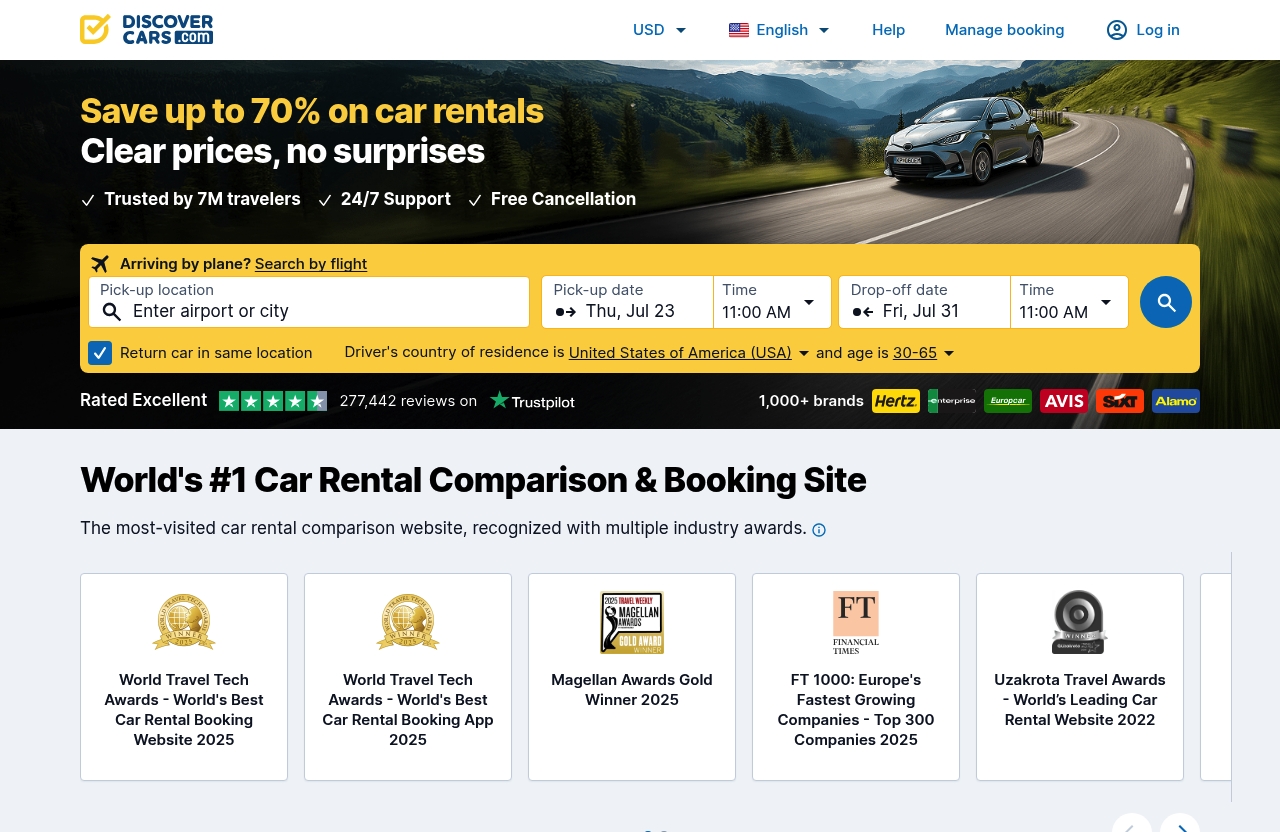
A comparison platform can make this easier. For example, Discover Cars lets travelers compare car rental deals in Thailand and manage bookings in one place. It also provides an English interface along with many other languages and currencies, which is useful if you are checking details before an international trip.
When foreigners rent a car in Thailand, the most important comparison point is not only price. It is whether your documents, age, license, IDP, and payment card match the supplier’s requirements.
Choose the right pickup location and transmission
Airport pickup is convenient, especially in Bangkok, Phuket, Chiang Mai, Krabi, and Koh Samui. City pickup can be cheaper or easier if you do not want to drive immediately after a long-haul flight.
Also check transmission carefully. Automatic cars are common in rental fleets, but manual options may appear in some listings. Do not assume every vehicle is automatic.
For island trips, read location-specific advice such as our [Phuket Car Rental: Honest 2026 Guide for Smart Travelers](/phuket-car-rental-honest-2026-guide/) before choosing a pickup point. Traffic, parking, hills, and beach access can affect what car makes sense.
Review insurance, deposit, and fuel policy
Before paying, read the insurance and deposit details. Look for the excess amount, what is excluded, whether tires or glass are covered, and how claims are handled.
Rental coverage can be confusing, so it helps to understand the trade-offs before you arrive at the counter. Our guide on [Rental Car Full Coverage Worth It in 2026: Is It Worth Buying?](/rental-car-full-coverage-worth-it-in-2026/) explains what to consider without assuming every traveler needs the same coverage.
Fuel policy also matters. “Full to full” is usually straightforward if you return the car with a full tank, but always keep the fuel receipt and take a dashboard photo at return.
Inspect the car and document damage before leaving
Before driving away, inspect the vehicle slowly. Take photos and videos of all sides, wheels, windshield, mirrors, roof, interior, fuel level, and odometer.
Ask the staff to mark existing damage on the rental agreement. Do not rely only on verbal reassurance.
This habit is useful everywhere, not just Thailand. Similar pickup discipline applies whether you are renting in Southeast Asia, the US, or Europe — as covered in our practical guides like [Florida Car Rental: 10 Tips to Save in 2026](/florida-car-rental-10-tips-to-save-in-2026/) and [Car Rental in Dubrovnik Airport: A Practical 2026 Guide for Smarter Pickup, Parking, and Road Trips](/car-rental-in-dubrovnik-airport-2026-guide/).
Common reasons foreigners are refused a rental in Thailand
No IDP when required by the supplier
One of the most common refusal reasons is missing an IDP when the rental conditions require one. This is frustrating because travelers often discover it only after reaching the counter.
If the supplier says an IDP is required, treat that as a firm pickup requirement. Do not assume you can negotiate around it.
When foreigners rent a car in Thailand, it is smarter to solve the IDP question before departure, because you usually need to obtain it in your home country before traveling.
Expired or unreadable license
An expired license is an obvious problem, but unreadable licenses can also cause issues. If the text is faded, cracked, damaged, or not in a language the agent can interpret, the supplier may hesitate.
A recently renewed license can also create confusion if the issue date appears very recent. If your license history matters, ask the supplier what proof they accept.
The main point: your license must be easy for the rental company to verify.
No passport or missing entry stamp
Some travelers leave their passport in a hotel safe and arrive with only a photo. That may not be enough.
The rental company may need to verify your passport physically. In some cases, they may also want to see your current Thai entry stamp or immigration record.
If you are collecting a car after checking into your hotel, remember to bring your passport back to the rental office.
Driver name mismatch or no credit card
A mismatch between the booking name, license, passport, and credit card can stop the rental. The most common version is when one person books and pays, but another person wants to drive.
If the main driver does not have an accepted credit card, the supplier may refuse the car. Some companies may allow a driver change, but this is not guaranteed and may involve fees or a new booking.
Here is a quick troubleshooting table:
| Problem at Pickup | Why It Matters | How to Prevent It |
|---|---|---|
| No IDP | Supplier may require it for foreign licenses | Check license rules before booking |
| Expired license | Driver cannot be verified as valid | Renew before travel |
| No passport | Identity cannot be confirmed | Bring original passport |
| Card not in driver’s name | Deposit cannot be authorized | Use main driver’s credit card |
| Booking under wrong name | Contract does not match driver | Book with the exact driver name |
Is it worth renting a car in Thailand as a foreigner?
Best use cases: islands, countryside, family trips, and road trips
Renting can be very worthwhile if you want flexibility. It is especially useful for families, travelers with luggage, photographers, surfers, golfers, and anyone exploring rural areas or beaches away from main transport routes.
A car can make sense in Phuket, Krabi, Chiang Mai countryside, Khao Lak, Hua Hin, and national park areas. It also helps when hotels are spread out and taxis are expensive or inconsistent.
For these trips, foreigners rent a car in Thailand because it saves time and gives them control over the day.
When taxis, buses, ferries, or rideshares may be better
You may not need a rental car if you are staying in central Bangkok, relying on ferries between islands, or spending most of your time in walkable beach areas. Parking and traffic can be annoying in dense urban zones.
If your itinerary is mostly temples, markets, nightlife, and short transfers, taxis or rideshares may be simpler. Buses, trains, and ferries can also be better for one-way routes where returning a car is inconvenient.
Be honest about your confidence level. If left-side driving, scooters, tight roads, or aggressive traffic make you nervous, renting may not improve the trip.
Safety and insurance considerations
Thailand can be a rewarding place to drive, but it requires attention. Expect motorbikes, sudden lane changes, variable road surfaces, and different driving habits from what you may know at home.
Choose a car size you can handle, avoid driving tired after long flights, and do not rush on mountain or island roads. Keep your passport copy, license, IDP if applicable, rental agreement, and emergency contacts accessible.
Insurance is also important. Review what is included, what is excluded, and what deposit you are responsible for before accepting the keys.
Best documents checklist before you book
Passport
Bring your original passport and make sure it is valid for your trip. Keep a digital backup, but do not expect a photo to replace the physical document at pickup.
Check that your booking name matches your passport name. If your passport has multiple surnames or middle names, use the same format where possible.
Home-country license
Your home-country license should be valid for the whole rental period. It should clearly show your name, license number, expiration date, and vehicle category.
If your license is not in English, or if the category is unclear, confirm whether the supplier requires an IDP or certified translation.
IDP if applicable
An IDP is strongly worth sorting out before your trip if your supplier requires it or your license format may be unclear. Remember that it must be carried with your actual license.
Do not wait until you land in Thailand to solve this. Many travelers need to obtain an IDP from an authorized organization in their home country.
Credit card in the driver’s name
Bring a physical credit card in the main driver’s name, with enough available credit for the deposit authorization. Check the supplier’s card rules before booking.
If you only have a debit card, prepaid card, virtual card, or a card belonging to another traveler, contact the supplier before paying. Do not assume it will be accepted.
Booking confirmation
Save your booking confirmation offline. It should show the supplier, pickup location, dates, main driver, vehicle class, included coverage, deposit details, fuel policy, and required documents.
If you book through a comparison tool such as Discover Cars, use the booking details and supplier terms to double-check pickup requirements before you travel.
Before paying, your checklist should include:
- Passport
- Valid home-country driver’s license
- IDP if required or recommended
- Credit card in the main driver’s name
- Booking confirmation or voucher
- Supplier contact details
- Insurance and deposit terms
- Pickup address and opening hours
Final answer: can foreigners rent a car in Thailand?
The fastest yes/no summary
Yes, foreigners rent a car in Thailand in 2026 if they meet the rental company’s requirements. In practical terms, that usually means a valid passport, valid home-country driver’s license, possibly an IDP, and a credit card in the main driver’s name.
The most common mistake is assuming that a confirmed online booking guarantees pickup. It does not. The rental desk still checks your documents, age, license, deposit card, and name matching.
What to verify before paying
Before you pay, verify the supplier’s exact rules for age, license language, IDP, credit card, deposit, insurance, and pickup documents. If any rule is unclear, ask the supplier or booking platform in writing.
The final answer is confident but conditional: can foreigners rent a car in Thailand? Yes — but the smoothest rentals happen when you prepare the paperwork before booking, not at the counter.
Free cancellation on most bookings · No hidden fees
FAQ
Can a US citizen rent a car in Thailand?
Yes, a US citizen can usually rent a car in Thailand if they meet the supplier’s age, license, ID, and payment requirements. They should bring a valid US driver’s license, passport, and a credit card in the main driver’s name.
A US traveler should also verify whether an IDP is required for their rental and driving situation. Supplier policy and local driving requirements should both be checked before travel.
How to rent a car in Thailand as a foreigner?
To rent car in Thailand as a foreigner, compare suppliers, choose a suitable pickup location, read the rental conditions, and book under the main driver’s exact name. Then bring your passport, valid license, IDP if applicable, credit card, and booking confirmation to pickup.
At the counter, expect the company to check your identity, license validity, deposit card, and booking details before releasing the vehicle.
Can I drive in Thailand with my US driver’s license?
A US driver’s license may be accepted by some rental suppliers, but a foreign license alone may not be enough in every legal, insurance, or roadside situation. Many travelers are advised to carry an IDP with their valid US license.
If you are asking “can I rent a car in Thailand with US license,” check both the supplier’s policy and current official Thai guidance before driving.
Can you rent a car in Thailand without an international license?
Some companies may allow certain foreign renters without an International Driving Permit, especially if the license is in English and clearly shows the vehicle category. However, many suppliers require or strongly prefer an IDP.
The safest approach is to verify the rental conditions before booking and confirm the local driving requirements for your nationality and license type.
What documents do I need to rent a car in Thailand?
The documents required to rent a car in Thailand commonly include a valid passport, valid home-country driver’s license, IDP if required, credit card in the main driver’s name, and booking confirmation.
Some suppliers may also check your entry stamp, license-holding period, age eligibility, and deposit authorization. Always read the pickup requirements for your exact booking.
Can foreigners rent a car in Thailand if they are staying long term?
Yes, foreigners rent a car in Thailand for both short trips and longer stays, but long-term visitors still need to meet the supplier’s document and payment rules. Expats, digital nomads, and extended-stay travelers should pay close attention to license validity, IDP rules, visa or entry status checks, and insurance conditions.