
Croatia is made for the road. Few European countries combine sea-hugging highways, ferry-linked islands, limestone mountains, vineyard peninsulas, medieval hill towns, and national-park detours so neatly into one self-drive trip. If you are comparing the best scenic drives in Croatia, the real question is not whether to drive, but which route fits your time, confidence level, and appetite for coast, mountains, or slow village wandering.
This guide breaks down five routes: the Adriatic Highway from Zadar to Split, the Split to Dubrovnik coastal drive, an Istrian Peninsula loop, the Velebit and Majstorska Road panoramas, and the Pelješac Peninsula with Southern Dalmatia. Use it as a practical route-selection guide, not just a list of pretty roads.
Free cancellation on most bookings · No hidden fees
Why Croatia Is One of Europe’s Best Self-Drive Destinations
What makes Croatia ideal for scenic driving
Croatia works beautifully as a self-drive destination because the scenery changes quickly. In one day, you can move from a walled coastal town to a mountain pass, a vineyard road, or a ferry port leading toward island landscapes.
The best scenic drives in Croatia are also varied. Some routes are easy coastal cruises with frequent places to stop for coffee and photos, while others climb into rougher, quieter mountain terrain where the reward is space, silence, and huge panoramas.
A rental car helps because many of Croatia’s most rewarding viewpoints, coves, trailheads, and small villages are awkward to reach by public transport. Buses connect major towns well enough, but they rarely let you pause at a roadside viewpoint or detour to a hidden beach when the light looks perfect.
When to go for the best road-trip conditions
For most travelers, late spring and early autumn offer the best balance of weather, traffic, and flexibility. May, June, September, and early October usually mean warmer days, open coastal services, and fewer parking headaches than peak summer.
July and August bring long daylight hours and the full Adriatic holiday atmosphere, but also heavier congestion around Split, Dubrovnik, ferry ports, and beach towns. If you are planning the most famous scenic drives in Croatia during high season, start early, reserve accommodation with parking, and build in buffer time.
Winter can be rewarding for quieter coastal roads, especially in Istria and Dalmatia, but mountain routes need extra caution. Weather can change quickly around Velebit, and some higher or unpaved roads may be unsuitable after snow, heavy rain, or strong wind.
How to use this guide to choose your route
Start by choosing your scenery type: coast, island-access peninsulas, hill towns, waterfalls, or mountain panoramas. Then match the route to your trip length and driving comfort.
If this is your first Croatia self-drive itinerary, prioritize the Adriatic Highway Croatia route or the Split to Dubrovnik drive. If you want slower food-and-village travel, choose an Istria road trip. If you want drama and fewer crowds, look toward Velebit scenic road options and Majstorska Road Croatia.
Think of this article as a written Croatia road trip map. You can combine two or three routes into a longer trip, or choose one loop for a relaxed day from a coastal base.
Quick Picks: The 5 Best Scenic Drives in Croatia
Best coastal drive for first-timers
The Adriatic Highway, especially the D8 Croatia section from Zadar to Split, is the best first-timer choice. It gives you sea views, easy town stops, and classic Dalmatian road-trip scenery without needing complicated ferry logistics.
This is one of the most accessible scenic drives in Croatia because it can fit into a single travel day, but it also rewards a slower pace. Add beach stops, Šibenik, Trogir, or a national-park detour if you have time.
Best island drive
For island flavor without committing to a full island-hopping itinerary, the Pelješac Peninsula drive is the easiest win. It feels maritime, local, and relaxed, with wine villages, sea views, and access points that pair naturally with Dubrovnik or Southern Dalmatia.
Pelješac is not technically an island, but the long, narrow peninsula delivers a similar sense of escape. It is ideal if you want coastal curves, small harbors, and a slower road rhythm.
Best inland mountain drive
The Velebit and Majstorska Road panoramas are the top choice for travelers who want elevation, switchbacks, and wilder Croatian scenery. This route suits confident drivers who are comfortable with narrow roads and changing conditions.
Unlike the coastal scenic drives in Croatia, Velebit feels more rugged and remote. It is best approached with a flexible schedule and a careful eye on weather.
Best route for waterfalls and panoramas
The Zadar-to-Split corridor works well if you want to combine the coast with inland detours. From this part of Dalmatia, travelers often build in Krka National Park, viewpoints above the coast, and smaller seaside towns.
This route is especially useful for a Croatia road trip 7 days plan because it can connect northern Dalmatia, national parks, and Split without backtracking too much.
Best route for a relaxed half-day escape
The Pelješac Peninsula and Southern Dalmatia loop is the best lower-effort scenic escape, especially from Dubrovnik. It offers a strong reward-to-driving-time ratio: vineyards, water views, villages, and seafood stops without needing an exhausting mileage day.
| Route | Best For | Approximate Driving Time | Difficulty | Vibe |
|---|---|---|---|---|
| Adriatic Highway D8: Zadar to Split | First-timers, coastal views | 2.5–4.5 hours without long stops | Easy to moderate | Classic Dalmatian coast |
| Split to Dubrovnik coastal drive | Big scenery, longer itineraries | 3.5–6+ hours depending on stops | Moderate | Dramatic cliffs, islands, rivieras |
| Istrian Peninsula loop | Food, villages, relaxed pacing | Half day to 3 days | Easy to moderate | Hill towns, vineyards, coast |
| Velebit and Majstorska Road | Mountain panoramas | Half day to full day | Moderate to challenging | Rugged, elevated, adventurous |
| Pelješac Peninsula loop | Dubrovnik add-on, wine country | Half day to full day | Easy to moderate | Coastal, local, slow travel |
1. Adriatic Highway (D8): Zadar to Split
Why this is Croatia’s classic scenic drive
The Adriatic Highway Croatia route is the road many travelers imagine before they arrive: blue water on one side, pale limestone hills on the other, and a chain of small towns, marinas, beaches, and island views along the way. The Zadar to Split section is a particularly manageable introduction.
This stretch of D8 Croatia is one of the best scenic drives in Croatia because it delivers variety without feeling logistically difficult. You can treat it as a direct transfer, but it becomes far more memorable when planned as a slow coastal day.
Expect the road to alternate between open sea-view sections, developed coastal towns, and inland-feeling stretches where the highway pulls away from the water. Drive times vary with traffic, roadworks, and stop choices, so avoid planning it to the minute.
Best stops: viewpoints, coves, and seaside towns
Zadar itself is worth time before you start driving. Its waterfront, Roman layers, and sunset-facing promenade make it a natural launch point for a southbound road trip.
From there, consider weaving in stops such as Biograd na Moru, Šibenik, Primošten, and Trogir. Šibenik is especially useful because it pairs coastal atmosphere with access to Krka National Park, while Primošten is a classic quick-photo stop with a compact old town set against the sea.
For a more flexible Croatia road trip map, mark three types of stops before you leave:
- One historic town for walking and lunch
- One viewpoint or beach pull-off for photos
- One inland detour if you want waterfalls, hills, or quieter roads
This keeps the day structured without making it feel rushed.
How to avoid the busiest stretches
The biggest mistake on this route is starting late in high season and expecting every coastal town to have easy parking. In July and August, leave early, especially if your day ends in Split or near a ferry port.
If you are driving the Adriatic Highway as part of a longer set of scenic drives in Croatia, stay overnight in a smaller town rather than forcing a late arrival into Split. Šibenik, Primošten, and Trogir can all work depending on your pace and accommodation availability.
Also remember that the fastest road is not always the prettiest road. Croatia’s A1 motorway may save time between regions, but the D8 is the route to choose when the journey itself is the point.
2. Dalmatian Coast Drive: Split to Dubrovnik
The most dramatic coastal scenery
The Split to Dubrovnik drive is the big-stage version of coastal Croatia. It links two of the country’s most famous destinations while passing the Makarska Riviera, high coastal slopes, island views, and Southern Dalmatian landscapes.
For many travelers, this is one of the most memorable scenic drives in Croatia because the road feels cinematic. Mountains rise sharply above the coast, the sea constantly reappears, and the light changes the mood of the route throughout the day.
The direct journey can be done in a single day, but it is best treated as a road-trip segment rather than a transfer. A rushed drive misses the best part: the ability to stop where the cliffs, beaches, and island views demand it.
Best detours for Makarska Riviera and viewpoints
The Makarska Riviera is the main scenic highlight between Split and Dubrovnik. Towns such as Omiš, Brela, Baška Voda, and Makarska give you a mix of beaches, harbor walks, and mountain-backed views.
Omiš is a practical early stop if you want a short walk, river scenery, or a coffee break soon after leaving Split. Farther south, the road becomes increasingly dramatic where the Biokovo massif rises behind the coast.
Build your day around fewer, better stops:
- Omiš for river-meets-sea scenery
- Brela or Baška Voda for beaches and clear-water views
- Makarska for a longer lunch or overnight break
- Roadside viewpoints where safe pull-offs allow
Do not stop suddenly on narrow coastal stretches. Use marked pull-offs and parking areas, especially in summer when traffic can move unpredictably.
One-way trip planning and ferry/toll considerations
A one-way Split to Dubrovnik drive can be very efficient, especially if your flights arrive in one city and depart from the other. It may cost more than a loop depending on supplier terms, but it can save backtracking and make your itinerary feel smoother.
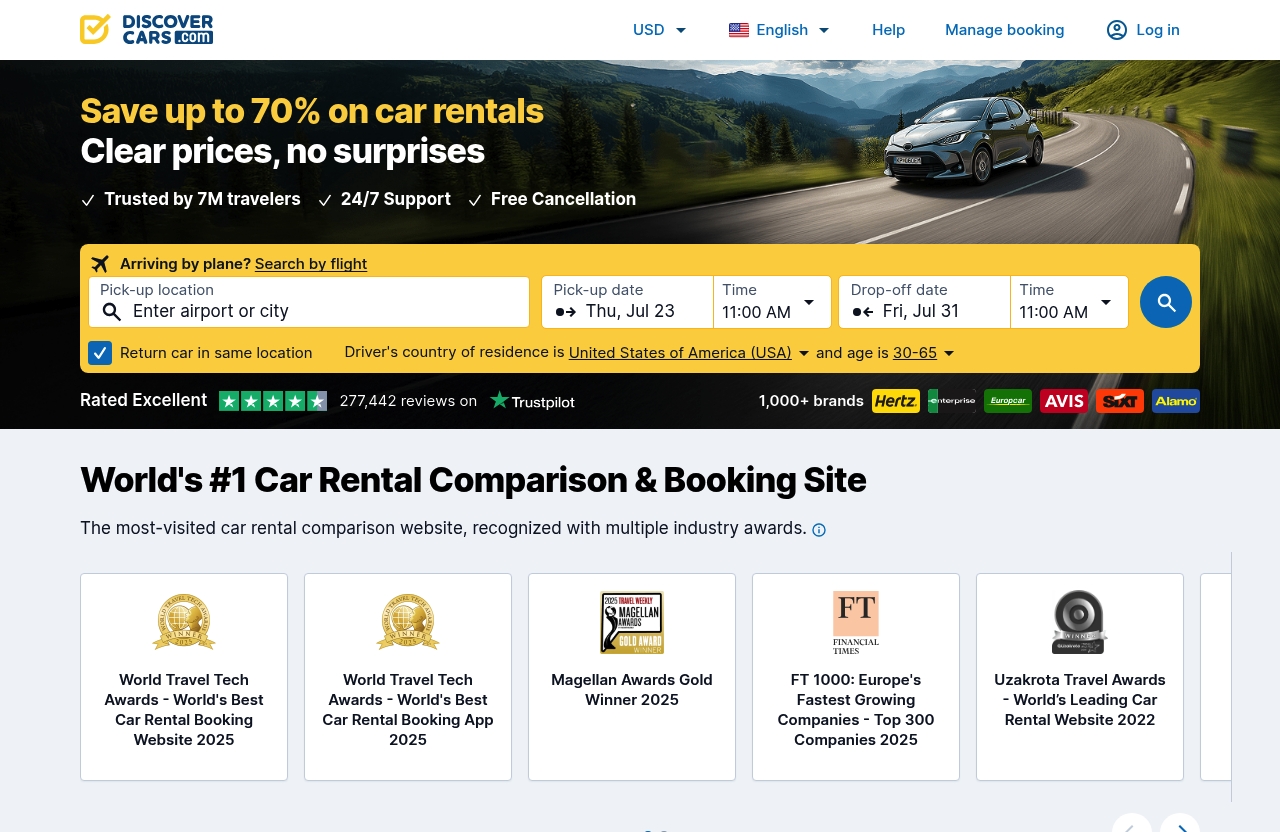
If you are comparing rental options, DiscoverCars presents itself as a car rental comparison and booking platform with the homepage wording “Best Car Rental Deals with Free Cancellation, Compare & Save!” It also lets users log in or create an account and manage bookings in one place, which is useful when coordinating a multi-city Croatia road trip.
Check whether your route involves toll roads, ferry legs, or cross-border conditions. The opening of modern infrastructure has simplified Southern Dalmatia travel, but rental terms, border rules, and ferry policies can still vary by provider.
3. Istrian Peninsula Loop
Hilltop villages and vineyard roads
An Istria road trip feels different from Dalmatia. Instead of long coastal drama, the pleasure comes from short distances, hilltop towns, vineyard lanes, truffle-country villages, and pastel seaside ports.
This is one of the best scenic drives in Croatia for travelers who prefer slower days and frequent stops. The roads encourage wandering: a morning in a medieval town, lunch in the countryside, then sunset on the coast.
Motovun, Grožnjan, Rovinj, Poreč, and Bale are common anchors for an Istrian loop. You do not need to visit all of them; the region works best when you leave time for unplanned cafés, viewpoints, and village walks.
Why Istria is ideal for a slower road trip
Istria is compact, which makes it forgiving. You can base yourself in one place and make daily loops, or move every night without huge driving distances.
Compared with the busier Dalmatian coast, Istria often feels more relaxed behind the wheel. Roads can still be narrow in old towns and rural areas, but the rhythm is generally less intense than approaching Split or Dubrovnik in peak season.
Food is also a major reason to drive here. A car lets you connect wineries, olive-oil producers, inland restaurants, and coastal towns in a way that would be difficult on public transport.
Suggested loop order and key stops
A simple loop might start in Pula or Rovinj, turn inland toward Bale, Grožnjan, and Motovun, then return via Poreč or the west coast. If you arrive from Zagreb or Slovenia, you can reverse the order without losing the logic.
For a two-day loop, keep it simple:
- Day 1: Rovinj or Pula, Bale, and a coastal sunset
- Day 2: Motovun, Grožnjan, vineyard roads, and Poreč
For three days, add more slow time rather than more mileage. Istria rewards lingering, and many travelers find it a refreshing contrast after the more famous scenic drives in Croatia along the Dalmatian coast.
Free cancellation on most bookings · No hidden fees
4. Velebit and Majstorska Road Panoramas
Mountain switchbacks and big-view roads
Velebit is where Croatia’s road-trip character changes completely. Instead of beach towns and harbors, you get limestone ridges, exposed slopes, forested sections, and far-reaching views toward the Adriatic and inland landscapes.
Majstorska Road Croatia is often discussed by road-trip enthusiasts because of its historic mountain-road character and dramatic setting. Conditions can vary, and parts may be narrow, rough, or unsuitable for nervous drivers or inappropriate vehicles, so research current conditions before committing.
This is one of the most adventurous scenic drives in Croatia, but it should not be treated casually. The reward is big-view driving with far fewer crowds than the coast, provided you approach it with patience and preparation.
Who should choose this route
Choose Velebit if you want a wilder inland experience and are comfortable adapting your plans. It suits photographers, hikers, repeat visitors, and travelers who enjoy mountain roads more than beach-hopping.
It may not be the best choice for a first day in Croatia, a nervous driver, or anyone on a tight schedule. Weather, road surface, visibility, and rental-car restrictions matter more here than on standard coastal highways.
If you are building a Croatia road trip 10 days itinerary, Velebit can be a brilliant contrast between Dalmatia and inland Croatia. It adds altitude and drama without needing to abandon the coast entirely.
Safety and road-condition tips
Before driving mountain roads, check local road updates, weather forecasts, and whether your rental agreement allows the specific road type you plan to use. Some scenic mountain roads may include unpaved or rougher sections, and rental terms can restrict those.
Drive slowly, use lower gears on descents, and do not rely on mobile signal everywhere. Bring water, snacks, and offline maps, especially if you are planning photo stops or hikes.
For a safer version of the Velebit scenic road experience, combine paved approaches, national-park viewpoints, and shorter mountain segments rather than trying to “complete” every rugged road. The best scenic drives in Croatia are the ones you can enjoy confidently.
5. Pelješac Peninsula and Southern Dalmatia Loop
Why this route feels like a hidden gem
The Pelješac Peninsula drive is one of the easiest ways to add a quieter Southern Dalmatian chapter to your trip. It has sea views, vineyards, small settlements, oyster-and-wine country, and a less hurried mood than the major city-to-city routes.
For travelers based in Dubrovnik, Pelješac works especially well as a day trip or overnight escape. It gives you the feeling of going somewhere distinct without needing a complicated ferry schedule.
Among the scenic drives in Croatia, this route is a strong choice when you want atmosphere over distance. It is not about ticking off major sights; it is about slow curves, water glimpses, local flavors, and relaxed stops.
Wine-country stops and coastal views
Pelješac is known for wine country, especially around villages and slopes where vineyards run toward the sea. If you plan to taste wine, designate a driver or arrange tastings responsibly with enough time and food.
Ston and Mali Ston are natural stops near the peninsula’s entrance, known for walls, salt pans, and seafood traditions. Farther along the peninsula, the road becomes more rural, with glimpses of channels, islands, and small harbors.
Good planning keeps the day enjoyable:
- Start early from Dubrovnik if visiting in summer
- Choose two or three main stops, not six
- Leave time for a long lunch or waterfront pause
- Check parking options before entering small villages
How to combine with Dubrovnik-based plans
From Dubrovnik, Pelješac can be a relaxed out-and-back or part of a wider Southern Dalmatia loop. If you have more time, you can combine it with Korčula access, depending on ferry schedules and your rental terms.
This route also works as a decompression day after the Split to Dubrovnik drive. Instead of tackling another long journey, you can enjoy a shorter scenic outing with plenty of time outside the car.
If you are designing a Croatia road trip 14 days plan, Pelješac can serve as a slow, flavorful finale before returning your car in Dubrovnik or continuing north.
How to Plan a Croatia Scenic Drive Trip Without Stress
Rental car checklist before pickup
Before pickup, confirm the basics: transmission, fuel policy, pickup and drop-off locations, insurance options, deposit requirements, and whether cross-border or ferry travel is permitted. These details matter more in Croatia than many travelers expect because itineraries often include islands, peninsulas, and one-way routes.
Inspect the vehicle carefully and photograph existing marks, wheels, windscreen, and fuel level. Save rental documents offline and make sure the emergency contact details are easy to find.
Travelers planning scenic drives in Croatia can compare rental options through DiscoverCars, which supports multiple currencies including EUR, USD, GBP, CAD, AUD, NZD, and others. The platform also lists language options including English, Hrvatski, Español, Français, Deutsch, Italiano, and more, which can help international travelers review booking details comfortably.
Automatic vs manual in Croatia
Manual cars are common in Europe, and they may be more widely available than automatics depending on location and season. If you strongly prefer automatic, reserve early and check the booking confirmation carefully.
For mountain roads, coastal towns, and tight parking areas, choose the transmission that makes you most comfortable. Saving a little effort on a manual is not worth stress if you are not used to hill starts, narrow lanes, or stop-and-go summer traffic.
On the other hand, confident manual drivers will usually adapt quickly. The key is matching the car to your actual route, not just the lowest available option.
Parking, tolls, ferries, and cross-border rules
Parking is often the biggest practical challenge on the most popular scenic drives in Croatia. Old towns were not designed for modern traffic, and summer demand can be intense.
Book accommodation with parking whenever possible, especially in Split, Dubrovnik, Rovinj, Zadar, and smaller beach towns. For day visits, use official lots and expect to walk into the historic center.
For tolls, keep a payment card and some cash available. If using ferries, arrive early in peak season and confirm whether your rental car is allowed on planned ferry routes. For cross-border travel, never assume it is included; check the rental terms before driving into Bosnia and Herzegovina, Montenegro, Slovenia, or elsewhere.
Best Scenic Drives in Croatia: Suggested Itineraries by Trip Length
1-day scenic drive
If you have one day, choose one route and keep it focused. The best options are Zadar to Split on the D8, a Pelješac Peninsula drive from Dubrovnik, or a compact Istrian loop from Rovinj or Pula.
For first-timers, Zadar to Split is the best single-day sample of scenic drives in Croatia. Start early, stop in Šibenik or Primošten, and arrive before evening traffic becomes frustrating.
From Dubrovnik, Pelješac is easier and less tiring than trying to drive too far north and back. From Istria, combine one coastal town with one hill town rather than racing around the whole peninsula.
3-day coastal sampler
A strong three-day itinerary can run Zadar to Split, Split to Makarska or nearby, then onward toward Dubrovnik. This gives you the Adriatic Highway, the Makarska Riviera, and Southern Dalmatian scenery in a compact sequence.
A slower version spends two nights around Split or Makarska and uses one day for a relaxed coastal loop. This is better if you dislike packing and unpacking or if you travel in summer.
For a three-day Istrian alternative, base in Rovinj or inland Istria and make daily loops to Motovun, Grožnjan, Poreč, Bale, and Pula.
7-day Croatia road trip
A Croatia road trip 7 days itinerary should balance coast with breathing room. One practical route is Zadar, Šibenik or Krka, Split or Trogir, Makarska, Dubrovnik, and Pelješac.
This gives you several of the best scenic drives in Croatia without forcing every day to be a long-distance transfer. You can use the motorway when you need efficiency and switch to coastal roads when scenery matters.
If you prefer less moving around, choose either Dalmatia or Istria rather than trying to cover both. A good road trip is not just about mileage; it is about arriving with enough energy to enjoy the stops.
10- to 14-day extended itinerary
A Croatia road trip 10 days plan can combine Istria, Zadar, Split, and Dubrovnik, especially with an open-jaw flight plan. Add Velebit if you want mountain scenery and are comfortable with more adventurous road conditions.
A Croatia road trip 14 days plan gives you room to slow down. You could start in Istria, continue through northern Dalmatia, drive the Adriatic Highway to Split, follow the coast to Dubrovnik, then add Pelješac as a final loop.
For 10 to 14 days, sketch a scenic drives in Croatia map before booking hotels. Mark your must-drive roads first, then place overnight stops where they reduce backtracking.
Driving Tips for First-Time Visitors
Can Americans drive in Croatia?
Most American visitors find driving in Croatia manageable with normal international preparation. Roads between major destinations are generally well signed, and navigation apps work well, though offline maps are still wise.
Check license requirements before your trip, including whether you need an International Driving Permit alongside your U.S. license. Requirements and rental-company policies can change, so verify them close to departure.
The biggest adjustments are narrower roads, roundabouts, manual transmissions, and parking in old towns. Once you understand those, the main scenic drives in Croatia feel very achievable.
Road rules and speed limits basics
Drive on the right-hand side of the road in Croatia. Use seat belts, follow posted speed limits, and expect enforcement on major routes.
Speed limits vary by road type and conditions, so rely on posted signs rather than memory. Coastal roads can feel slower than they look on a map because of curves, towns, traffic, and pedestrian crossings.
Use headlights when required, avoid phone use while driving, and never drink and drive. In mountain areas, give yourself more space and time than your navigation app suggests.
What to know before crossing islands and borders
Island and ferry logistics need advance planning. Check ferry schedules, seasonal frequency, vehicle rules, and how early you should arrive, especially in July and August.
Border crossings also require attention. Some routes near Southern Dalmatia may bring you close to international borders, and rental agreements may have specific cross-border requirements.
If your itinerary includes ferries, Bosnia and Herzegovina, Montenegro, or Slovenia, confirm the rules before pickup. This is one of the simplest ways to avoid stress on otherwise beautiful scenic drives in Croatia.
Free cancellation on most bookings · No hidden fees
FAQ
What is the most beautiful road in Croatia?
The Adriatic Highway, especially the D8 coastal sections through Dalmatia, is commonly considered one of the most beautiful roads in Croatia for sea views. If you want mountains instead of coastline, Velebit and Majstorska Road offer a more rugged kind of beauty.
The best choice depends on your travel style. For a first visit, choose the Adriatic Highway; for dramatic inland scenery, choose Velebit.
Is it hard for an American to drive in Croatia?
Most Americans find it manageable, especially on main roads and highways. The main challenges are narrow coastal lanes, manual cars, roundabouts, parking, and summer traffic near major destinations.
Prepare by checking license requirements, reserving the transmission you want, downloading offline maps, and reviewing basic road rules. With that in place, the main scenic routes are very approachable.
What is the most scenic part of Croatia?
Coastal Dalmatia is the classic answer, especially for first-timers who want blue-water views, islands, cliffs, and historic towns. The Zadar-to-Split and Split-to-Dubrovnik corridors are especially strong.
Istria is better for hill towns, vineyards, and slow food-focused travel. Velebit is the best alternative if you want mountains, elevation, and fewer crowds.
What should I know before driving in Croatia? Scenic drives in Croatia planning notes
Book your rental car early if you need an automatic or plan to travel in peak season. Confirm ferry permissions, cross-border rules, one-way rental terms, and parking at your accommodation.
What many travelers wish they knew before going to Croatia is that distances can look short but take longer than expected. Build in time for traffic, viewpoints, ferries, and slow town approaches, and your scenic drives in Croatia will feel far more relaxed.
Related Reading
- Driving in Croatia: Tolls, Motorways and Rules in 2026
- Dalmatian Coast Road Trip: 7-Day 2026 Itinerary From Split to Dubrovnik
- Car Rental in Split Airport: 2026 Guide