
Italy car rental insurance is one of the most confusing parts of planning a self-drive trip in Italy. The car may look affordable online, but the real question is what happens if it is scratched in a tight village lane, stolen in a city, or returned with damage you did not notice at pickup.
The safest approach is not to buy every add-on automatically. It is to understand CDW, theft protection, excess, deposits, and deductible reduction before you book, then verify the exact terms with the rental company, your credit-card issuer, and your travel insurer.
Free cancellation on most bookings · No hidden fees
Italy car rental insurance in 2026: the short answer
Most rentals in Italy usually include some form of basic mandatory coverage, often including third-party liability. That does not mean you have full protection for the rental car itself.
The main financial risk with italy car rental insurance is usually the excess, also called the deductible. This is the amount you may still be responsible for if the car is damaged or stolen, even when CDW Italy or theft protection is included.
What most travelers think they need vs. what they actually need
Many travelers think they need “full insurance” because the rental desk asks whether they want extra protection. In practice, the better question is: “How much money am I still responsible for if something goes wrong?”
Here is the plain-English version:
| Term | Simple meaning | What to check |
|---|---|---|
| Third-party liability | Covers injury or damage you cause to others | Usually required, but limits and terms vary |
| CDW | Reduces your responsibility for damage to the rental car | Check the excess and exclusions |
| Theft protection | Reduces your responsibility if the car is stolen | Check the theft excess and key/security rules |
| Excess/deductible | Your maximum out-of-pocket amount for covered damage or theft | Check the amount before booking |
| Deductible reduction | Pays extra to lower your excess | Check what still is not covered |
The best car rental insurance in Italy is not always the most expensive add-on. It is the protection setup that matches your risk tolerance, route, vehicle, and existing coverage.
The biggest surprise charges to watch for
The most common surprises are not usually dramatic accidents. They are smaller, frustrating charges that fall into contract fine print.
Watch especially for:
- Damage to tires, wheels, glass, mirrors, underbody, or roof
- Lost keys or damaged key fobs
- Towing, roadside assistance, and administrative fees
- Fuel, cleaning, late return, or out-of-hours fees
- A large card hold at pickup
- A CDW excess that remains high even after “included insurance”
Italy car rental insurance should be reviewed before payment, not negotiated under pressure at the airport counter.
How car rental insurance in Italy works
Car rental insurance Italy terms can feel inconsistent because rental companies, brokers, credit cards, and travel insurers all use similar words differently. “Included,” “covered,” “waived,” and “protected” do not always mean zero risk.
The key is separating legal responsibility from rental-company waivers. A waiver may reduce what the rental company charges you, but it may not cover every part of the car or every situation.
Basic rental coverage and why the terminology is confusing
In simple language, basic rental coverage usually protects other people and property if you cause damage while driving. That is different from protecting the rental car itself.
In rental-industry wording, third-party liability Italy rental car coverage generally refers to liability toward others, while CDW and theft protection deal with the rental vehicle. The exact package depends on the company, booking channel, vehicle class, and contract.
A quote may say “insurance included,” but the important follow-up is: included with what excess?
What the rental company is usually covering
The rental company usually owns or manages the vehicle and sets the contract terms. Your rental agreement explains what is included, what is excluded, and how much your card may be charged if there is damage, theft, or a dispute.
With italy car rental insurance, you are usually looking at four layers:
- Basic liability for damage or injury to others.
- CDW for damage to the rental car, subject to an excess.
- Theft protection for theft of the vehicle, also subject to an excess.
- Optional excess reduction to lower your out-of-pocket risk.
Always confirm the exact wording with the provider. Rules can differ even between two desks operating under the same brand in different locations.
Why country rules and rental-company rules are not the same thing
Italy may require certain forms of basic vehicle coverage, but that does not mean every rental includes the same damage protection for you as the renter. Legal requirements are one thing; rental-contract conditions are another.
A company can include CDW Italy but still exclude tires, glass, roof, underbody, negligent use, off-road driving, wrong fuel, or unauthorized drivers. That is why italy car rental insurance decisions should be based on the actual rental terms, not assumptions about national rules.
CDW explained: what it covers and what it does not
CDW stands for Collision Damage Waiver. In plain English, it means the rental company agrees to waive some of its right to charge you for damage to the rental car.
In industry terms, CDW is a contractual waiver, not always a traditional insurance policy. It typically limits your financial responsibility for covered damage, but only up to the terms of the rental agreement.
Collision Damage Waiver vs. full insurance
CDW is not the same as full insurance. It may reduce your liability for body damage after an accident, scrape, or collision, but it often leaves you responsible for an excess.
For example, if a covered incident occurs, the rental company may charge you up to the car rental excess Italy amount stated in the contract. If you have separate reimbursement coverage from a credit card or travel insurer, you may still need to pay the rental company first and claim later, depending on the policy.
This is why italy car rental insurance should be judged by your final financial exposure, not just whether CDW appears in the quote.
Common exclusions: tires, glass, underbody, roof, keys, towing, admin fees
Common exclusions matter because they are exactly where many small Italy driving incidents happen. Narrow roads, stone walls, curbside parking, and tight garages can make wheels and mirrors vulnerable.
Common CDW exclusions may include:
- Tires and wheels
- Windscreen, windows, and other glass
- Roof and underbody
- Interior damage
- Lost or damaged keys
- Towing and roadside callouts
- Administrative or processing fees
- Damage caused by unauthorized drivers
- Damage during prohibited use
Not every rental company excludes the same items. Before buying cheap car rental insurance Italy options or declining extra coverage, read the damage-exclusion section carefully.
Why a ‘zero excess’ offer can still have fine print
A “zero excess” or “no deductible” offer sounds simple, but it can still have limits. It may reduce your standard excess to zero for covered damage while excluding tires, glass, keys, towing, or administrative fees.
Some packages are sold by the rental company, while others are reimbursement-style products from a broker, credit card, or travel insurer. With reimbursement coverage, you may pay the rental company first, then submit documents for a claim.
For italy car rental insurance, the best question is not “Is it full coverage?” but “What situations could still cost me money?”
Theft protection in Italy: when it matters
Theft protection Italy rental car coverage is separate from CDW. It deals with loss of the vehicle through theft, not ordinary collision damage.
This can matter if you are parking overnight in cities, using airport lots, leaving luggage in the car, or traveling through multiple regions. Italy is a popular road-trip country, but city parking and tourist areas require sensible precautions.
How theft cover differs from CDW
CDW generally concerns damage to the rental vehicle. Theft protection concerns the vehicle being stolen or, depending on the contract, damage related to attempted theft.
Both may have an excess. That means you could have one deductible for damage and another for theft, or a combined excess structure depending on the company.
When comparing italy car rental insurance, check whether theft protection is included, whether the theft excess is different from the damage excess, and whether personal belongings are excluded. Rental theft protection usually does not insure your luggage or electronics.
What ‘stolen’ actually means in a rental contract
In everyday language, “stolen” means the car is taken without permission. In a rental contract, theft coverage may depend on whether you followed security rules.
The contract may require that you:
- Return all keys
- Lock the vehicle
- Use required anti-theft devices if provided
- File a police report
- Notify the rental company quickly
- Avoid leaving documents or valuables in the car
If keys are lost, left in the vehicle, or stolen with identifying documents, coverage may be affected. Always verify the theft section directly with the rental provider.
Parking, city centers, and risk management
Good parking habits reduce your risk more than any policy wording. In cities such as Rome, Florence, Milan, Naples, and Palermo, use secure garages when practical and avoid leaving luggage visible.
For road trips, plan your parking before arriving in historic centers. Many towns have limited traffic zones, narrow streets, and paid lots outside the old town.
Italy car rental insurance is a financial safety net, not a substitute for careful parking and common-sense security.
Excess, deductible, and deposit holds: the part that surprises travelers
The excess is where many travelers get caught off guard. A booking can include CDW and theft protection, yet still leave you responsible for a substantial amount if the car is damaged or stolen.
This is also why the card hold at pickup matters. The rental company may pre-authorize funds on your credit card as security for the excess, fuel, fines, or other charges.
What an excess/deductible is
An excess, also called a deductible, is the amount you may have to pay before the rental company’s protection fully applies. In plain English, it is your share of the risk.
In rental-industry wording, the excess is the renter’s maximum liability for covered damage or theft under the waiver, subject to contract terms and exclusions. If the damage is excluded, the excess limit may not protect you.
For italy car rental insurance, the key number is not only the daily rate. It is the rental price plus your remaining exposure.
How large the hold can be on your card
Rental companies often place a pre-authorization hold on your credit card at pickup. The amount can depend on the car category, rental company, location, fuel policy, excess amount, and local terms.
Do not assume a debit card will work unless the terms clearly say it will. Many companies require a physical credit card in the main driver’s name, and card acceptance rules can vary.
Before booking, check:
- Required card type
- Main driver name requirement
- Deposit or pre-authorization policy
- Excess amount for damage and theft
- Whether extra protection lowers the hold
- Currency and card foreign-transaction fees
A lower headline rate can become stressful if the required hold is higher than your available credit.
Why reducing excess can be more important than buying full coverage
Deductible reduction rental car Italy options are designed to lower the amount you could be charged for covered damage or theft. This is often what travelers actually want when they ask for “more insurance.”
An excess waiver Italy option may be worth considering if you do not want a large card hold, are uncomfortable with a high deductible, or are driving in places where scratches and parking damage feel more likely.
However, excess reduction is not always identical to full protection. Read what remains excluded before assuming every charge will be waived.
Free cancellation on most bookings · No hidden fees
Do you need extra insurance for Italy?
There is no single answer because italy car rental insurance depends on your included coverage, credit-card benefits, travel insurance, route, driving confidence, and budget. The goal is to avoid paying twice for the same protection while also avoiding a deductible you cannot comfortably absorb.
Think of the decision as risk management, not a yes-or-no purchase.
When basic coverage may be enough
Basic coverage may be enough if your rental already includes CDW and theft protection with an excess you can afford, and you have verified that a credit card or travel insurer can reimburse eligible charges.
This approach may suit:
- Experienced drivers comfortable in Italy
- Short rentals outside major cities
- Travelers with strong verified card coverage
- Drivers renting a modest car with manageable excess
- People willing to handle claims paperwork later
Even then, confirm exclusions. Credit card rental car insurance Italy benefits often have rules about vehicle type, rental length, country eligibility, and payment method.
When extra protection is worth buying
Extra protection may be worth buying if a potential damage charge would disrupt your trip or finances. It can also be useful if you want fewer arguments at the desk and a lower out-of-pocket risk.
Consider more protection if you are:
- Driving in historic towns with narrow streets
- Parking frequently in cities
- Taking a longer road trip
- Renting a larger vehicle or van
- Traveling with children and lots of luggage
- Uncomfortable with claims paperwork
- Not covered by your credit card or travel insurer
For many travelers, the best car rental insurance in Italy is a balanced setup: included liability, CDW, theft protection, and a clearly understood excess reduction if the remaining deductible feels too high.
Solo travelers, long road trips, and younger drivers
Solo travelers may value simplicity because there is no second adult to help manage claims, calls, or disputes. If you are driving alone, a lower excess can reduce stress.
Long road trips increase exposure simply because you drive more miles, park in more places, and encounter more unfamiliar roads. Families may also prefer lower risk because travel disruption is harder with children.
Younger drivers should read terms especially carefully. Age-related fees, vehicle restrictions, and deposit rules depend on the rental company and location.
Italy car rental insurance should fit the actual trip, not just the cheapest quote.
Can your credit card or travel insurance cover you in Italy?
Credit cards and travel insurance can be excellent tools, but travelers often overestimate what they cover. Never assume that a benefit applies in Italy just because it worked for a domestic rental.
Before relying on credit card rental car insurance Italy benefits, ask the card issuer for written or app-based benefit details and confirm the exact country, vehicle, rental length, and exclusion rules.
Credit-card rental car insurance: common limitations
Credit-card rental coverage may be primary or secondary, depending on the card and your country of residence. Secondary coverage often pays only after other applicable insurance.
Common limitations may involve:
- Excluded countries
- Luxury, exotic, camper, van, or motorcycle exclusions
- Maximum rental duration
- Requirement to pay the full rental with the card
- Requirement to decline certain rental-company waivers
- Exclusion of liability coverage
- Exclusion of tires, glass, or roadside costs
Some online discussions, including rental car insurance Italy Reddit threads, can be helpful for spotting common problems. But forum advice should never replace your actual card benefit guide.
Why some cards exclude Italy or certain vehicle types
Some cards may exclude specific countries or classes of vehicles because claim risk and local rental practices vary. Others may cover Italy but exclude expensive cars, large vans, long rentals, or off-road use.
If your card requires you to decline CDW, be careful. In Italy, CDW may be bundled into the rental rate and not removable in the way your card wording expects.
The safest move is to contact the card issuer before booking and ask: “Does this benefit apply to a rental car in Italy if CDW is included in the rate?”
Travel insurance vs. rental car damage coverage
Travel insurance and rental car damage coverage are not the same thing. A travel insurance policy may include rental vehicle excess reimbursement, but it may also exclude liability, certain vehicle types, or specific countries.
Ask your travel insurer:
- Does the policy cover rental car damage in Italy?
- Is it excess reimbursement or direct coverage?
- Are tires, glass, roof, underbody, and keys included?
- What documents are needed for a claim?
- Are there rental duration or vehicle value limits?
- Does it include third-party liability, or only rental car damage?
Italy car rental insurance decisions are much easier when you know which layer pays first and which situations are excluded.
How to avoid expensive surprises at the rental desk
The rental desk is not the best place to make insurance decisions. You may be tired, dealing with luggage, and trying to get on the road.
Prepare before pickup so you can calmly compare what you booked with what the desk is offering.
Read the terms before paying
Before you pay, read the rental conditions, not just the headline price. The cheapest rate may have a high excess, strict deposit rules, limited mileage, or exclusions that make it more expensive in real life.
Check these items:
| Before booking | Why it matters |
|---|---|
| CDW included or not | Shows whether damage waiver is part of the rate |
| Theft protection included or not | Shows theft-related exposure |
| Damage excess | Your potential out-of-pocket risk |
| Theft excess | May differ from damage excess |
| Deposit/hold | Affects available credit |
| Card rules | Prevents pickup refusal |
| Cross-border rules | Important for multi-country trips |
| Fuel and mileage policy | Avoids add-on charges |
| Exclusions | Reveals gaps in protection |
A good italy car rental insurance plan starts with reading the terms before entering your payment details.
Take photos and videos at pickup
At pickup, photograph and video the entire car before leaving the lot. Include close-ups of existing damage and wide shots showing the vehicle’s condition.
Capture:
- Front, rear, and both sides
- Roof if visible
- Wheels and tires
- Windscreen and windows
- Mirrors and lights
- Interior seats and dashboard
- Fuel level and mileage
- Any warning lights
Ask the staff to mark existing damage on the inspection report. If the desk is busy, take timestamped photos anyway.
Inspect tires, glass, and bodywork
Tires and glass are frequent problem areas because they may be excluded from standard CDW. Look carefully at wheel rims, sidewalls, windscreen chips, mirrors, and bumper corners.
If you notice damage after leaving but before driving far, contact the branch immediately and document the issue. Do not wait until return day.
This simple habit can protect you from paying for damage that was already there.
Confirm what is included in the quoted rate
At the desk, ask the agent to confirm what is already included and what is optional. If you decline extra protection, make sure the final rental agreement still matches the quote you intended to book.
Before signing, review:
- Final price
- Included waivers
- Excess amounts
- Deposit amount
- Optional products accepted or declined
- Fuel policy
- Return location and time
- Emergency contact number
Italy car rental insurance disputes often begin with a rushed signature. Take five extra minutes and read the agreement.
Discover Cars in Italy: how booking comparison can help
Comparison booking can make the insurance question easier because you can review multiple offers before committing. Instead of focusing only on the lowest daily rate, compare what each rental includes and what excess remains.
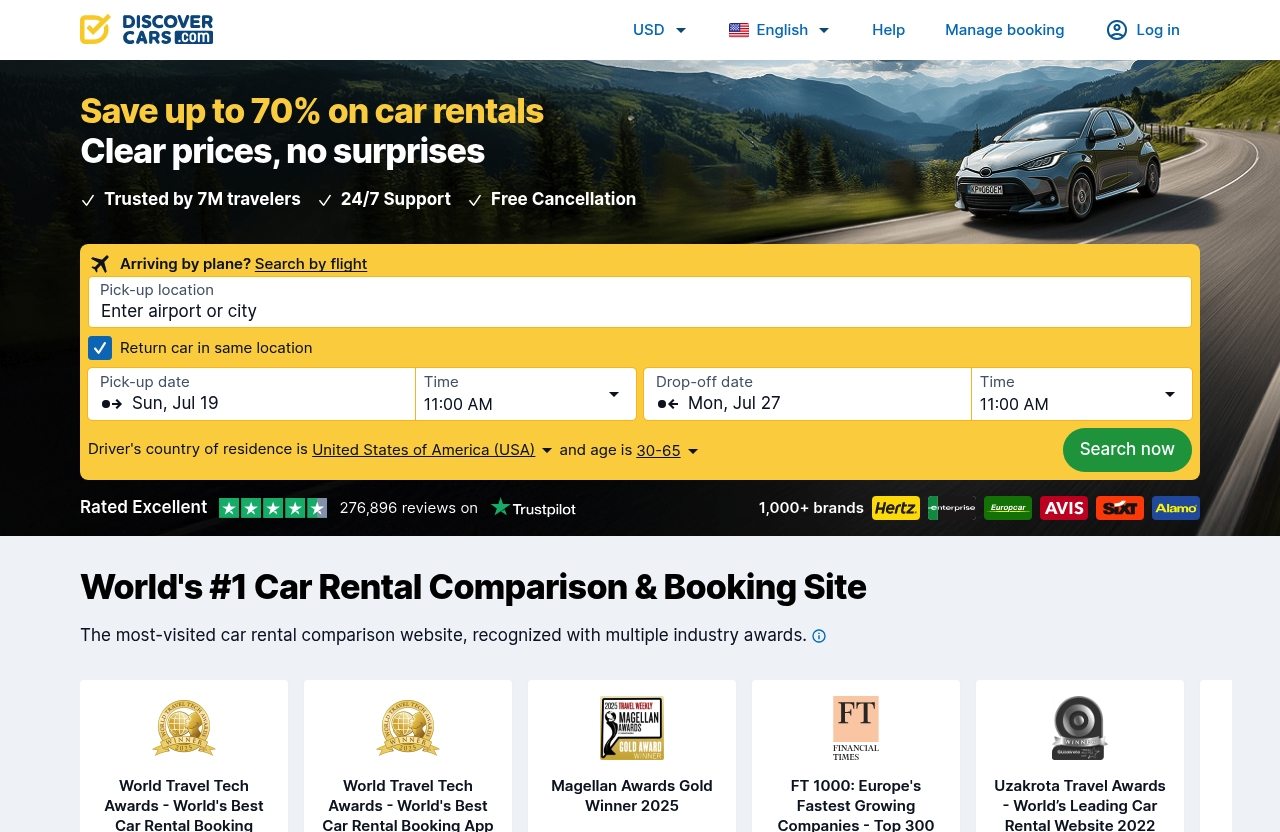
Discover Cars is a car rental comparison and booking service that lists Italy rental options in one place. Its homepage states “Save up to 70% on car rentals,” “Clear prices, no surprises,” “Trusted by 7M travelers,” “24/7 Support,” and “Free Cancellation.”
Compare rates and see what’s included before checkout
When comparing rentals on Discover Cars, look beyond the car category and daily price. Review the included coverage, deposit policy, supplier rating, fuel policy, mileage, and cancellation terms.
This is especially useful for italy car rental insurance because two similar cars can have different excess amounts or pickup requirements. A slightly higher quote may be better value if it has clearer terms or a more manageable deposit.
Do not assume every listing includes the same protection. Open the rental conditions and verify the details before booking.
Why free cancellation and transparent pricing matter
Travel plans change, especially in Italy where train schedules, hotel locations, and road-trip routes can shift. Free Cancellation can help if you find a better option or decide not to drive after all.
Transparent pricing matters because insurance confusion often starts with unclear totals. A quote that helps you see what is included before checkout can reduce pressure at pickup.
Still, confirm final coverage directly with the rental provider. Booking platforms help compare options, but the rental agreement controls what happens at the counter.
When affiliate booking can add convenience
An affiliate booking link does not change the editorial advice: compare the total deal, not just the cheapest car. If you use Discover Cars for Italy rentals, use it as a research tool to compare suppliers, terms, and included coverage before you commit.
This can be convenient if you want to evaluate multiple rental companies without opening each site separately. The important part is still reading the rental conditions and understanding your excess.
Bottom line: the safest insurance strategy for Italy
The safest italy car rental insurance strategy is to know your layers before you arrive: liability, CDW, theft protection, excess, deposit, and any outside reimbursement coverage. Do not rely on vague phrases like “included insurance” or “full cover” without reading the terms.
Your best option depends on your trip, budget, and verified coverage from your card or insurer.
Budget option
The budget option is to book a rental with included basic coverage, CDW, and theft protection, then accept the standard excess if you can comfortably afford it. This can work for confident drivers on short trips with verified credit-card or travel-insurance backup.
Before choosing this route, confirm that your card or policy applies in Italy and understand whether you would need to pay the rental company first.
Balanced option
The balanced option is to choose a rental with clear included coverage and reduce the excess to a level you are comfortable with. This is often the practical middle ground for road trips, families, and travelers parking in cities.
It may not be the cheapest upfront, but it can reduce the chance of a stressful charge after a minor scrape, theft incident, or parking damage.
Peace-of-mind option
The peace-of-mind option is to minimize your excess as much as possible through the rental company or a verified third-party policy, while carefully checking exclusions. This suits travelers who want less financial uncertainty and less claims complexity.
Even with stronger protection, keep pickup photos, read the agreement, and follow parking and security rules. The smartest italy car rental insurance plan combines good coverage with careful documentation.
Free cancellation on most bookings · No hidden fees
FAQ
Do you need extra insurance when renting a car in Italy?
Not always. Many rentals include basic mandatory coverage, and CDW or theft protection may already be bundled into the rate.
However, you may still have an excess/deductible and exclusions for items like tires, glass, roof, underbody, keys, towing, or admin fees. Extra protection is worth considering if the remaining excess is more than you are comfortable paying.
Does my car insurance cover international car rental?
It depends on your policy, country of residence, and destination. Many domestic auto insurance policies do not automatically extend to international rentals.
Before relying on your own insurer, ask specifically whether your policy covers rental cars in Italy, what damage is included, whether liability applies, and what documents are needed for a claim.
Does my US car insurance cover me in Italy?
Often, U.S. auto insurance has limited or no coverage for rentals in Italy, but policies vary. Do not assume your domestic policy applies overseas.
Contact your insurer before travel and ask for confirmation in writing. Also check whether your credit card or travel insurance provides rental car damage coverage in Italy.
Is CDW mandatory in Italy?
CDW is commonly bundled into rental rates in Italy, but the exact setup depends on the rental company, booking terms, and vehicle. In some cases, it may not be something you can simply remove.
The key is to check whether CDW is included, what excess remains, and what damage is excluded. CDW Italy terms are not identical across all suppliers.
What is the difference between CDW and theft protection?
CDW deals with damage to the rental car from a collision or other covered incident. Theft protection deals with the vehicle being stolen, subject to the contract terms.
Both can have an excess, and both can include exclusions. When reviewing italy car rental insurance, check the damage excess and theft excess separately before booking.
Related Reading
- Car Rental in Italy: The Complete 2026 Guide
- Car Rental in Italy with US License: 2026 Guide for American Travelers
- Car Rental in Italy Airport: 2026 Guide