
Planning car rental in Thailand can feel confusing at first: left-side driving, license rules, insurance terms, island roads, mountain routes, and busy city traffic all matter. But for the right trip, renting a car can make Thailand much easier to explore, especially in Phuket, Chiang Mai, and rural areas where taxis or ride-hailing can limit your flexibility.
This guide is designed for international travelers comparing options before booking. It explains when a rental car makes sense, what documents to prepare, how left-side driving works, and how to compare suppliers without rushing into a risky deal.
Free cancellation on most bookings · No hidden fees
Thailand car rental in 2026: what travelers need to know before booking
Car rental in Thailand is most useful when your itinerary goes beyond dense city centers. If you want to beach-hop in Phuket, visit temples outside Chiang Mai, explore national parks, or travel with luggage and family, having your own vehicle can be a major convenience.
That said, Thailand is not a destination where every traveler automatically needs a car. Bangkok traffic can be stressful, parking can be limited in popular areas, and first-time visitors should be honest about their comfort with left-side driving.
The best approach is to match the rental to the route. Think about where you will drive, how often you will use the car, and whether taxis, Grab, private drivers, ferries, or domestic flights would be simpler.
Is renting a car in Thailand worth it?
Car rental in Thailand is worth it when flexibility matters more than pure cost. It is especially helpful if you want to travel on your own schedule, stop at viewpoints, visit multiple beaches in one day, or reach places that are awkward by public transport.
In Phuket, a rental car can make it easier to move between beaches, hotels, restaurants, and family-friendly attractions. In Chiang Mai, it opens up day trips into the surrounding mountains and countryside.
It is less worthwhile if you plan to stay in central Bangkok, spend most of your time around one resort, or prefer not to drive in unfamiliar traffic conditions. In those cases, taxis, Grab, hotel transfers, or a car rental in Thailand with driver may be more comfortable.
Who should rent a car vs use taxis, Grab, or drivers?
A rental car suits confident drivers, families, couples with active itineraries, and travelers staying outside walkable tourist centers. It also helps if you have luggage, camera gear, children’s equipment, or multiple hotel changes.
Use taxis, Grab, or drivers if you are nervous about left-side traffic, do not want to handle parking, or plan to drink alcohol with meals. A driver can also be a good choice for long sightseeing days where navigation and local road habits would become tiring.
For some travelers, the best solution is mixed. You might skip the car in Bangkok, then book car rental in Thailand for Phuket or Chiang Mai only.
What this guide covers and who it is for
This guide is for travelers comparing the best car rental in Thailand options before committing. It covers license requirements, International Driving Permit considerations, insurance, deposits, vehicle types, pickup locations, and booking steps.
It is practical, not legal advice. Rules, supplier policies, and insurance conditions can change, so always verify your license, IDP, age eligibility, and coverage with official sources and the rental company before driving.
If you have rented in other destinations, you may find the process familiar. For comparison, DriveTheAtlas also has guides to [renting a car in Italy](/italy-car-rental), [car rental in Greece](/greece-car-rental), [Portugal road trips](/portugal-car-rental), [Croatia car rental](/croatia-car-rental), and [Iceland car rental](/iceland-car-rental).
Can foreigners rent a car in Thailand?
Yes, many suppliers offer car rental in Thailand for foreigners, provided you meet their requirements. These usually involve age, driving license, passport, payment card, and booking conditions set by the rental company.
The exact rules are not identical across every supplier. Before reserving, read the rental terms carefully and confirm anything unclear with the company directly.
Foreign visitors should also check official guidance from their home country, Thai authorities, and the rental supplier regarding driving documents. Do not assume that what worked for another traveler will automatically apply to your booking.
Basic eligibility requirements
Most rental companies require the main driver to meet a minimum age and to have held a valid license for a required period. The exact age rules, young driver conditions, and senior driver restrictions vary by supplier.
Car rental in Thailand may also require the driver’s name on the booking to match the documents presented at pickup. If you plan to share driving, add every driver officially to the rental agreement.
Do not rely on verbal assumptions. If a rule matters to your trip, check it in the supplier’s terms before you pay.
Passport, license, and payment documents
For pickup, tourists commonly need a passport, a valid driving license, a booking voucher or confirmation, and a payment card accepted by the rental supplier. Some suppliers require a credit card in the main driver’s name for the security deposit.
If your license is not in English or does not use a Roman alphabet, an International Driving Permit may be especially important. Even if your license is in English, you should still verify current requirements before driving.
Keep digital and paper copies of your booking details. At the counter, make sure the rental agreement reflects the car, insurance, fuel policy, mileage conditions, and any extras you selected.
Common rental restrictions for tourists
Common restrictions can include mileage rules, cross-border travel limits, ferry or island conditions, prohibited road types, additional driver fees, and restrictions on where the car can be driven.
Car rental in Thailand may also involve specific pickup and return hours. Late pickup, after-hours returns, or one-way rentals can carry extra conditions or fees, depending on the supplier.
Read the “rental conditions” section before booking, not after. This is where many important details appear, including deposit, excess, accepted cards, and insurance exclusions.
Driving in Thailand: the rules that matter most
The biggest adjustment for many visitors is that Thailand uses left-side driving. Traffic flows on the left, the driver sits on the right side of the car, and roundabouts and turns may feel different if you usually drive on the right.
For confident drivers, this becomes easier with practice. But your first hour matters: avoid starting in rush-hour traffic, stay calm, and take a few minutes to get comfortable with mirrors, indicators, and lane positioning.
Car rental in Thailand is much more enjoyable when you build in patience. Thai roads can vary from modern highways to narrow lanes, busy markets, steep mountain roads, and scooter-heavy beach towns.
Left-side driving explained
Yes, you drive on left in Thailand. This means you keep left except when overtaking, turn into the left lane where appropriate, and pay extra attention at intersections.
If you normally drive on the right, the biggest risk is habit. Be especially careful when leaving gas stations, parking lots, small side roads, and quiet viewpoints because those are the places where people accidentally drift to the wrong side.
With car rental in Thailand, I prefer an automatic car for this reason. Removing gear-shifting stress makes it easier to focus on lane position, scooters, signs, and navigation.
Road signs, speed limits, tolls, and highway basics
Major highways usually have clear route numbers and many signs include English, especially near airports and tourist regions. Smaller roads may rely more heavily on Thai-language signs, so offline maps are useful.
Speed limits and road rules can vary by road type and area, so follow posted signs rather than assumptions. Also pay attention to school zones, local traffic controls, construction areas, and police checkpoints.
Some expressways and highways use tolls. Keep small cash available unless you know your route and payment options in advance.
Urban traffic vs island roads vs mountain roads
Bangkok driving is dense, slow, and often frustrating. If your trip is city-focused, public transport, taxis, and ride-hailing are usually easier than car rental in Thailand for just the capital.
Island roads, especially in Phuket, can be more manageable but still busy near beaches, markets, nightlife zones, and steep coastal areas. Scooters may pass closely, and parking can be competitive around popular beaches.
Mountain roads near Chiang Mai require more concentration. Expect curves, elevation changes, slower vehicles, and occasional rain or fog depending on season and route.
International Driving Permit and license rules
License requirements are one of the most important parts of car rental in Thailand. Travelers should not assume that a home license alone is enough, even if it has worked in other countries.
An International Driving Permit, often shortened to IDP, is a translation-style document used alongside your valid domestic license. It is not a replacement license.
Because rules and enforcement can change, verify International Driving Permit Thailand requirements with official authorities, your rental supplier, and your travel insurer before driving.
Can a US citizen drive in Thailand?
A US citizen may be able to drive in Thailand if they meet the legal and rental requirements, but they should verify current documentation rules before getting behind the wheel. A US license alone should not be assumed sufficient.
For US travelers considering car rental in Thailand, the safest planning step is to obtain the appropriate International Driving Permit before leaving home if required or recommended. You generally need to arrange this before travel, not after arrival.
Also check whether your insurance coverage depends on holding the correct driving documents. If your paperwork is incomplete, a claim could become more complicated.
Do you need an IDP?
Many international travelers should plan as if an IDP may be required or strongly expected. Rental companies, police, and insurers may all care about whether your license is properly supported.
The IDP should match the license category you are using and be valid for the period of travel. It should be carried with your original license, not stored separately at the hotel.
Before booking car rental in Thailand, check the supplier’s license rules in the rental conditions. If anything is unclear, contact the supplier or platform support before you reserve.
When your home license is not enough
Your home license may not be enough if it is not in English, does not use Roman characters, lacks the proper vehicle category, is expired, is provisional, or is not accepted by the supplier.
A license can also be valid at home but still fail a rental company’s requirements. For example, the supplier may require the license to have been held for a minimum period.
When in doubt, resolve the issue before booking. Turning up at the counter without acceptable documents can mean no car, lost time, and possible cancellation charges depending on the terms.
Best places to rent a car in Thailand
The best locations for car rental in Thailand are usually airports and major tourist bases where several suppliers operate. Airport pickup is often simpler because rental desks, shuttles, and vehicle lots are designed for travelers.
However, city pickup can make sense if you do not need a car immediately. For example, you might spend two nights in Bangkok without a vehicle, then rent only when leaving for a regional route.
Phuket and Chiang Mai are priority use cases because a car can directly improve the trip. Both destinations reward flexibility, though they involve very different driving environments.
Bangkok: airport pickup vs city pickup
Bangkok airport pickup is convenient if you are driving directly out of the city or arriving late with luggage. It can also provide a wider choice of suppliers than a small neighborhood office.
But if you are staying in central Bangkok, think carefully. Traffic, toll roads, parking, and navigation can make car rental in Thailand feel more stressful than helpful in the capital.
A practical plan is to use public transport or taxis inside Bangkok, then pick up a rental car only when leaving for another region.
Phuket: island convenience and beach-hopping
Phuket car rental is one of the strongest reasons to rent in Thailand. The island is spread out, and many popular beaches, viewpoints, restaurants, and resorts are not comfortably walkable from each other.
A car gives you control over your day, especially if you want to visit Kata, Karon, Nai Harn, Rawai, Kamala, Surin, or quieter northern beaches. It is also useful for families who do not want to rely on scooters.
Car rental in Thailand can be particularly valuable in Phuket during multi-stop days. Just remember that traffic around Patong and popular beach areas can be heavy.
Chiang Mai: mountains, temples, and road-trip bases
Chiang Mai car rental is ideal for travelers who want to explore beyond the Old City. Popular use cases include temple visits, countryside cafés, waterfalls, mountain viewpoints, and day trips.
The city itself is more manageable than Bangkok, though traffic still builds around markets, gates, schools, and evening areas. Once outside the center, a car offers much more flexibility.
For many travelers, Chiang Mai is one of the best car rental in Thailand destinations because the rewards of self-drive are high and the city driving is usually less intimidating than Bangkok.
Other useful pickup spots
Other useful pickup areas can include Krabi, Surat Thani, Koh Samui, Hat Yai, Udon Thani, and regional airports near national parks or island gateways. The right choice depends on your route.
If you are combining flights and ferries, check whether the rental car is allowed on ferries or across specific routes. Some suppliers restrict island transfers or off-mainland use.
One-way rentals may be possible with some suppliers, but they can involve additional fees or limited availability. Always confirm before planning a long point-to-point trip.
Phuket car rental guide
Phuket deserves its own section because it is one of the most searched and practical destinations for car rental in Thailand. The island is large enough that a car can save time, but busy enough that you need a calm driving style.
Self-drive works best when your hotel is not directly in the middle of the area you plan to explore. If you are staying at a resort and want to see multiple beaches, viewpoints, and restaurants, a car is often more convenient than arranging transport each time.
Phuket is also a place where route planning matters. Short distances on the map can take longer because of hills, traffic, beach roads, and limited parking near popular spots.
Best use cases for Phuket self-drive
Phuket car rental is especially useful for families, couples staying outside Patong, travelers with surfboards or beach gear, and anyone planning multiple stops in a day. It also helps if you want to explore quieter beaches in the north or south.
A car is practical for viewpoints, grocery runs, early morning beach visits, and restaurant hopping. It gives you more control than waiting for taxis in areas with limited availability.
Car rental in Thailand does not mean you must drive every day. In Phuket, it can be smart to rent for only the days when you plan to explore widely.
Road conditions, parking, and traffic notes
Main roads in Phuket are generally navigable, but traffic can be heavy around Patong, Phuket Town, beach access roads, and shopping areas. Hills and curves require attention, especially after rain.
Parking varies by beach and season. Some hotels have easy parking, while popular beaches may have limited roadside spaces or paid lots.
Take extra care around scooters. They are common, can appear quickly on either side, and may filter through slow-moving traffic.
When a car is better than a scooter or taxi
A car is usually better than a scooter if you are traveling with children, carrying luggage, driving in rain, or uncomfortable with two-wheel traffic. It also gives better protection from sun and sudden weather.
Taxis and ride-hailing can still make sense for nightlife, one-way evenings, or days when parking is a hassle. Do not drive if you plan to drink alcohol.
For many visitors, the best Phuket strategy is simple: rent a car for sightseeing days, use taxis for nights out, and choose accommodation with parking.
Chiang Mai car rental guide
Chiang Mai is another top destination for car rental in Thailand because many of the region’s best experiences sit outside the compact Old City. Temples, mountain roads, waterfalls, cafés, gardens, and small villages are easier with your own transport.
Driving here can feel calmer than Bangkok, but it still requires attention. The Old City moat area, night markets, and school traffic can be busy.
If your plan includes mountain routes, choose the vehicle and schedule carefully. Curvy roads are beautiful but can be tiring, especially in rain or after dark.
Day trips and mountain drives
Chiang Mai car rental is particularly useful for day trips to mountain temples, scenic viewpoints, national park areas, and countryside stops. A car lets you start early, avoid some crowds, and adjust the day as you go.
Mountain drives require patience. Use lower speeds, watch for sharp curves, and allow faster local traffic to pass when safe.
Car rental in Thailand for mountain routes is not about rushing. Build a relaxed itinerary with fewer stops and more time between them.
City parking and navigation tips
In Chiang Mai, parking is easiest when your hotel provides it. In the Old City and around popular markets, spaces can be limited, and traffic patterns may be confusing for first-time visitors.
Use offline maps and check your destination’s parking situation before leaving. Some temples, cafés, and attractions have their own lots, while others require nearby street parking.
Avoid planning your first drive during peak evening traffic. A calm morning pickup can make the whole rental experience smoother.
Why Chiang Mai is often better for self-drive than Bangkok
Chiang Mai often suits self-drive better than Bangkok because the city is smaller, the surrounding attractions are closer, and the countryside begins relatively quickly.
Bangkok is better served by trains, taxis, river transport, and ride-hailing for most short stays. In Chiang Mai, a car can directly unlock more of the region.
For travelers deciding where to book car rental in Thailand, Chiang Mai is one of the clearest “yes” destinations if you are comfortable with mountain roads and left-side driving.
Free cancellation on most bookings · No hidden fees
How much does car rental in Thailand cost?
Thailand car rental price depends on season, location, vehicle category, pickup point, rental duration, insurance choices, supplier, and how early you book. Exact rates change frequently, so it is better to compare live quotes than rely on outdated numbers.
You may see economy cars advertised in a low daily range on comparison platforms, while SUVs, vans, peak-season rentals, and last-minute bookings can cost more. Treat headline prices as a starting point, not the full trip cost.
Car rental in Thailand can still be good value when it replaces multiple transfers, taxis, tours, or private drivers. But the cheapest visible rate is not always the best overall deal.
What affects the price
The biggest cost drivers are destination, season, car size, transmission, insurance package, pickup location, and rental length. Airports may offer more choice, while smaller offices can have limited inventory.
Demand rises around holidays, school breaks, and popular travel periods. Booking earlier can improve your selection, but always compare cancellation terms before committing.
If you want the cheapest car rental in Thailand, focus on total cost rather than daily rate alone. Deposit, excess, fuel policy, mileage, and add-ons can change the real price.
Economy vs SUV vs van
Economy and compact cars are usually the budget-friendly choice for cities, couples, and light luggage. They are easier to park and use less space on narrow roads.
SUVs are more suitable for rural routes, mountain drives, rougher access roads, or travelers carrying more luggage. They may cost more, but they can be more comfortable for certain itineraries.
Vans are useful for families and groups, but check luggage space carefully. A seven-seat vehicle may not hold seven people plus large suitcases comfortably.
How to find cheaper rates without risky compromises
Compare multiple suppliers, check both airport and city pickup, and avoid paying for extras you do not need. At the same time, do not strip away important coverage just to reduce the displayed price.
Read the fuel policy, mileage terms, deposit requirement, and cancellation rules. A low price with a high deposit or inconvenient pickup can be less attractive than a slightly higher, clearer offer.
For car rental in Thailand, I would rather choose a transparent supplier with understandable terms than chase the lowest number on the page.
Insurance, deposits, and hidden costs to watch
Insurance is where many travelers feel most uncertain about car rental in Thailand. The important terms to understand are collision damage waiver, theft protection, excess, exclusions, and deposit.
Coverage language can vary by supplier and platform. Do not assume every rental includes the same protection or that every type of damage is handled the same way.
Before booking, read the terms slowly and screenshot or save the details. If you do not understand the excess or deposit, ask before reserving.
CDW, theft protection, and excess
Collision Damage Waiver, often called CDW, may reduce your financial responsibility for damage to the rental car, but it often has exclusions and an excess. Theft protection may work similarly for theft-related events.
The excess is the amount you may remain responsible for under the rental terms. This can vary significantly by vehicle and supplier.
Car rental in Thailand becomes less stressful when you know your maximum exposure, what is excluded, and what documents are needed if a claim occurs.
Security deposit expectations
Rental companies commonly place a security deposit or hold on the main driver’s payment card. The amount, accepted card type, and release timing depend on the supplier.
Some travelers are surprised when debit cards are not accepted for deposits. Check the payment rules before booking, especially if you do not travel with a credit card.
Make sure your card has enough available limit for the deposit plus your normal travel spending. A declined deposit can prevent pickup.
Fuel policy, mileage, and add-on fees
Fuel policies matter. “Full-to-full” is often straightforward: you receive the car full and return it full, but always confirm the exact terms.
Mileage can be unlimited or limited depending on the supplier and deal. If your route is long, check this carefully before choosing a car.
Add-ons may include child seats, extra drivers, GPS, after-hours pickup, one-way fees, and young driver charges. These are normal rental considerations, but they should be visible before you finalize the booking.
Best car type for Thailand roads
The best vehicle for car rental in Thailand depends on where you are going, how much luggage you have, and how confident you are driving. Do not choose based on price alone.
For city stays and beach towns, smaller cars are often easier. For rural areas, mountains, or luggage-heavy trips, a larger vehicle may be more comfortable.
Also consider transmission. If you are already adjusting to left-side driving, an automatic can reduce the mental load.
Compact cars for cities
Compact cars are a practical choice for Bangkok outskirts, Chiang Mai city, Phuket beach towns, and short regional routes. They are easier to park and navigate through tight hotel entrances or narrow streets.
They work best for one to three travelers with light luggage. If you have large suitcases, check the luggage capacity before booking.
For many itineraries, a compact vehicle is the sensible starting point for car rental in Thailand.
SUVs for rural or mountain trips
SUVs can be a better fit for mountain roads near Chiang Mai, rural routes, family travel, or trips with extra luggage. They may offer more ground clearance and comfort on uneven access roads.
This does not mean every traveler needs an SUV. Many popular routes are accessible by normal cars, and a larger vehicle can be harder to park in tight areas.
Choose an SUV when the itinerary justifies it, not because it sounds more adventurous.
Automatic vs manual
Automatic cars are generally easier for visitors who are not used to driving on the left. They let you focus on traffic flow, mirrors, signs, and road position.
Manual cars may be cheaper or more familiar for some drivers, but shifting with the opposite hand can be distracting if you are not used to right-hand-drive vehicles.
When comparing car rental in Thailand, filter by transmission early. Do not assume every low-priced listing is automatic.
How to book with DiscoverCars
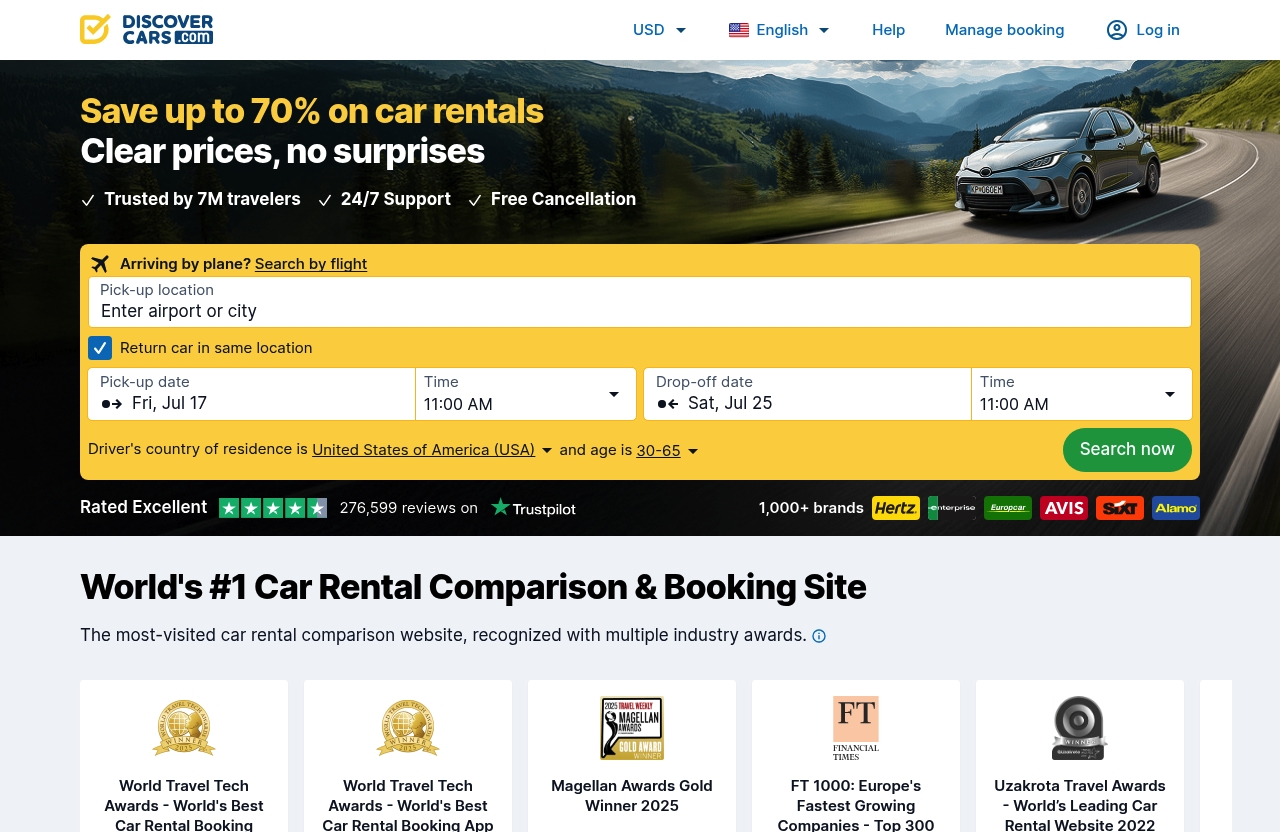
For travelers ready to compare options, DiscoverCars is a practical place to start because it is a car rental comparison and booking platform. You can compare suppliers, pickup locations, vehicle categories, and rental conditions in one search.
You can review options for car rental in Thailand on DiscoverCars, then read the specific terms before choosing. The platform’s homepage also says users can access exclusive member-only deals and manage bookings in one place, and it shows support links including Help center and Our Guarantee.
Disclosure: DriveTheAtlas may earn a commission if you book through our DiscoverCars link, at no extra cost to you.
Why compare on DiscoverCars
Comparison is useful because rental terms are not identical. Two cars that look similar may have different deposits, mileage rules, fuel policies, excess amounts, pickup procedures, or accepted payment cards.
DiscoverCars helps travelers compare deals rather than checking each supplier separately. Its site title also emphasizes free cancellation, but you should always confirm the cancellation policy shown for your specific booking.
For car rental in Thailand, comparison matters most in Phuket, Chiang Mai, Bangkok airports, and peak travel periods where availability and terms can vary.
How affiliate booking works
Affiliate booking does not change the basic rental process. You use a link from DriveTheAtlas, compare options on the booking platform, and reserve the car that fits your trip.
If you complete a booking through the affiliate link, this site may receive a commission. That does not remove your responsibility to read the rental terms, verify documents, and choose appropriate coverage.
A transparent affiliate recommendation should save you time, not pressure you. If the terms do not fit your trip, choose another supplier or transport option.
Tips to filter by price, policy, and pickup location
Start by entering the exact pickup and return locations. Compare airport pickup with city pickup if your schedule is flexible.
Then filter by car type, transmission, supplier rating if available, and terms that matter to you. Pay close attention to deposit, excess, fuel policy, mileage, and required documents.
You can compare Thailand options through DiscoverCars, but make your final decision based on the full rental conditions, not only the headline price.
Step-by-step booking checklist
A checklist helps prevent the most common car rental in Thailand mistakes. The goal is to arrive at the counter with the right documents, realistic expectations, and enough time to inspect the vehicle.
Do not rush pickup. Many problems are easier to avoid before you sign and drive away.
Use this checklist as practical travel guidance, then confirm anything important with your rental supplier.
Before you reserve
Before booking, confirm your route, pickup location, return location, dates, and driver eligibility. Decide whether you need a compact car, SUV, van, automatic, or child seat.
Check the rental conditions for license rules, International Driving Permit requirements, deposit, excess, accepted cards, mileage, fuel policy, and cancellation terms.
Also compare whether car rental in Thailand is needed for the whole trip or only part of it. Renting for fewer days can reduce cost and stress.
At pickup
At the counter, present your passport, license, IDP if required, booking confirmation, and payment card. Make sure the main driver’s name matches the reservation and card requirements.
Read the rental agreement before signing. Confirm the insurance, deposit, fuel level, mileage, return time, and emergency contact details.
If anything differs from your booking, ask for clarification in writing. Do not rely only on verbal explanations.
Before you drive away
Inspect the car carefully in daylight if possible. Take photos and videos of all sides, wheels, windshield, mirrors, interior, fuel level, and odometer.
Check that lights, indicators, wipers, air conditioning, horn, and seatbelts work. Make sure you know how to open the fuel cap and what fuel type the car uses.
Before entering traffic, adjust your mirrors, set navigation, and remind yourself: Thailand drives on the left.
What to do if you have an accident or police stop
Accidents and police stops are rare for most travelers, but you should know what to do before starting car rental in Thailand. A calm response is more useful than panic.
This section is general travel guidance, not legal advice. Follow local procedures, rental company instructions, and your insurer’s requirements.
Keep the rental company’s emergency number available offline. Do not wait until you have a problem to look for it.
Document everything
If an accident happens, prioritize safety first. Move only if it is safe and appropriate, and avoid standing in dangerous traffic areas.
Take photos and videos of the vehicles, damage, road position, license plates, surroundings, and any relevant signs or signals. Save names, contact details, and reference numbers where applicable.
Do not admit liability casually or sign documents you do not understand. Ask the rental company what steps are required.
Contact the rental company
Contact the rental company as soon as possible after an accident, breakdown, theft, or serious issue. Follow their instructions about police reports, replacement vehicles, towing, and documentation.
If you purchased additional coverage, check what documents are needed for a claim. Missing paperwork can complicate reimbursement or coverage review.
For car rental in Thailand, keeping records is essential. Save receipts, messages, reports, photos, and the final rental invoice.
Keep calm and follow local procedures
At a police stop, remain polite, calm, and patient. Have your passport copy, license, IDP, rental agreement, and insurance documents accessible.
If there is a language barrier, use translation tools and contact the rental company if needed. Do not argue roadside about rules you are unsure of.
The best prevention is simple: drive conservatively, follow posted signs, avoid night driving on unfamiliar rural roads when possible, and never drive impaired.
Final verdict: is car rental in Thailand right for you?
Car rental in Thailand is a strong choice for travelers who want flexibility, especially in Phuket, Chiang Mai, and regional road-trip areas. It is less compelling for travelers staying mainly in Bangkok or anyone uncomfortable with left-side driving.
The decision should be based on itinerary, confidence, documents, insurance comfort, and parking access. A rental car can improve the trip, but only when the route justifies the responsibility.
If you compare suppliers carefully, verify license requirements, and choose the right vehicle, car rental in Thailand can be a practical and rewarding way to travel in 2026.
Best for road trips and flexible itineraries
Renting is best for beach-hopping in Phuket, mountain day trips from Chiang Mai, rural routes, national park access, family travel, and multi-stop itineraries.
It gives you freedom to leave early, stop spontaneously, and avoid negotiating transport for every movement. That flexibility is the main value.
For travelers who enjoy independent travel, car rental in Thailand can turn a standard itinerary into a much richer route.
When not to rent
Do not rent if you are staying in central Bangkok, nervous about left-side driving, unable to meet license or IDP requirements, or planning evenings where you will drink.
Also reconsider if your hotel has no parking or your itinerary is mostly one-way transfers easily handled by flights, ferries, taxis, or drivers.
Sometimes the smartest travel decision is not renting. A good guide should make that clear.
Quick recommendation by traveler type
| Traveler type | Recommendation |
|---|---|
| First-time visitor staying in Bangkok only | Usually skip the rental |
| Phuket family trip | Strongly consider a compact car or SUV |
| Chiang Mai day trips | Strongly consider renting |
| Nervous driver | Use taxis, Grab, tours, or a driver |
| Rural or mountain itinerary | Consider an SUV and plan conservative routes |
| Budget traveler | Compare total cost, not just daily rate |
| Long stay traveler | Compare weekly or monthly terms carefully |
If you are still deciding, compare live options, read the rental conditions, and only book when the documents, deposit, insurance, and route all make sense.
Free cancellation on most bookings · No hidden fees
FAQ
Can foreigners rent a car in Thailand?
Yes. Many rental companies allow foreigners to rent a car if they meet the supplier’s age, license, passport, and payment requirements.
Before booking, check the specific rental terms. Car rental in Thailand for foreigners can be straightforward, but the exact rules vary by supplier.
Is it a good idea to rent a car in Thailand?
It can be a good idea for flexible road trips, families, Phuket, Chiang Mai, rural routes, and travelers who want independence. It is often less useful in dense Bangkok traffic.
If you are confident with left-side driving and have the right documents, car rental in Thailand can be very practical. If not, taxis, Grab, tours, or a driver may be easier.
How expensive is it to rent a car in Thailand?
Costs vary by season, location, car type, rental duration, insurance, deposit conditions, and pickup point. Economy cars may appear in a low daily range on comparison sites, while SUVs, vans, and peak-season bookings usually cost more.
Compare live quotes and read the full terms. The cheapest car rental in Thailand is not always the best value if the deposit, excess, or policy conditions do not suit your trip.
Can a US citizen drive a car in Thailand?
A US citizen should verify current license and International Driving Permit requirements before driving in Thailand. Do not assume a US license alone is enough.
Check official guidance, your rental supplier’s terms, and your insurance conditions before pickup. Carry your valid license, IDP if required, passport, and rental agreement while driving.
Do you drive on the left in Thailand?
Yes. Thailand uses left-side driving, so traffic flows on the left and the driver usually sits on the right side of the car.
If you are used to right-side driving, take extra care at intersections, turns, parking lots, and quiet roads. Left-side driving is manageable for many travelers, but it requires attention.
Related Reading
- Car Rental in Croatia: Complete 2026 Guide
- Car Rental in Italy: The Complete 2026 Guide
- Car Rental in Greece 2026: Islands, Mainland, Ferries, and Booking Tips