
If you are planning a self-drive trip and wondering do you need a 4×4 in Iceland, the honest answer is: not always. A 2WD rental car is enough for many summer trips on paved roads, including Reykjavik, the Golden Circle, much of the south coast, and the main Ring Road in good conditions.
But a 4×4 becomes necessary, strongly recommended, or simply worth the extra money when your route includes F-roads, Highlands access, winter driving, rough gravel detours, remote regions, or a tighter itinerary where flexibility matters. The best choice depends less on “Iceland as a whole” and more on your season, route, comfort level, and legal road access.
Free cancellation on most bookings · No hidden fees
Quick Answer: Do You Need a 4×4 in Iceland in 2026?
The fastest way to answer do you need a 4×4 in Iceland is to match the car to the trip, not to the country. Iceland has smooth paved highways, rough gravel roads, seasonal mountain tracks, wind-exposed coastal roads, and winter routes that can change quickly.
Here is the simple decision matrix:
| Trip Type | Best Choice | Why |
|---|---|---|
| Summer Reykjavik, Golden Circle, paved south coast | 2WD | Main roads are paved and commonly driven in standard cars |
| Summer Ring Road with few paved detours | 2WD | Usually enough in good weather if you avoid F-roads |
| Highlands or F-roads Iceland | 4×4 required | F-roads are legally restricted to suitable 4×4 vehicles |
| Winter road trip outside Reykjavik | 4×4 recommended | Better traction and stability in snow, ice, wind, and slush |
| Remote gravel-heavy itinerary | 4×4 recommended | More clearance, confidence, and flexibility |
| Short city or airport stay | 2WD | A 4×4 is usually unnecessary |
The short verdict by trip type
If your Iceland itinerary is mostly paved, lowland, and summer-based, you probably do not need a 4×4. A compact or midsize 2WD can be the smarter choice because it is simpler, usually more fuel-efficient, and easier to park in towns.
If your plan includes the Highlands, F-roads, winter travel, or remote gravel routes, the answer to do you need a 4×4 in Iceland changes quickly. In those cases, a 4×4 is either required by road rules or worth booking for safety and control.
Who can safely choose a 2WD
You can usually choose a 2WD if you are visiting in summer and sticking to main paved routes. This includes Reykjavik, Keflavik Airport, the Golden Circle, Blue Lagoon, much of the south coast, and a classic Ring Road itinerary without mountain-road detours.
For many first-time visitors comparing Iceland 2WD vs 4WD, the 2WD option is perfectly reasonable. The key is avoiding F-roads, checking weather and road conditions daily, and not treating a small rental car like an adventure vehicle.
Who should book a 4×4
You should book a 4×4 if your route includes F-roads, Highlands access, rough gravel roads, remote fjords, winter conditions, or photography stops where you want more flexibility. You should also consider one if you are nervous about Iceland winter driving or plan to cover long distances in unpredictable weather.
When readers ask do you need a 4×4 in Iceland, I usually ask three questions back: What month are you going? Are you driving only paved roads? Are you trying to reach the Highlands or remote gravel areas? Those answers decide the car.
What a 4×4 Actually Changes in Iceland
A 4×4 is not magic, but it can make Iceland driving more controlled and less stressful in the right conditions. The benefit is not only about “power”; it is about traction, clearance, stability, and legal access to certain roads.
This is where many visitors misunderstand the question do you need a 4×4 in Iceland. A 4×4 helps in specific situations, but it does not make closed roads safe, legal, or passable.
Traction vs ground clearance
Traction and ground clearance are different things. Traction is about how well the vehicle can send power to the wheels and maintain grip on snow, gravel, mud, or slippery surfaces.
Ground clearance is the space between the underside of the car and the road. This matters on rutted gravel, potholes, stones, uneven tracks, and some Highland routes.
A low AWD car may have good traction but poor clearance. A larger 4×4 may offer both traction and clearance, but it still has limits. When comparing AWD vs 4WD Iceland options, look at the actual vehicle suitability, not just the badge.
Why Iceland roads make this decision different
Iceland compresses many driving conditions into one trip. You might leave Reykjavik on smooth pavement, hit strong crosswinds near the south coast, drive gravel to a guesthouse, then encounter snow on a mountain pass the next day.
That is why generic Europe rental advice does not always work here. The best car for Iceland depends on route exposure, weather, and whether your detours remain on regular roads or enter mountain-road territory.
In summer, a 2WD can feel completely adequate on popular paved routes. In shoulder season or winter, the same road can become icy, slushy, windy, or temporarily closed.
What a 4×4 does not allow you to do
A 4×4 does not allow you to drive off-road in Iceland. Off-road driving is illegal because the landscape is fragile, and tire tracks can damage moss, lava fields, and soil for years.
A 4×4 also does not let you ignore road closures, rental restrictions, river-crossing limits, weather warnings, or common sense. If a road is closed, unsuitable for your vehicle, or beyond your driving skill, the correct decision is to turn around or change plans.
So when asking do you need a 4×4 in Iceland, remember that “4×4” means better capability on permitted roads. It does not mean permission to leave marked roads.
When You Definitely Need a 4×4
There are several situations where the answer is no longer optional. You either need a 4×4 for legal access, practical safety, or both.
This is the most important section for anyone deciding between standard Iceland Ring Road car rental and a more capable Iceland 4×4 rental.
Driving F-roads to the Highlands
You need a 4×4 for F-roads in Iceland. F-roads are mountain roads that lead into the Highlands, and they are typically seasonal, rougher, and legally limited to suitable 4×4 vehicles.
These roads may include loose gravel, rocks, steep sections, washboard surfaces, narrow bridges, and sometimes river crossings. They usually open only when conditions allow, often sometime in the warmer months, but opening dates vary each year.
If your dream itinerary includes Landmannalaugar, Askja, Þórsmörk access routes, or other Highland areas, your rental choice must match the road. Some routes may require not just any 4×4, but a specific type of vehicle suitable for rough tracks or river crossings, so always verify with your rental provider.
Winter driving and unpredictable weather
For winter road trips, a 4×4 becomes the safer default for many travelers. Iceland winter driving can involve snow, ice, slush, darkness, strong wind, and rapidly changing visibility.
A 4×4 does not stop faster on ice, and it does not replace winter tires or careful driving. But it can help you maintain traction when starting, climbing, turning slowly, or driving through uneven snowy sections.
If you are visiting between late autumn and early spring and plan to leave the capital area, the question do you need a 4×4 in Iceland usually deserves a more conservative answer. For nervous drivers, families, photographers, and anyone with a full itinerary, the extra capability can be worth it.
Remote regions, steep gravel, and river-crossing routes
Some remote Iceland routes are not F-roads but can still feel demanding. Gravel-heavy areas, steep access roads, rural guesthouse tracks, and less-traveled coastal roads can be rougher than expected.
A 4×4 can make these drives calmer because you get more clearance and traction. This is especially useful when roads are wet, potholed, recently graded, or covered in loose stones.
River crossings are a separate issue. Not all 4×4 rentals are approved for river crossings, and many insurance policies exclude water damage. If your itinerary involves river-crossing routes, confirm vehicle suitability and restrictions before booking.
When a 2WD Is Enough
A 2WD rental is enough for many Iceland travelers, especially in summer. You do not need to pay for capability you will not use if your route is simple, paved, and weather-flexible.
This is where balanced Iceland rental car advice matters. The right answer to do you need a 4×4 in Iceland is often “no, if you stay on the classic paved route.”
Summer Ring Road itineraries
In summer, many travelers complete the Ring Road in a 2WD. The main route is generally manageable in favorable conditions if you stay on the primary road and avoid F-roads.
A 2WD can work well if your plan is Keflavik, Reykjavik, Golden Circle, south coast, Eastfjords via main roads, Lake Myvatn, Akureyri, and back around the west. You still need to check weather, road conditions, and wind warnings, but a 4×4 is not automatically required.
The main mistake is booking a 2WD and then adding Highland detours later. If you want the freedom to change plans toward F-roads, choose a 4×4 from the start.
Reykjavik, Golden Circle, and paved south coast trips
For Reykjavik, the Golden Circle, Blue Lagoon, and the paved south coast to places like waterfalls, black-sand beaches, and glacier viewpoints, a 2WD is usually enough in good conditions.
These are popular routes with paved roads and regular traffic. In summer, a standard car is often the most practical option.
In winter, the same route can still be driven in 2WD by experienced drivers in good conditions, but a 4×4 may feel more secure. Your confidence, weather forecast, and flexibility matter.
Short airport-to-hotel or city-based stays
If you are mainly staying in Reykjavik or driving from Keflavik Airport to a hotel, you probably do not need a 4×4. City parking, fuel use, and rental cost can make a smaller car more convenient.
For short stays, day tours may also replace the need for a bigger rental. If you only plan one or two excursions, compare whether a 2WD plus guided tour makes more sense than renting a 4×4 for the whole trip.
Do You Need a 4×4 by Season?
Season is one of the biggest factors in deciding do you need a 4×4 in Iceland. The same itinerary can be easy in July and stressful in February.
Month-based advice should always be treated as guidance, not a guarantee. Icelandic weather does not follow a neat calendar.
Summer: what changes and what does not
Summer gives you the best chance of driving a 2WD comfortably on main roads. Longer daylight, milder temperatures, and better road access make standard cars suitable for many itineraries.
But summer does not remove every challenge. Wind, rain, fog, gravel, sheep on roads, and sudden weather shifts still happen.
Summer is also when some Highland F-roads open, which can increase the temptation to explore. If you want those routes, you need a 4×4 and should confirm that your rental is permitted for the specific roads you plan to drive.
Shoulder season in spring and autumn
Spring and autumn are trickier. You may find dry roads one day and icy, windy, or snowy conditions the next, especially in the north, east, or higher elevations.
If you are doing a simple city-and-south-coast trip, a 2WD may still work in favorable conditions. If you are circling the country, driving long distances, or visiting remote areas, a 4×4 becomes more attractive.
For shoulder season, I would frame the Iceland 2WD vs 4WD decision around flexibility. If your schedule is tight and you cannot easily wait out weather, a 4×4 gives you a larger safety margin.
Winter: why 4×4 becomes the safer default
In winter, I generally recommend a 4×4 for travelers driving beyond Reykjavik and nearby paved attractions. It is not because a 2WD can never work, but because conditions can change quickly and daylight is limited.
A 4×4 can help with traction on snow-covered roads, icy parking areas, rural accommodation access, and windy exposed sections. It can also reduce stress for visitors who are not used to Nordic winter driving.
If you are asking do you need a 4×4 in Iceland for a winter Ring Road trip, the practical answer is yes for most international travelers. You still need to monitor road.is, vedur.is, and local advice, and you should be ready to change plans.
Free cancellation on most bookings · No hidden fees
Do You Need a 4×4 for the Ring Road?
For the main Ring Road in summer, you usually do not need a 4×4 if you stay on the primary paved route. A 2WD is commonly enough in good conditions.
But the real issue is not the Ring Road itself. It is the side trips you add along the way.
Main Ring Road vs side roads
The Ring Road is Iceland’s main highway loop, and much of it is paved. If your itinerary sticks closely to that main route, a 2WD can be a practical choice in summer.
Side roads can change the answer. Gravel access roads, remote viewpoints, mountain passes, and detours toward the Highlands may require more clearance, better traction, or a legally permitted 4×4.
So if you ask do you need a 4×4 in Iceland for the Ring Road, the better question is: are you driving only the Ring Road, or are you building an adventure itinerary around it?
Detours that may change the answer
Detours toward the Highlands, interior tracks, rough access roads, and remote gravel areas may make a 4×4 the better choice. Even if the main Ring Road is easy, your planned stop could involve a road your 2WD rental is not allowed or suited to drive.
This is common with travelers who want waterfalls, canyons, hot springs, hiking trailheads, and photography locations. Many famous places are accessible by normal car, but not all.
Before booking, map every major detour and check whether it uses F-roads Iceland, gravel roads, or seasonal routes. That single step can prevent expensive rental mistakes.
What happens if you only stick to paved stretches
If you only stick to paved stretches in summer, a 2WD is usually the sensible option. You can save money, reduce fuel use, and still see a huge amount of Iceland.
You will need to skip roads that are restricted, rough, or clearly unsuitable. That is not a failure; it is smart trip planning.
A 4×4 is about access and resilience, not bragging rights. If your route does not require it, a 2WD may be the best car for Iceland for your specific trip.
Best Vehicle Choice by Trip Style
The best rental car depends on how you travel. A solo budget traveler, a family, and a winter photographer may all need different vehicles for the same country.
Use this section as a practical 4×4 rental Iceland decision guide before you compare listings.
Budget-focused traveler
If your priority is keeping costs down, choose a 2WD for summer city, Golden Circle, south coast, and paved Ring Road trips. Avoid F-roads and plan accommodation near main roads.
This is the most economical answer to do you need a 4×4 in Iceland. Do not pay for a larger vehicle unless your itinerary actually benefits from it.
A budget traveler should spend more attention on insurance, fuel policy, luggage space, and transmission than on getting the biggest car available.
Couple or family road trip
Couples and families should think about comfort as much as capability. A small 2WD can be fine for two people with light luggage, but it may feel cramped with winter clothing, camera gear, snacks, and multiple suitcases.
For a family Ring Road trip in summer, a larger 2WD or crossover-style vehicle may be enough if you avoid rough routes. For winter or remote stays, a 4×4 is often worth considering.
The best car for Iceland is the one that fits your luggage, gives the driver confidence, and matches the road rules for your route.
Photographer/adventure traveler
Photographers and adventure travelers often benefit from a 4×4 because the best light and locations do not always align with perfect roads. Early starts, late returns, gravel access roads, and remote accommodations are common.
A 4×4 can give you more flexibility to reach legal, marked-road locations without worrying as much about clearance or traction. It also helps when you need to adjust plans due to wind, ice, or road surface changes.
If your itinerary includes Highlands, remote gravel, northern winter landscapes, or multiple sunrise and sunset drives, an Iceland 4×4 rental is usually the more practical choice.
Winter traveler
For winter travelers, a 4×4 is often the safer default outside Reykjavik. This is especially true for the Ring Road, north Iceland, east Iceland, rural accommodations, and trips with limited schedule flexibility.
Winter also increases the importance of tires, insurance, emergency planning, and daily road checks. A 4×4 helps, but it does not replace cautious driving.
If you are still asking do you need a 4×4 in Iceland for December, January, February, or March, I would lean strongly toward yes unless your driving is minimal and city-based.
Costs, Risks, and Trade-Offs of Booking a 4×4
A 4×4 costs more than a basic 2WD in many cases, but price should not be the only factor. The real question is whether the extra cost reduces risk, stress, or itinerary limitations.
This is where commercial investigation matters. You are not just buying a car category; you are buying access, confidence, and flexibility.
Higher daily rate and possible add-ons
A 4×4 rental usually has a higher daily rate than a small 2WD. You may also see differences in insurance options, deposits, luggage capacity, transmission, fuel policy, and winter equipment.
Do not compare only the headline price. Review what is included, what is excluded, and whether the car is allowed on the roads you plan to drive.
If your itinerary does not need the extra capability, a 2WD may be the better-value choice. If it does, the cheaper car can become the expensive mistake.
Fuel use and deposit considerations
Larger 4×4 vehicles often use more fuel than smaller 2WD cars. In Iceland, long driving distances can make fuel consumption a noticeable part of your total trip cost.
Deposits and rental terms may also vary by vehicle class and provider. Read the listing carefully before booking, especially if you are using a debit card, have a lower credit limit, or are choosing extra coverage.
Good Iceland rental car advice is simple: compare total trip cost, not just daily rental cost.
When paying more is actually cheaper
Paying more for a 4×4 can be cheaper if it prevents route cancellations, unsafe driving stress, or booking the wrong vehicle for F-roads. It can also be worth it if your accommodation is remote or your schedule gives you little room for weather delays.
For example, a summer Reykjavik-and-south-coast trip does not justify a 4×4 for most travelers. A winter north Iceland route or Highland itinerary absolutely might.
When evaluating do you need a 4×4 in Iceland, think in terms of downside risk. The more remote, seasonal, or weather-exposed your plan is, the more valuable the upgrade becomes.
How to Choose the Right Rental Car in Iceland
Choosing the right rental car is mostly about matching the vehicle to reality. Your Instagram route, Google Maps route, and legally drivable rental route are not always the same.
Before booking, build the route first, then select the car.
Match the car to your itinerary
Start with your exact route, season, and detours. Mark every major stop and check whether it involves paved roads, gravel roads, F-roads, winter mountain passes, or rural access roads.
Use this quick rule:
- Choose 2WD for summer paved city, Golden Circle, south coast, and simple Ring Road trips.
- Choose 4×4 for Highlands, F-roads, winter road trips, rough gravel, remote stays, and weather-flexible adventure itineraries.
- Choose a larger or more capable 4×4 only if clearance, luggage, passengers, or road suitability justify it.
This is the most reliable way to answer do you need a 4×4 in Iceland without overpaying.
Check road restrictions before booking
Always check whether your rental car is allowed on your planned roads. F-roads require suitable 4×4 vehicles, but not every vehicle with AWD or 4WD is automatically right for every mountain route.
Also check official Iceland road and weather sources before and during your trip. Road status, closures, wind warnings, and seasonal openings can change quickly.
Your rental agreement matters too. Some companies restrict certain roads, river crossings, or vehicle use even if a road is technically open.
Verify insurance, age rules, and transmission
Before paying, verify insurance options, excess, deposit, fuel policy, mileage rules, pickup hours, and transmission. Automatic cars may be less familiar or more limited in some markets, so confirm what you are booking.
Age and license rules can vary by provider and vehicle category. As general guidance, drivers often need a valid license held for at least one year, and some sources note minimum ages around 20 for regular cars and 23 for 4WDs, but you should always verify with your rental provider and official requirements.
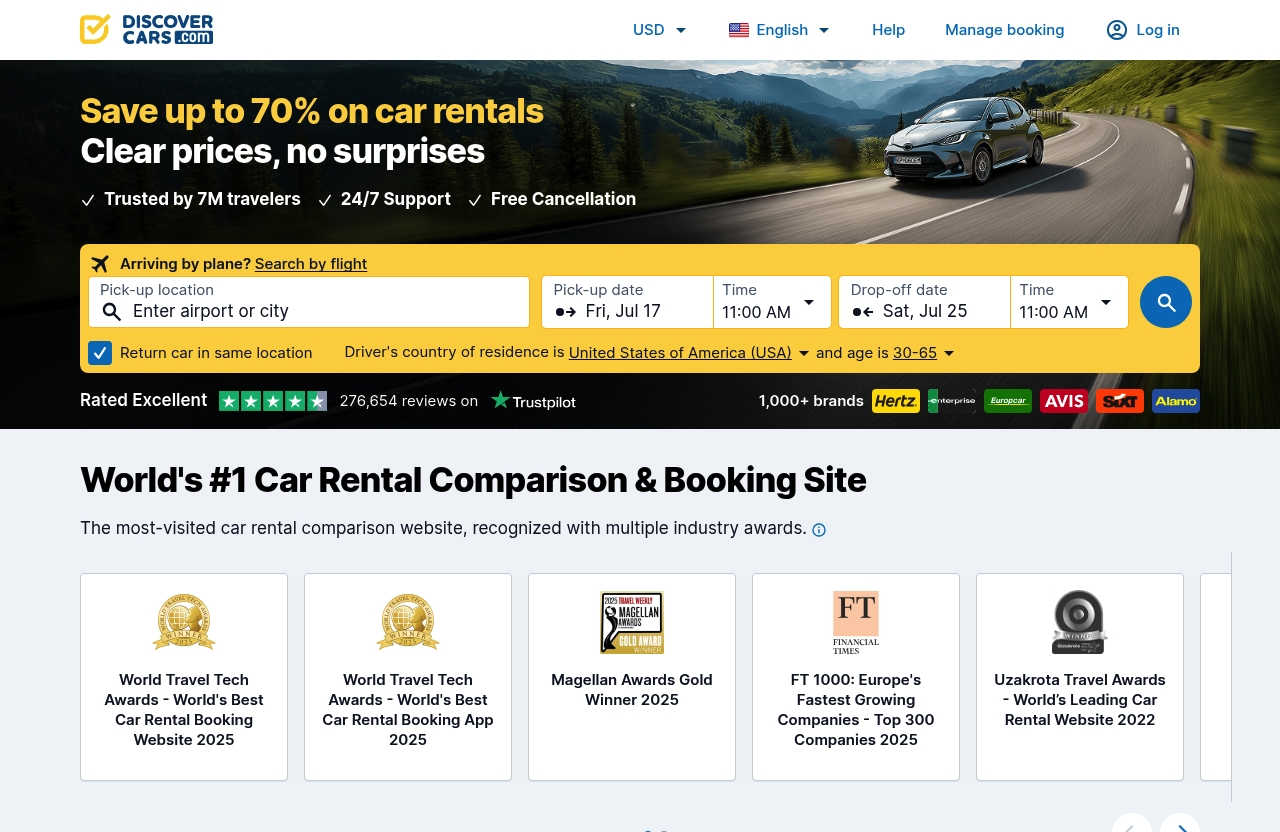
If you are comparing vehicles online, DiscoverCars is useful because it lets you compare Iceland car rentals, review booking details, and manage bookings in one place. Its site also supports language and currency selection, including USD and ISK, which is helpful for international travelers.
Recommended Iceland 4×4 Rental Options at DiscoverCars
If your route points toward a 4×4, the next step is not to book the biggest vehicle blindly. Compare the available cars by road suitability, luggage space, pickup location, transmission, insurance, and rental conditions.
DiscoverCars is a booking partner option for comparing car rental choices in Iceland. Its official homepage is titled “Best Car Rental Deals with Free Cancellation, Compare & Save!”, and the site includes booking-management and support areas such as Manage booking, Help, Help center, My Booking, Our Guarantee, and price-guaranteed pages.
How to compare cars on DiscoverCars
When comparing an Iceland 4×4 rental, start by filtering for your pickup and drop-off locations, dates, transmission, and vehicle category. Keflavik Airport is common for international arrivals, but check whether city pickup makes more sense for your itinerary.
Then compare terms carefully. Look for what the listing says about included coverage, mileage, deposit, fuel policy, supplier rating, and road restrictions.
Do not assume every 4×4 rental Iceland option is equal. A compact AWD vehicle, larger SUV, and more rugged 4×4 can feel very different on gravel, in winter, or with four passengers and luggage.
What to look for in the listing
Look for the details that affect your actual trip:
- Whether the vehicle is listed as 4×4, AWD, or 4WD
- Transmission type
- Luggage capacity
- Passenger comfort
- Fuel policy
- Deposit and excess
- Insurance options
- Pickup and drop-off terms
- Road-use restrictions
- Cancellation terms shown for your booking
This is especially important if you are deciding do you need a 4×4 in Iceland because your route includes possible gravel or winter conditions. The right listing should match the specific roads you plan to drive, not just the image of the car.
Booking tips for price and flexibility
Book early if you are traveling in peak summer or winter holiday periods, because early booking can give you more choice of vehicle categories and transmission types. Do not wait until the last minute if you need a specific 4×4 for a specific route.
Compare available cars, review pickup and drop-off terms, check transmission and insurance options, and make sure the vehicle category fits your route. You can start by comparing Iceland rentals on DiscoverCars, then read the provider terms before confirming.
The goal is not to upsell yourself into a larger vehicle. The goal is to avoid booking a car that limits your itinerary or creates unnecessary risk.
Free cancellation on most bookings · No hidden fees
FAQ
Can you drive a 2WD in Iceland?
Yes, you can drive a 2WD in Iceland if you stay on main paved roads and travel in favorable conditions, especially in summer. A 2WD is commonly enough for Reykjavik, the Golden Circle, paved south coast routes, and many summer Ring Road trips.
Winter, gravel-heavy routes, remote areas, and Highland roads can change the answer. If your route includes F-roads or rough seasonal roads, choose a suitable 4×4.
Is AWD or 4WD better in Iceland?
The better choice depends on your route, weather, and rental restrictions. AWD and 4WD can both help with traction, but the key question is whether the vehicle is suitable and allowed for the roads you plan to drive.
For paved winter roads, AWD may feel helpful. For F-roads, rough gravel, clearance needs, or more demanding routes, you should look for a proper 4×4 that your rental provider permits on those roads.
What do US citizens need to drive in Iceland?
US citizens generally need a valid driving license, commonly held for at least one year, to rent and drive in Iceland. If your license is in English and uses Latin characters, it is usually straightforward, but you should verify current requirements with your rental provider.
As general guidance, some rental rules may require drivers to be at least 20 for regular cars and 23 for 4WDs. Age rules, license rules, and deposits can vary, so confirm before booking.
Do you need a 4×4 for the Ring Road?
Usually, you do not need a 4×4 for the Ring Road in summer if you stay on the main paved route and conditions are good. A 2WD is often enough for a classic summer Ring Road itinerary.
A 4×4 may be smarter for winter, rough gravel detours, remote side trips, or if your route includes F-roads. The side roads often matter more than the Ring Road itself.
What are F-roads in Iceland?
F-roads are mountain roads that lead into the Icelandic Highlands. They are typically seasonal, rougher than normal roads, and legally require a suitable 4×4 vehicle.
F-roads may include rocks, steep sections, loose gravel, poor surfaces, and sometimes river crossings. Off-road driving is still illegal, even in a 4×4, so you must stay on marked roads.
Conclusion: Do You Need a 4×4 in Iceland?
So, do you need a 4×4 in Iceland for 2026? Book a 4×4 if you are driving F-roads, visiting the Highlands, traveling in winter, staying in remote areas, or building an itinerary with rough gravel and weather exposure.
Choose a 2WD if your trip is summer-based, paved, and focused on Reykjavik, the Golden Circle, the south coast, or the main Ring Road without restricted detours. That can be the smarter, cheaper, and simpler choice.
The decision should come down to season, route, legality, clearance, traction, and your comfort level. If your plans require capability or flexibility, a 4×4 is worth the money; if they do not, save the budget for fuel, food, tours, and better accommodation.